
Tuesday, November 10, 2026Nov 10

‘I cannot mourn’: Former colonies conflicted over the queen

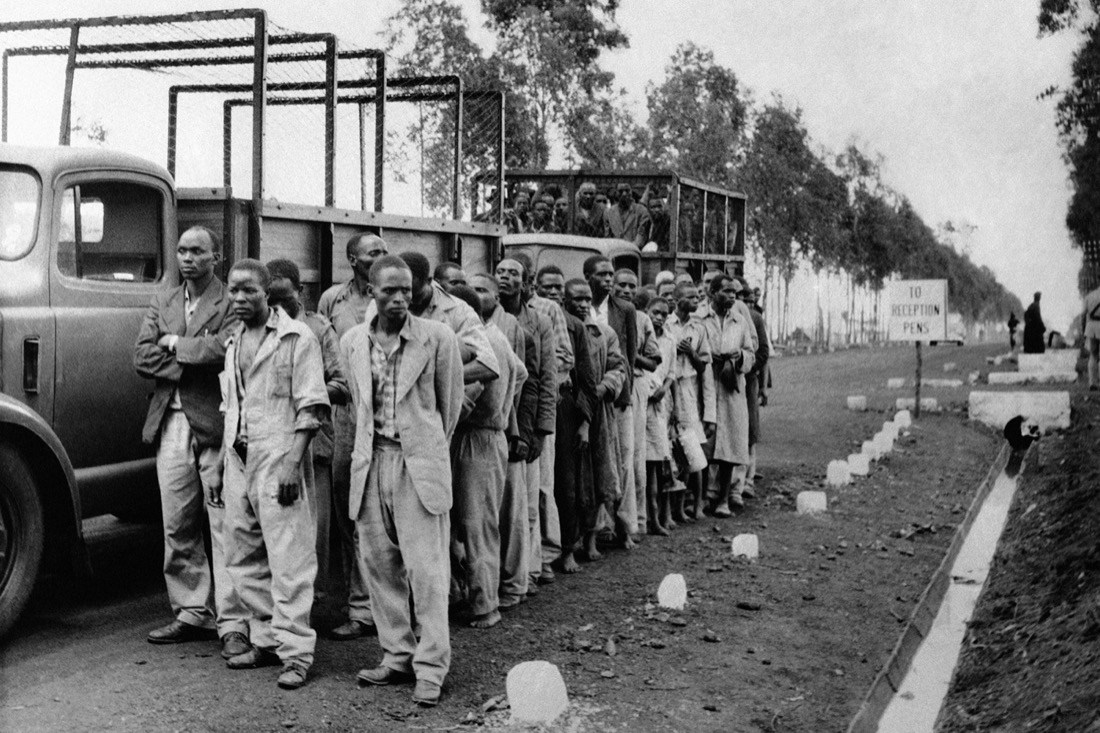
Two lorry loads transporting Kikuyu people arrive at a reception camp outside Nairobi, Kenya, on April 28, 1954, after 5,000 British troops and 1,000 armed police rounded up some 30,000 to 40,000 men for screening. The sweep followed the breakdown of the surrender invitation launched by the authorities after the capture of Mau Mau's "General China." At the reception camp many men were released after screening. Others were sent to detention camps by the sea. (AP Photo, File)
Two lorry loads transporting Kikuyu people arrive at a reception camp outside Nairobi, Kenya, on April 28, 1954, after 5,000 British troops and 1,000 armed police rounded up some 30,000 to 40,000 men for screening. The sweep followed the breakdown of the surrender invitation launched by the authorities after the capture of Mau Mau's "General China." At the reception camp many men were released after screening. Others were sent to detention camps by the sea. (AP Photo, File) Two lorry loads transporting Kikuyu people arrive at a reception camp outside Nairobi, Kenya, on April 28, 1954, after 5,000 British troops and 1,000 armed police rounded up some 30,000 to 40,000 men for screening. The sweep followed the breakdown of the surrender invitation launched by the authorities after the capture of Mau Mau's "General China." At the reception camp many men were released after screening. Others were sent to detention camps by the sea. (AP Photo, File)

NAIROBI, Kenya (AP) — Upon taking the throne in 1952, Queen Elizabeth II inherited millions of subjects around the world, many of them unwilling. Today, in the British Empire’s former colonies, her death brings complicated feelings, including anger.

Beyond official condolences praising the queen’s longevity and service, there is some bitterness about the past in Africa, Asia, the Caribbean and elsewhere. Talk has turned to the legacies of colonialism, from slavery to corporal punishment in African schools to looted artifacts held in British institutions. For many, the queen came to represent all of that during her seven decades on the throne.

In Kenya, where decades ago a young Elizabeth learned of her father’s death and her enormous new role as queen, a lawyer named Alice Mugo shared online a photograph of a fading document from 1956. It was issued four years into the queen’s reign, and well into Britain’s harsh response to the Mau Mau rebellion against colonial rule.

“Movement permit,” the document says. While over 100,000 Kenyans were rounded up in camps under grim conditions, others, like Mugo’s grandmother, were forced to request British permission to go from place to place.

“Most of our grandparents were oppressed,” Mugo tweeted hours after the queen’s death Thursday. “I cannot mourn.”