
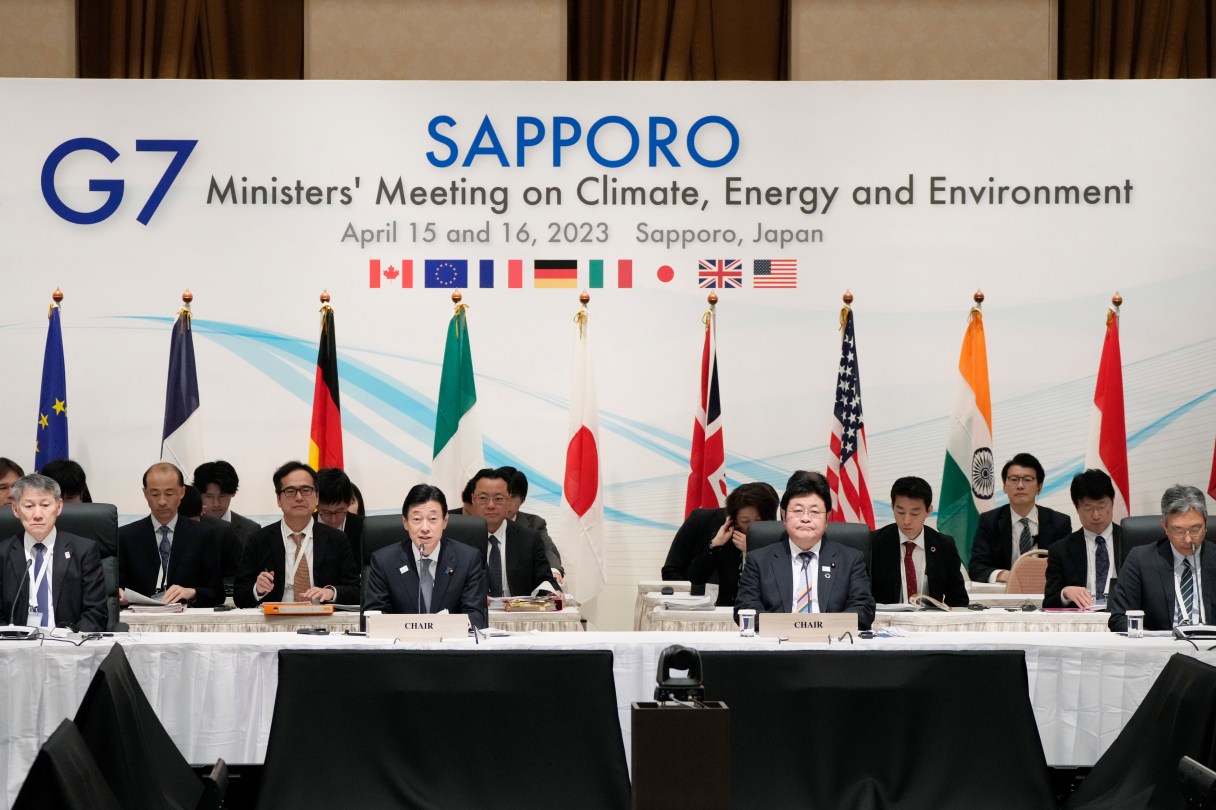
SAPPORO, Japan (AP) — Energy and environment ministers of the Group of Seven wealthy nations met Saturday in northern Japan, seeking to reconcile the world’s heavy reliance on fossil fuels with the urgency of ending carbon emissions to stave off the worst consequences of climate change.
The meetings in the northern Japanese city of Sapporo are aimed at forging a consensus on the best way forward, ahead of the G-7 summit in Hiroshima in May.
“We are facing the challenge of promoting reforms to resolve climate change … and achieving energy security at the same time,” economy minister Yasutoshi Nishimura told the ministers as the meetings began.
Speaking on the sidelines of the meetings, U.S. Presidential Envoy for Climate John Kerry said the G-7 was “powerfully positioned to be able to lead” in the effort to stem global warming. “We appreciate Japan’s leadership and its stewardship of G-7 this year.”
But differences persist over how, and how quickly, to end carbon emissions, especially at a time when the war in Ukraine has deepened concerns over energy security, complicating that effort.