

“THIS ISN’T GOING TO END WELL: THE TRUE STORY OF A MAN I THOUGHT I KNEW” by Daniel Wallace (Algonquin Books, 272 pages, $28).
Daniel Wallace is best known for “Big Fish,” his 1998 debut novel, and its star-studded 2003 film adaptation by director Tim Burton. Since then he has produced a steady stream of comically odd Southern fiction, most recently “Extraordinary Adventures” in 2017. His first nonfiction book, “This Isn’t Going To End Well: The True Story of a Man I Thought I Knew,” occasionally provides some of the same wackiness as his fiction. Yet as the title promises, the true story Wallace has waited decades to tell is tragic and heartrending.
You know where a book is headed when the author’s note before the first chapter includes the National Suicide Prevention Lifeline number. In the note, Wallace lays out the central tragedy: the suicide of William Nealy, his brother-in-law, childhood hero and inspiration to become a writer. “Suicide is one of the most traumatic deaths, no matter how it’s undertaken,” Wallace writes, “and those left behind suffer through a complicated grief that may never subside.”
In exploring his own particularly complicated grief, Wallace reveals his coming of age as a writer, the tragic yet inspiring life of his sister Holly and a cast of larger-than-life characters as beguiling as any of his fictional inventions. Gradually the reader comes to realize that those inventions exist only because of Wallace’s long friendship with Nealy, which began in childhood.
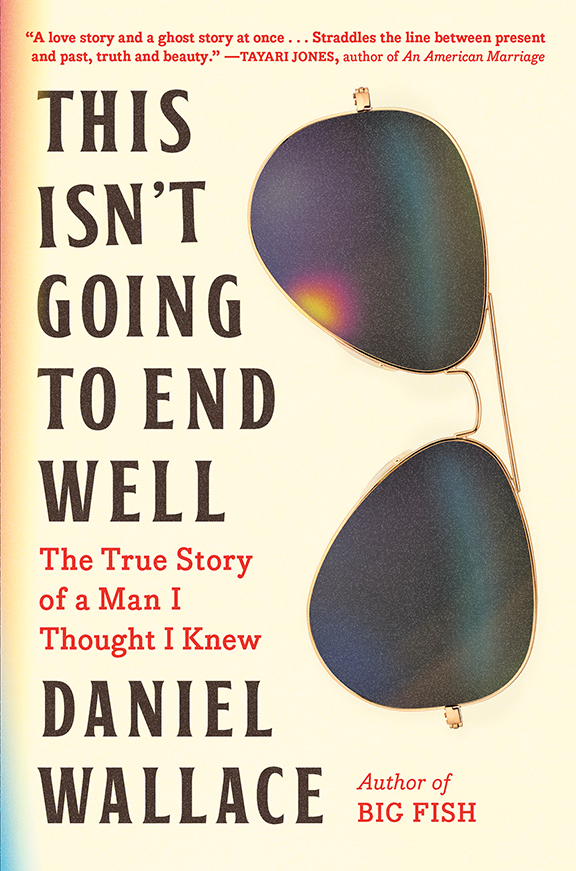 Algonquin Books / “This Isn’t Going To End Well”
A meticulous artist and cartoonist in the manner of R. Crumb, Nealy developed a unique style that became popular with river runners and the growing outdoor culture — or more accurately, counterculture — of the 1970s. It was fitting that his early work was published in Outside magazine, a spin-off of Rolling Stone. Samples of Nealy’s work, often informative and always comical, appear before many of Wallace’s chapters.