
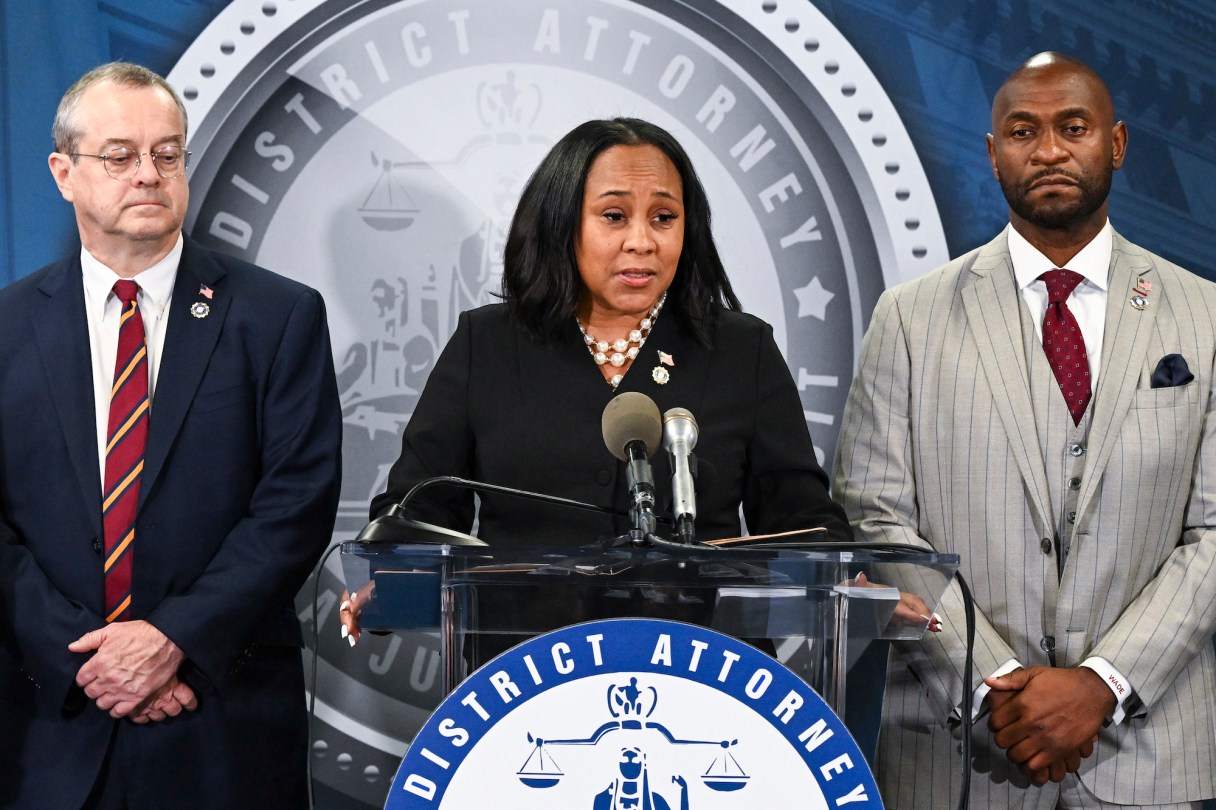
The best way to think about Georgia’s sprawling indictment against Donald Trump and his allies is that it is a case about lies. It’s about lying, conspiring to lie and attempting to coax, coerce and cajole others into lying. Whereas the attorney general of Michigan just brought a case narrowly focused on the alleged fake electors in her state (Trump is not a defendant in that one), and special counsel Jack Smith brought an indictment narrowly focused on Trump’s efforts to overturn the 2020 election, Fulton County District Attorney Fani Willis has brought a case about the entire conspiracy, from start to finish, and targeted each person subject to her jurisdiction for each crime committed in her jurisdiction.
In other words, this indictment is ambitious. But it also answers two related questions: Why bring yet another case against Trump in yet another jurisdiction? Isn’t he going to face a federal trial in Washington, D.C., for the same acts outlined in the Georgia indictment?
The answers lie in the distinctions between state and federal law. Georgia law is in many ways both broader and more focused than the federal statutes at issue in Smith’s case against Trump. The breadth is evident from the racketeering charges. As Norm Eisen and Amy Lee Copeland have written in The New York Times, Georgia’s racketeering statute allows prosecutors to charge, among other crimes, a number of false statement statutes as part of a generalized criminal scheme. In other words, rather than seeing each actionable lie as its own, discrete criminal act, those lies can also be aggregated into part of a larger whole: an alleged racketeering enterprise designed to alter the results of the Georgia presidential election.
Yet it’s the focus of Georgia law that’s truly dangerous to Trump. The beating heart of the case is the 22 counts focused on false statements, false documents and forgery, with a particular emphasis on a key statute: Georgia Code Section 16-10-20, which prohibits false statements and writings on matters “within jurisdiction of state or political subdivisions.” The statute is a state analog to a federal law, 18 USC Section 1001, which also prohibits false statements to federal officials on matters within their jurisdiction, but the Georgia statute is even broader.
Simply put, while you might be able to lie to the public in Georgia — or even lie to public officials on matters outside the scope of their duties — when you lie to state officials about important or meaningful facts in matters they directly oversee, you’re going to risk prosecution. That’s exactly what the indictment claims Trump and his confederates did, time and time again, throughout the election challenge.