
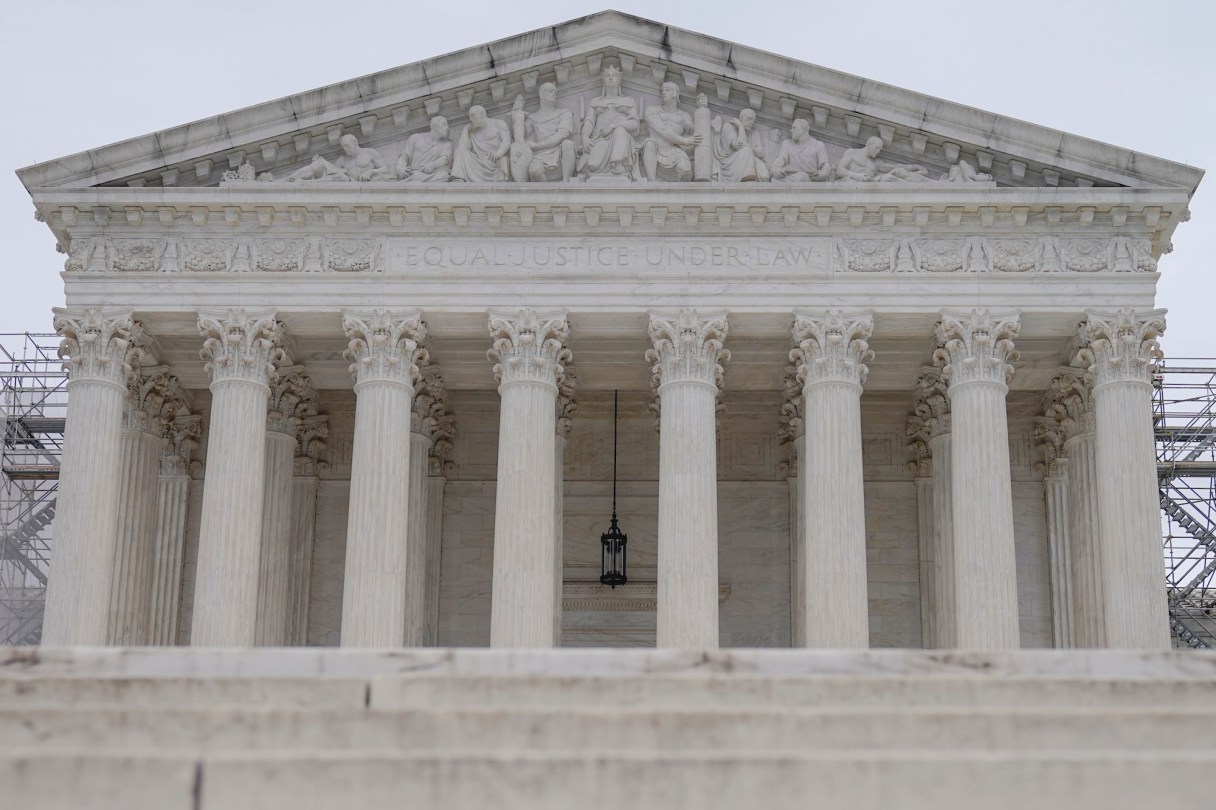
A federal appeals court panel handed down a decision last week that would hobble enforcement of the Voting Rights Act by holding that only the U.S. attorney general, not aggrieved citizens, can file lawsuits to enforce one of the landmark civil rights law’s key protections. The Supreme Court, which has a checkered history when it comes to protecting voting rights, must overrule this radical decision if it is appealed, which is likely.
In a dispute arising from challenges to a legislative redistricting plan in Arkansas, the U.S. 8th Circuit panel ruled that, because the text of Section 2 of the Voting Rights Act doesn’t authorize lawsuits by private individuals, such suits may not proceed.
Writing for the 2-1 majority, Judge David R. Stras said that “silence is not golden for the plaintiffs.” Never mind that, as a dissent by Chief Judge Lavenski Smith pointed out, federal courts across the country, including the Supreme Court, have considered numerous Section 2 cases brought by private plaintiffs. Congress also made clear in committee reports that it envisioned private lawsuits, a fact shrugged off by the majority opinion with the dismissive comment that there “are many reasons to doubt legislative history as an interpretive tool.” (Earlier this month, another federal appeals court, the U.S. 5th Circuit Court of Appeals, concluded that private parties could sue under Section 2.)
The Voting Rights Act, originally signed into law in 1965, initially was seen as protection against blatant attempts by states, mostly in the South, to prevent Black voters from participating in elections, despite the guarantee in the 15th Amendment that the right to vote “shall not be denied or abridged by the United States or by any state on account of race, color, or previous condition of servitude.”
The law requires that jurisdictions with a history of voting discrimination to “pre-clear” changes in election procedures with a federal court or the U.S. attorney general — a provision that was gutted by a disastrous 2013 decision in Shelby County vs. Holder. But it also includes a provision, Section 2, that applies nationwide and prohibits voting practices or procedures that discriminate on the basis of race, color or membership in language minority groups.