
It’s been more than 2 1/2 years since Alabama dropped its mask mandate as part of its COVID-19 safety guidance, but at least one member of state’s congressional delegation is concerned about whether a similar mandate could be issued in the future.
U.S. Rep. Gary Palmer, R- Alabama, was fixated last week on whether the Atlanta-based Centers for Disease Control and Prevention would reimpose such a requirement.
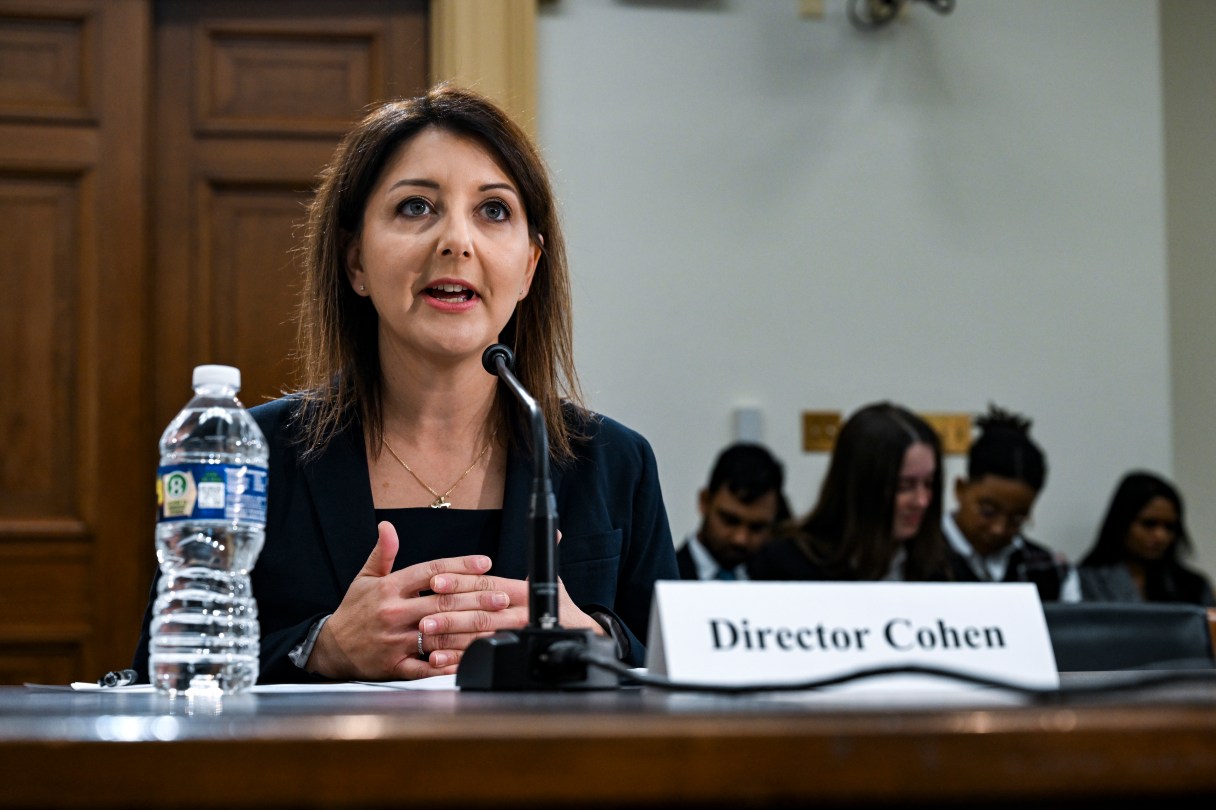
“It’s good that we’re in a different place and we’re able to turn a chapter forward,” Dr. Mandy Cohen, the CDC’s new director, said in response to Palmer’s concerns. “We have a lot of different tools to protect our children now, vaccines and treatment. Masks continue to be one tool amongst many that we can use.”
Palmer asked if that meant the CDC would continue to require masking for 2-year-old children.
“Again, we’re in a very different place,” Cohen said.
Palmer said many people believed masking was more about power than it was about medicine.
“And if you’re going to continue to try to do a sales job, it’s going to be difficult to get us on board with the CDC because people don’t trust you anymore,” Palmer said.
Trust is something Cohen, North Carolina’s former secretary of health and human services, has been working to restore since being sworn in as the CDC new director in July.
“To do this, we must be transparent, provide clear communication and collaborate across government and with other public and private partners,” Cohen told members of a House Energy & Commerce subcommittee. “But even as CDC takes concrete steps to achieve these goals, we know we cannot do it alone. We do need help from Congress to support a CDC that has both the resources and the policy levers to be the national security asset we all need.”
Rep. Dan Crenshaw, R-Texas, told Cohen if the CDC wants its credibility back, it would require a mea culpa moment.
“You’re in the perfect position to do it, because you had nothing to do with their decisions at the time. So, there’s no reason to defend it,” Crenshaw said. “You can blame it on hindsight. You can blame it on, you know, we didn’t know as much as we know now at the time. You can do a little sort of things, but you can tell the truth and then the public will start trusting the CDC again.”
Cohen stayed focused on efforts to improve communication, data visualization and put lessons learned from the pandemic into action.
Agency’s focus
Georgia Rep. Buddy Carter, a Pooler Republican, told Cohen he wasn’t trying to “pile on” but had concerns about a shift in the CDC toward addressing broader societal issues like climate change.
“We’re not here to beat you up. We need to help. But I’m concerned now that you’re biting off more than you can chew. What’s up with this?” Carter asked.
Cohen said the CDC deals with a number of health threats at its doorstep. Many of them are infectious disease, and many are not, she added.
Carter asked whether the Environmental Protection Agency or the CDC is more qualified or better prepared to deal with climate change.
“You know, what CDC is great at is bringing data and evidence and best practices to some of this … whether it’s suicide or whether it’s how things like heat or wildfires are affecting people’s health. We need to have that data and evidence so that our health delivery system and others know how to react to protect,” Cohen said.
Carter said his concern was the agency’s focus.
“We want you to get it right,” he said. “And we want you to make sure that you’re fulfilling your mission and not trying to expand beyond your mission.”
Cohen said she appreciated lawmakers wanting to work with the agency on an “important mission.”
“And again, some of the things we’ve been talking about to make sure we have the infrastructure, the needed workforce response, our lab capacity. I think we’re all talking about the same things,” she said.
Rep. Kathy Castor, D-Florida, told her colleagues it was more than appropriate for the CDC to focus on climate change based on the emerging risks in her state.
“It’s hotter, so in Florida, we have longer wet seasons during the summer that breeds mosquitos, so that’s very important to combat malaria, dengue, Zika,” Castor said.
Combating misinformation
In her questioning, Rep. Debbie Dingell, D-Michigan, returned to COVID-19 and her worry that people aren’t getting vaccinated for other illnesses.
“There’s a distrust of all shots — not only the COVID-19 vaccine, but the flu and the RSV,” Dingell said. “Why is it so important for people to get the latest COVID-19 vaccine and these other immunizations as well?”
(READ MORE: Flu is on the rise while RSV infections may be peaking, US health officials say)
Cohen said the same way the flu virus changes every year, the COVID-19 virus has changes as well. And members of the public want to make sure the protection they have is matched to the way the virus has changed.
“Whether you’ve had COVID before or you’ve been vaccinated before, that protection decreases over time, and you want to make sure you are boosted up to the highest level of protection you can going into a time when we know we will see more COVID circulating,” Cohen continued.
An updated COVID-19 booster can also reduce the risk of long COVID.
“We are still seeing 1 in 7 adults have extended symptoms even from a mild case of COVID. No one wants to be sick for a short time, certainly not for a long time. And so, for those reasons, we are encouraging folks to get the updated vaccine,” Cohen said.
Dingell asked how the CDC was combating misinformation.
“In order to combat misinformation, you just have to get a lot of the good information out there,” Cohen said. “And that means we have to partner with folks who are trusted.”
In advance of year-end travel, about 17% of the U.S. population has received the new bivalent booster.
(READ MORE: Long COVID limbo: A Chattanooga man’s quest to solve his medical mystery)
Tracking illnesses
Flu is just beginning across most of the nation, though it is accelerating fast.
It, along with COVID-19 and RSV, can be tracked on a new respiratory season website, where the CDC is for the first time giving a combined view of the three illnesses. The CDC also recently launched the Bridge Access Program to provide no-cost COVID-19 vaccines to uninsured and underinsured adults for a limited time.
(READ MORE: What to know as fall vaccinations against COVID, flu and RSV get underway)
Cohen said even as CDC takes these concrete steps, the agency cannot do it alone.
“We do need help from Congress to support a CDC that has both the resources and the policy levers to be the national security asset we all need,” she said.
Read more at GeorgiaRecorder.com.