
Let’s start with the good news about the first session of the 118th Congress. Lawmakers successfully avoided — or postponed — any major self-inflicted disasters. The debt limit was extended on time, averting a potential default. Temporary spending bills were passed before the deadline, twice, pushing any possible federal government shutdown until January. And several other key programs, such as those contained in the farm bill, similarly were extended.
It’s a bit of a myth that no significant legislation passes during election years and even more of a myth that important laws can’t be passed with a divided government. But so far, this is shaping up to be a historically inactive Congress — just barely doing the minimum. Fewer than 30 bills will be enacted into law this year, by far the fewest since at least 1973. Even that’s probably an understatement, given the minimal effect of what did pass compared to what happens during a typical session.
This is one time where it’s easy to see who’s at fault. That would be House Republicans, the party and chamber that took a week to elect a speaker last January and then spent three weeks in October dumping him and choosing another. Senate Republicans, the majority of Senate Democrats, and (to the extent they could) House Democrats were all willing to bargain in good faith on many items and achieve compromises.
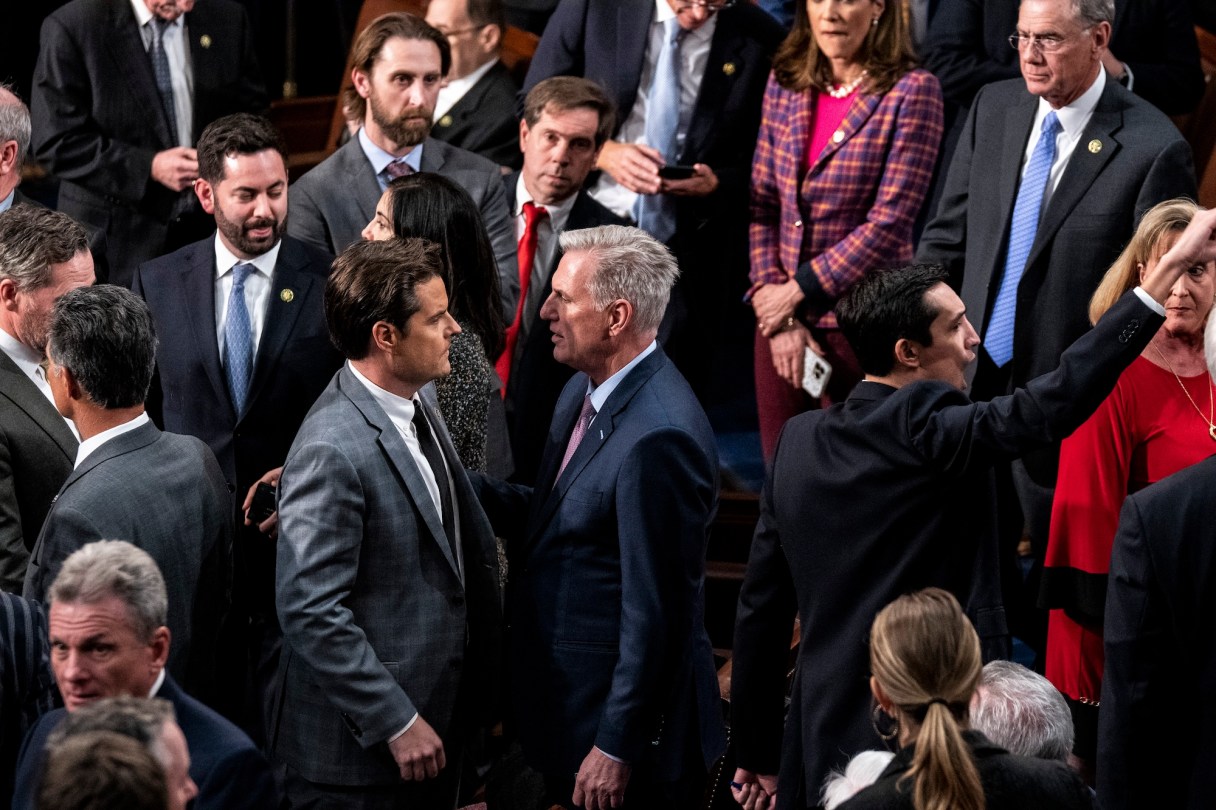
House Republicans basically had two poses. They were either attempting to pass show bills that the most extreme party members could endorse and coerce the rest of their conference to support, or they allowed the Senate versions of must-pass items to get through, usually with more Democratic votes than Republican. They also set a modern record for bills they tried to pass on the floor that were defeated in final votes, yanked at the last minute because they didn’t have the votes, or failed to win procedural votes. The latter used to be something that happened every few years, but it became common in Kevin McCarthy’s House.
And while it’s true that Congress managed to avert major disaster this session, plenty of important things fell through the cracks. For example, aid to Ukraine, Israel, other allies and border programs hasn’t been approved. Lawmakers also failed to meet the deadline to re-authorize PEPFAR, leaving the fight against HIV/AIDS in Africa in limbo. And while passing temporary funding measures has prevented a government shutdown, keeping spending on autopilot makes it impossible to adjust for changing circumstances — or, for that matter, the priorities of the new House Republican majority. In each of these cases, the inability of House Republicans to agree internally or to bargain with other actors within the system has not only harmed the nation, but also prevented them from having policy wins.