
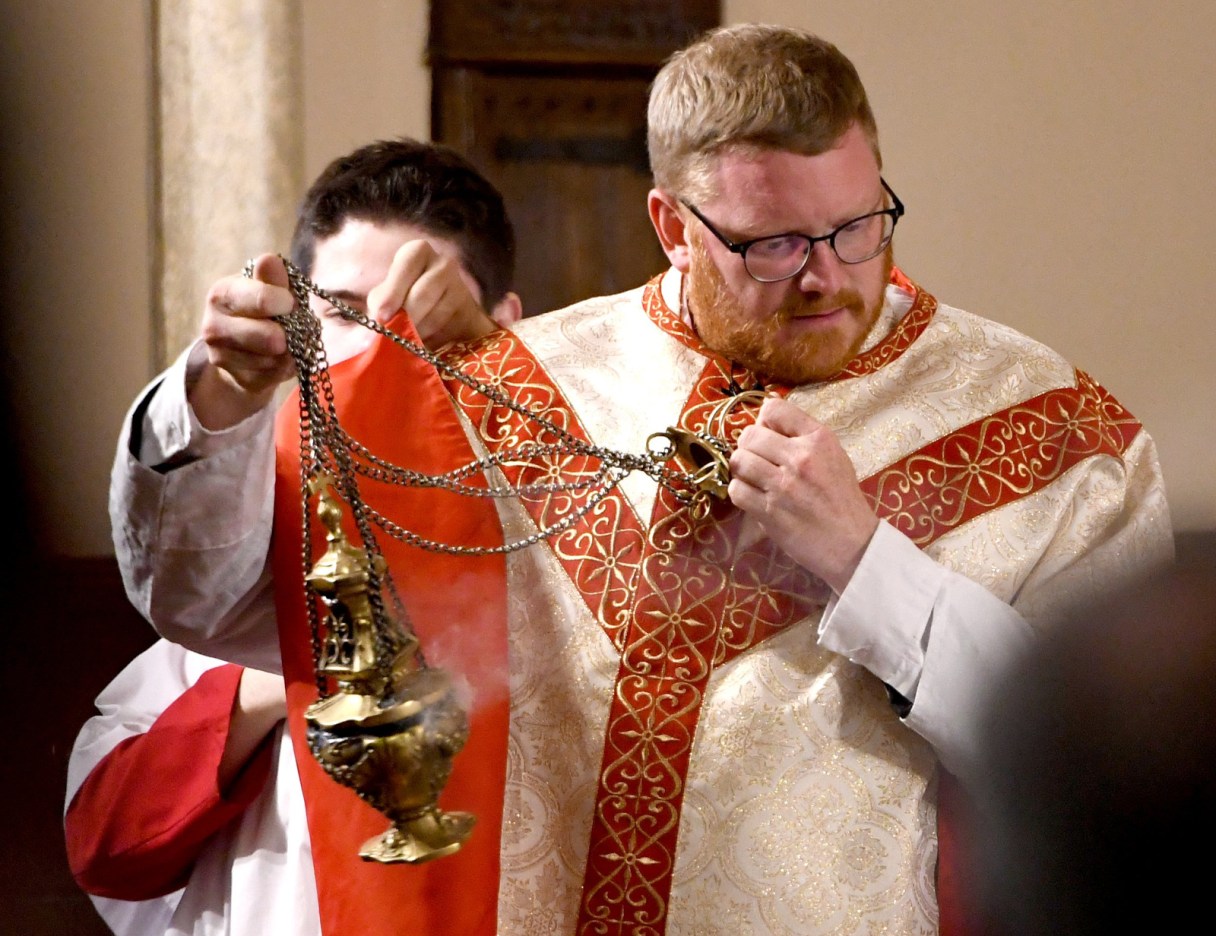
One afternoon in April 2005, David Carter was supposed to attend a seminar on Catholic canon law. He skipped it.
There were more pressing matters for Carter, now a pastor at Chattanooga’s Basilica of Sts. Peter and Paul. Pope John Paul II had died, and cardinals seeking to elect a new pope deliberated inside the Sistine Chapel. In nearby St. Peter’s Square, Carter found his seminary classmates — a diverse cohort that reflected the global character of the Catholic scene in Rome, where they all studied.
The announcement that a new pope had been selected gave way to a “great moment of anticipation,” Carter said by phone Tuesday. The announcement that it would be Joseph Ratzinger, to become known as Benedict XVI, gave way to screams of delight. Carter turned to embrace a fellow seminarian, a burly Scotsman, and the two jumped up and down in joy, he said.
“Everybody in St. Peter’s Square was just thrilled that there was going to be this continuity with what we had known all our lives,” Carter said.
Observers described the bookish Benedict, who in a nearly unprecedented move retired in 2013, as a reluctant pope. His death, announced by the Vatican on Saturday, is causing Chattanooga-area Catholics, from the Bishop of Knoxville to schoolchildren, to reflect on his historical role as a stabilizing and lucid intellectual force that, here and beyond, held space for old — some say timeless — traditions amid the encroachments of modern life.