
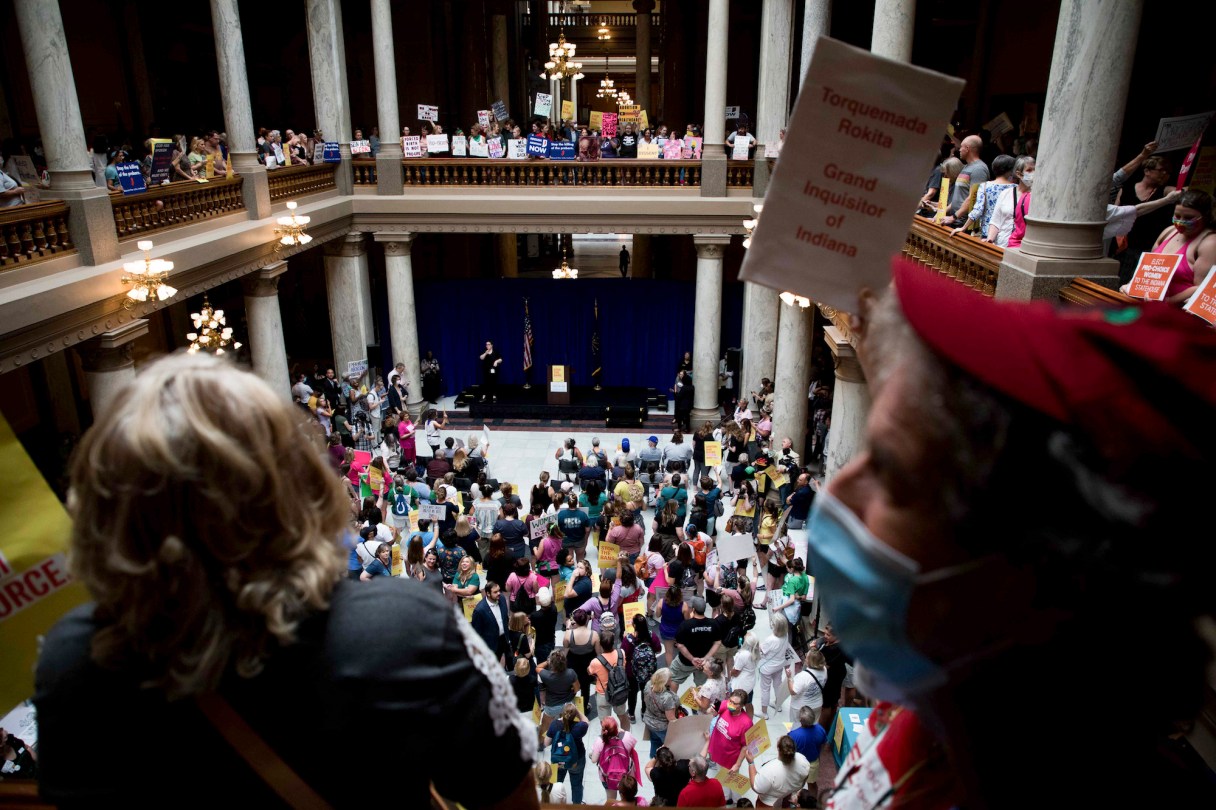
A little over six months ago, the Supreme Court overturned Roe v. Wade, ending the constitutional right to an abortion and sending the nation back half a century to the time when state politicians decided whether women controlled their own bodies.
In the chaotic wake of that decision in the Dobbs v. Jackson Women’s Health Organization case, trigger laws banning abortion went into effect in 13 states while others had pre-Roe bans that could be enacted. Some laws went into effect quickly; some did not. Some went into effect, then were blocked by court orders.
Meanwhile, abortion rights advocates filed dozens of lawsuits arguing that many state abortion bans were illegal because, though their legislatures may be hostile to abortion, the state constitutions’ protections for bodily autonomy and privacy rights extend to abortion. Sometimes they won, but often they just bought clinics more time to operate until a court hearing.
Currently, 12 states completely ban abortion while another state bans it at six weeks of gestation and two more ban it at 15 weeks, according to the Guttmacher Institute, a research group that supports abortion rights issues and tracks statistics. A grim period of history had begun.