
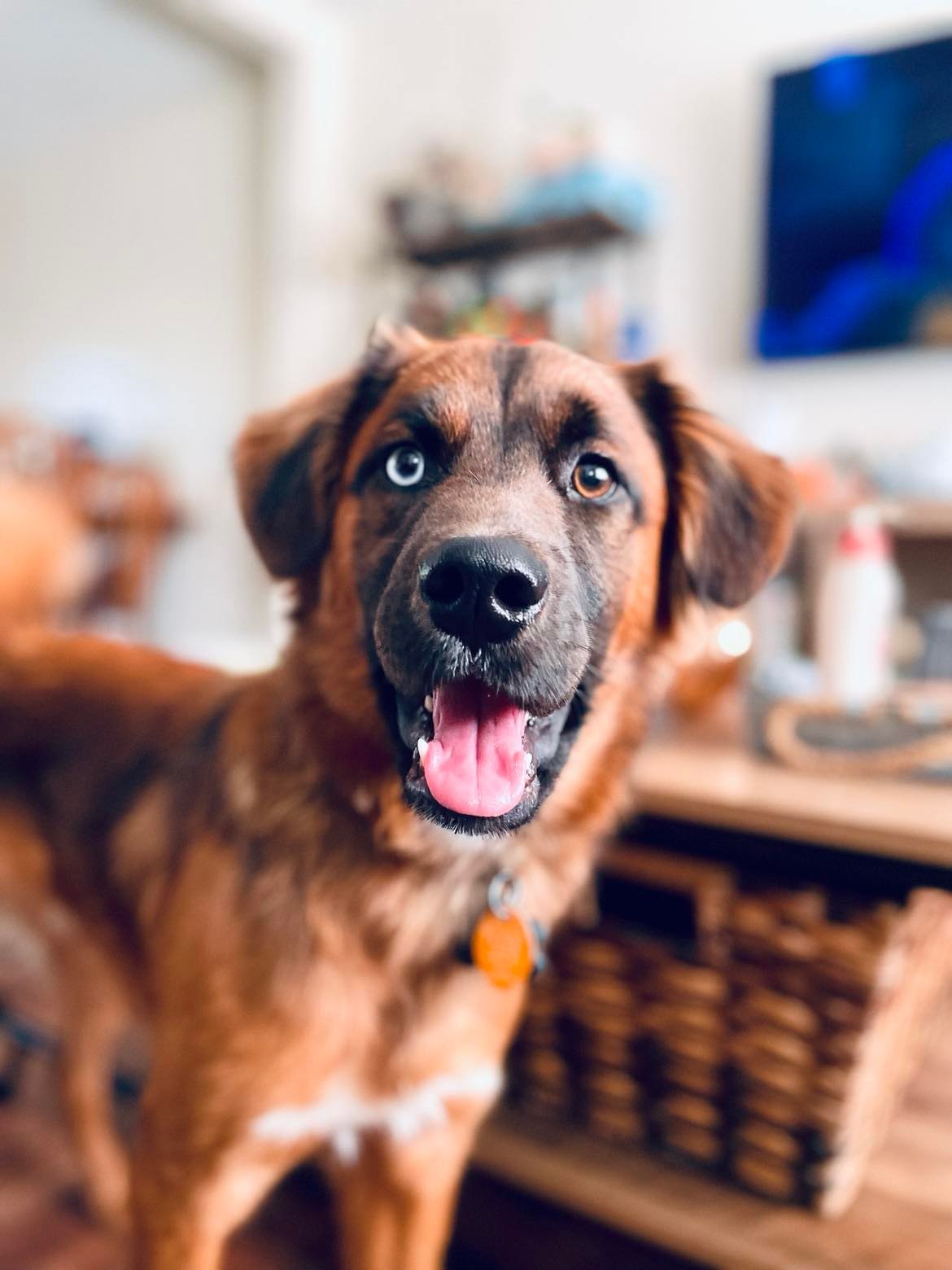

When Lauren Mann adopted her dog Ringo from McKamey Animal Center, she and her husband guessed he was a golden retriever and Australian or German shepherd mix of some sort. The shelter had labeled him as a shepherd.
According to the results of an Embark dog DNA test, Ringo is 16.3% Chihuahua, 11.9% Siberian husky, 11% chow chow, 8.9% Shih Tzu, 8% Labrador retriever, 7.5% boxer, 7.3% German shepherd and 29% “super mutt” — Embark’s term for DNA so mixed that it’s indistinguishable, Mann said in an email.
“Looks are deceiving, but he is the absolute sweetest, snuggliest dog I have ever owned,” she said.
Mann, who serves as development director at McKamey, said the fact that a dog’s breed is often difficult to pinpoint without a DNA test is one reason the shelter recently stopped assigning breed labels to dogs in its care.
It’s a step many animal welfare organizations across the nation are taking to prevent animals from being assigned inaccurate breed labels that can keep them in shelters longer due to adopters’ negative misconceptions about certain breeds.