
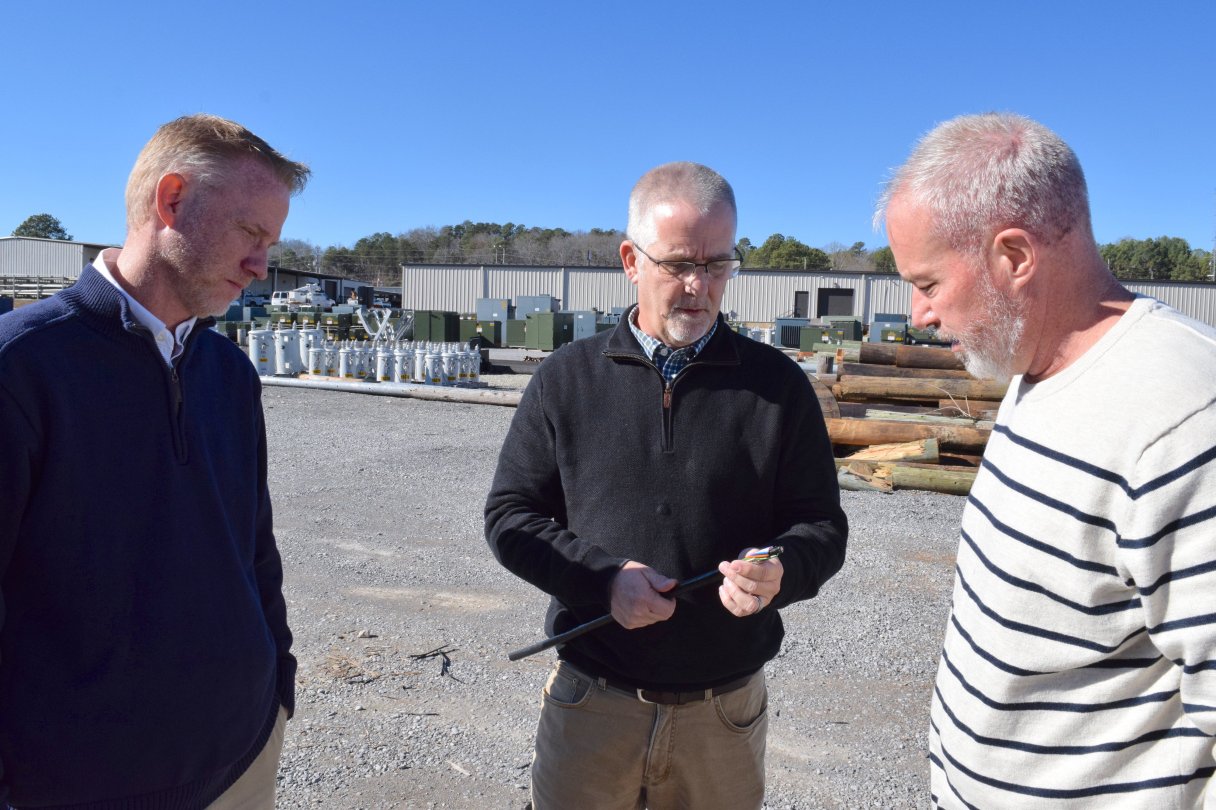

CLEVELAND, Tenn. — A $72 million proposal from Cleveland Utilities and the municipal government of Cleveland, Tennessee, to provide a standard 1-gigabit broadband network and phone service — with the capability to provide up to 10-gigabit speed to businesses — is drawing fire from three conservative groups in Bradley County.
According to a proposal submitted in the fall for review by the Tennessee Comptroller’s Office, the goal in the proposal is to build a state-of-the-art fiber network for all of Cleveland Utilities’ service area. The proposed system would also allow the utility to design and install a smart grid infrastructure that provides automatic fault location for power restoration during outages, better power restoration response times and phone service.
The utility’s all-fiber network would be superior to its competitors, according to the plan, and offer more value at competitive pricing and consistently higher speeds. The plan says that the public utility has a reputation for responsive customer service and that all revenue generated by the project would remain in Cleveland to provide direct financial benefit.
But the proposal, opponents say, pits the government against private businesses, could compromise customer privacy and could cost ratepayers more in the end.