
Q: I’ve been told I need to get my first colon cancer screening earlier than my parents did. Is this true?
A: There is a common myth that people should start colon cancer screenings at age 50. However, recent findings from the American Cancer Society show the rate of Americans being diagnosed with colon cancer is decreasing among people 65 and older but increasing in younger age groups.
Colon cancer is not only a disease affecting older adults. The average age of diagnosis for colon cancer is decreasing. It is important that young adults understand the symptoms, know their family history and discuss with their primary care provider when they need to begin screening.
As a general rule of thumb, primary care providers should ask every patient starting at age 45 if they have been screened for colon cancer. However, other factors can influence earlier screenings, such as a family health history of the disease or if a patient suffers from a type of inflammatory bowel disease.
Patients sometimes have the misconception that there is nothing that can be done about colon cancer, and thus, there’s no point in doing anything about it. This is clearly not true. There are many lifestyle factors that can be modified to reduce their risk. Colonoscopy can prevent colon cancer by removing precancerous polyps. And even if colon cancer does develop, it is most often able to be cured when discovered by a screening test. It doesn’t make sense to wait until symptoms develop from the cancer to get checked; at that point, a cure is less likely and even, if possible, will involve a more difficult treatment course.
Like most cancers, treating colon cancer is based on the stage of the disease. In many cases, surgery is the only treatment needed to remove the disease. However, earlier cases of colon cancer can be treated with minimally invasive methods, such as endoscopic mucosal resection. For more advanced cancers, chemotherapy, in addition to surgery, is sometimes needed. Radiation can also be a helpful form of treatment for rectal cancers. Colon and rectal surgeons specialize in the care of this disease and can offer optimal outcomes with the widest variety of minimally invasive treatments.
Following treatment for the disease, patients should proceed under a surveillance protocol, which includes regular appointments with their primary care physician, CT scans, lab tests and more frequent colonoscopies to ensure the cancer is eradicated.
I spend extra time with my patients discussing their diet and other lifestyle factors and how these choices affect their health. Hopefully, this education is not only useful for the patients but also their family in ways that improve the overall health of our community.
Dr. Eric Nelson is a colorectal surgeon with University Surgical Associates and a member of the Chattanooga-Hamilton County Medical Society.
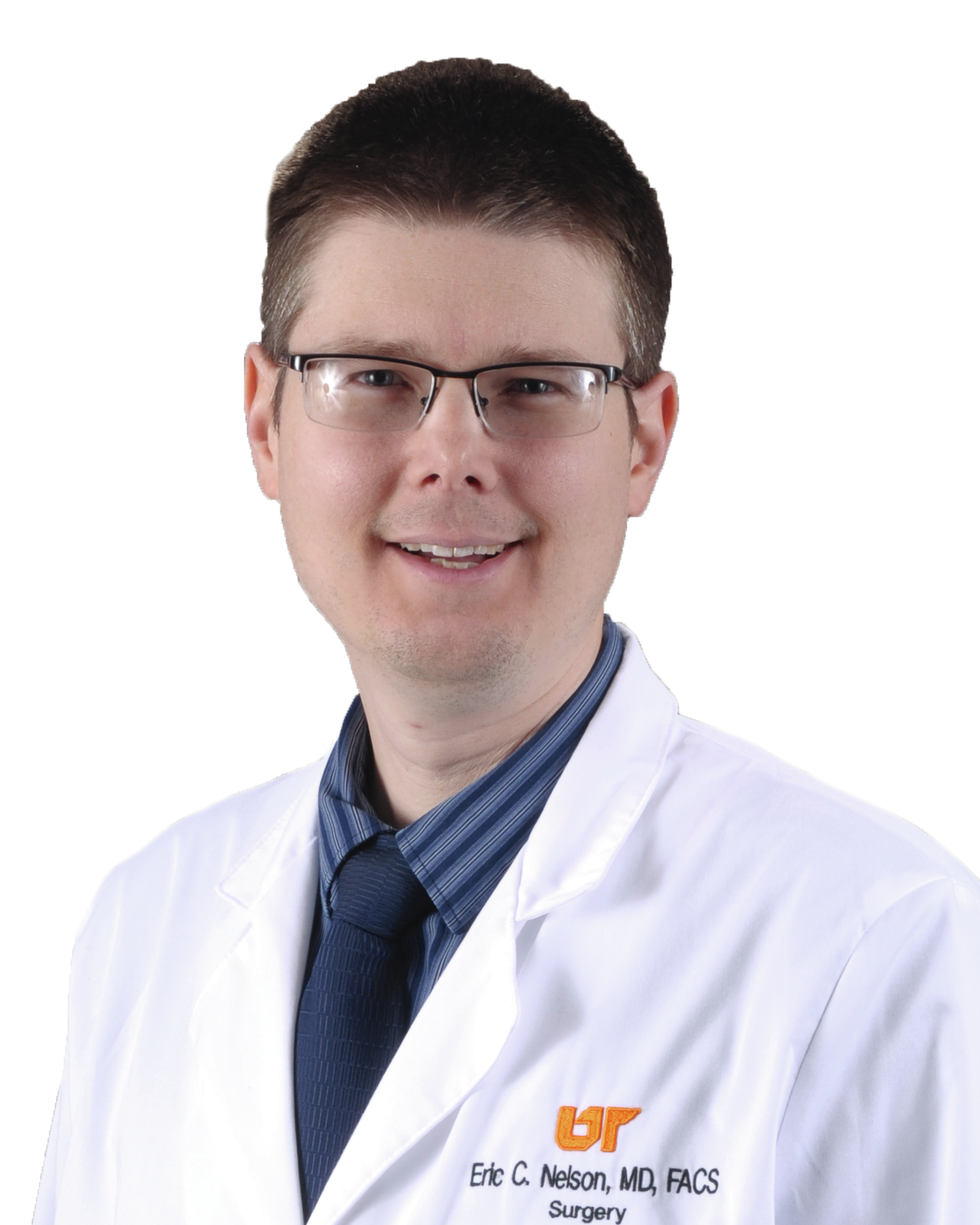 Dr. Eric Nelson