
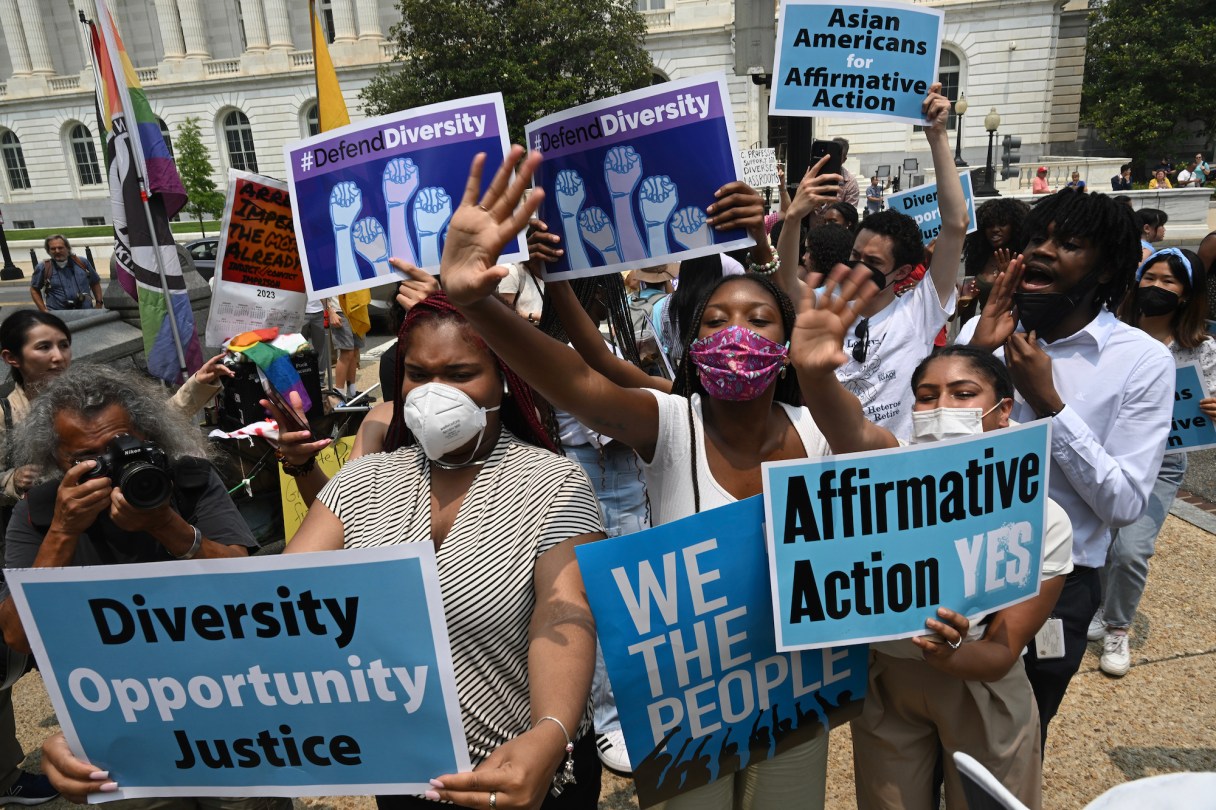
For decades, conservatives have railed against judicial activism, but Thursday’s decision striking down affirmative action by colleges and universities in admissions was the height of conservative judicial activism. The court rejected almost half a century of precedents, overturned decisions made by public and private universities across the country, and ignored the history of the 14th Amendment of the Constitution.
The experience of California — where affirmative action was eliminated by Proposition 209 in 1996 — shows that it still will be possible to have diversity in higher education, but it will take sustained effort and it will be difficult.
In 1978, in University of California v. Bakke, Justice Lewis Powell wrote the pivotal opinion and explained that colleges and universities have a compelling interest in having a diverse student body and may use race as one of many factors in admissions decisions to benefit minorities and enhance diversity. The Supreme Court reaffirmed this in 2003 in Grutter v. Bollinger and again, most recently, in 2016, in Fisher v. University of Texas, Austin. For decades, universities across the country have based their admissions policies on these holdings.
What changed in a mere seven years? Donald Trump appointed three justices: Neil Gorsuch, Brett Kavanaugh and Amy Coney Barrett. They joined the three conservative dissenters in the Fisher case — John G. Roberts Jr., Clarence Thomas and Samuel Alito — to overturn 45 years of precedents allowing affirmative action. As it did last year in overruling Roe v. Wade, the conservatives on the court paid no attention to the principle of stare decisis and following precedent.
Nor did the conservatives on the court pay attention to the judgment of university educators that diversity in the classroom matters in education. I have been a law professor for 43 years and have taught classes that are overwhelmingly white and those with a significant number of minority students. The discussions in the classrooms are vastly different and the educational experience for all students is enhanced when there is diversity.