
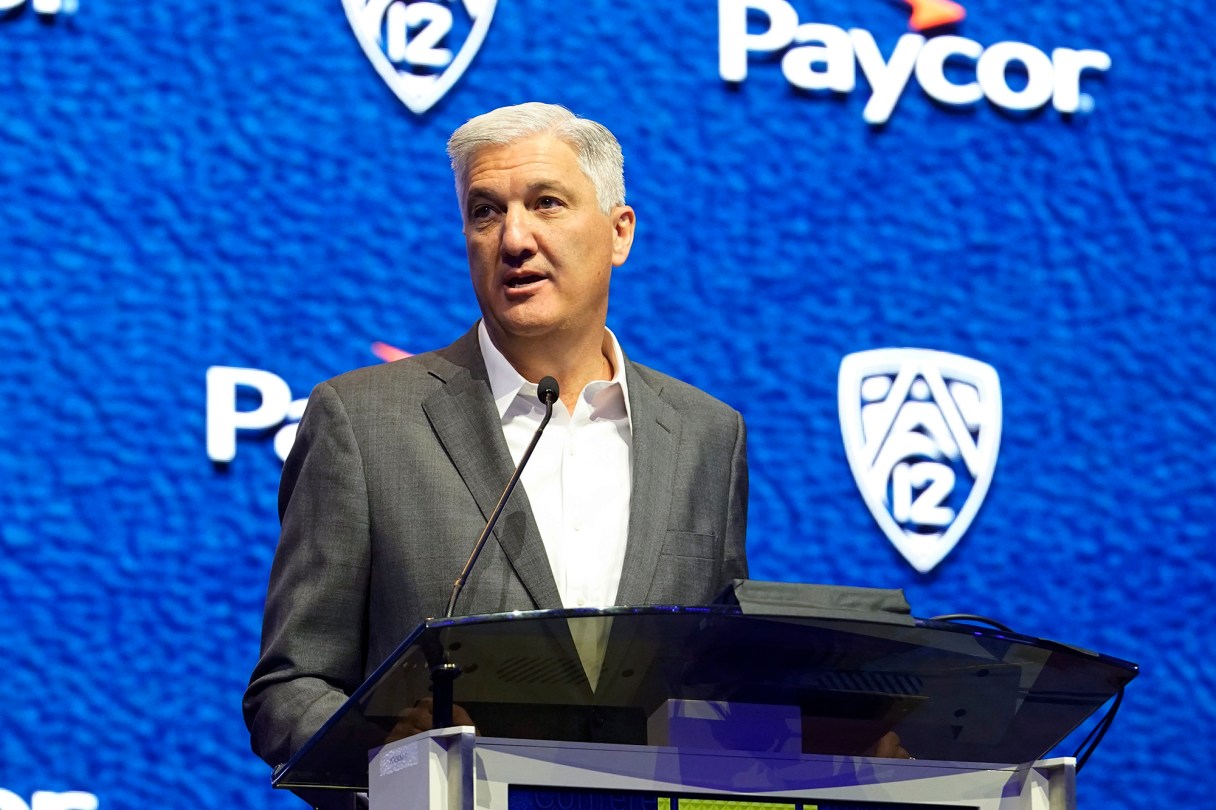
The Pac-12 issued a statement aimed at stability on Thursday after Colorado became the third school in a year to announce plans to leave the West Coast-based conference.
A day later, the nine schools remaining for the 2024-25 season were largely silent.
Colorado has announced it will join the Big 12 beginning in 2024, joining Big Ten-bound UCLA and USC in an exodus that could add more participants in the coming weeks and months. Their departures coincide with the expiration of the league’s current media rights deals, and the Pac-12 has not yet announced a lucrative deal going forward.
Shortly after the University of Colorado’s board of regents approved the move to the Big 12, the Pac-12 issued a statement pledging to soldier on. Possible Pac-12 expansion targets could include San Diego State and SMU, which is near Dallas.
“We are focused on concluding our media rights deal and securing our continued success and growth,” the Pac-12’s release read. “Immediately following the conclusion of our media rights deal, we will embrace expansion opportunities and bring new fans, markets, excitement and value to the Pac-12.”
The Pac-12’s media rights contract expires at the end of the 2023-24 academic year, and league commissioner George Kliavkoff has not noted any progress in landing a new deal.
Oregon State was the only Pac-12 school to comment after the Colorado announcement. A founding member of the league in 1915, Oregon State is considered one of the least likely schools to be poached by another conference.
“Oregon State Athletics trusts that the Pac-12 will secure a media rights deal that will strongly benefit the institutions that are remaining loyal to this conference,” Oregon State athletic director Scott Barnes said in the school’s release. “All of us at Oregon State will continue to work hard and diligently to continue the long-term membership and success of our athletic department at a national level.”
Oregon State president Jayathi Murthy said her school joins other members in reaffirming its commitment to the Pac-12.
“We are united by our shared values, our passion for the highest level of intercollegiate athletic competition, our leadership roles as Tier 1 research universities and our support for student-athletes’ academic and athletic excellence,” Murthy said in the release.
The administrations and athletic departments at Utah and Washington declined comment. The athletic departments at Arizona State, California and Washington State also declined comment, as did the Arizona and Oregon president’s offices. Stanford did not immediately respond to a request for comment.
Arizona, Arizona State and Utah are believed to be potential targets for further Big 12 expansion, though those schools publicly committed to the Pac-12 prior to Colorado’s announced departure. The Big 12 has a six-year, $2 billion contract that is projected to net annual revenue of $31 million for each school.
During former commissioner Kevin Warren’s tenure, the Big Ten still had eyes on the West Coast even after landing UCLA and USC, with Oregon and Washington believed to have the most appeal of the remaining Pac-12 schools. Warren is gone now, though, and his replacement, Tony Pettit, said earlier this week that the Big Ten isn’t eager to expand more.