
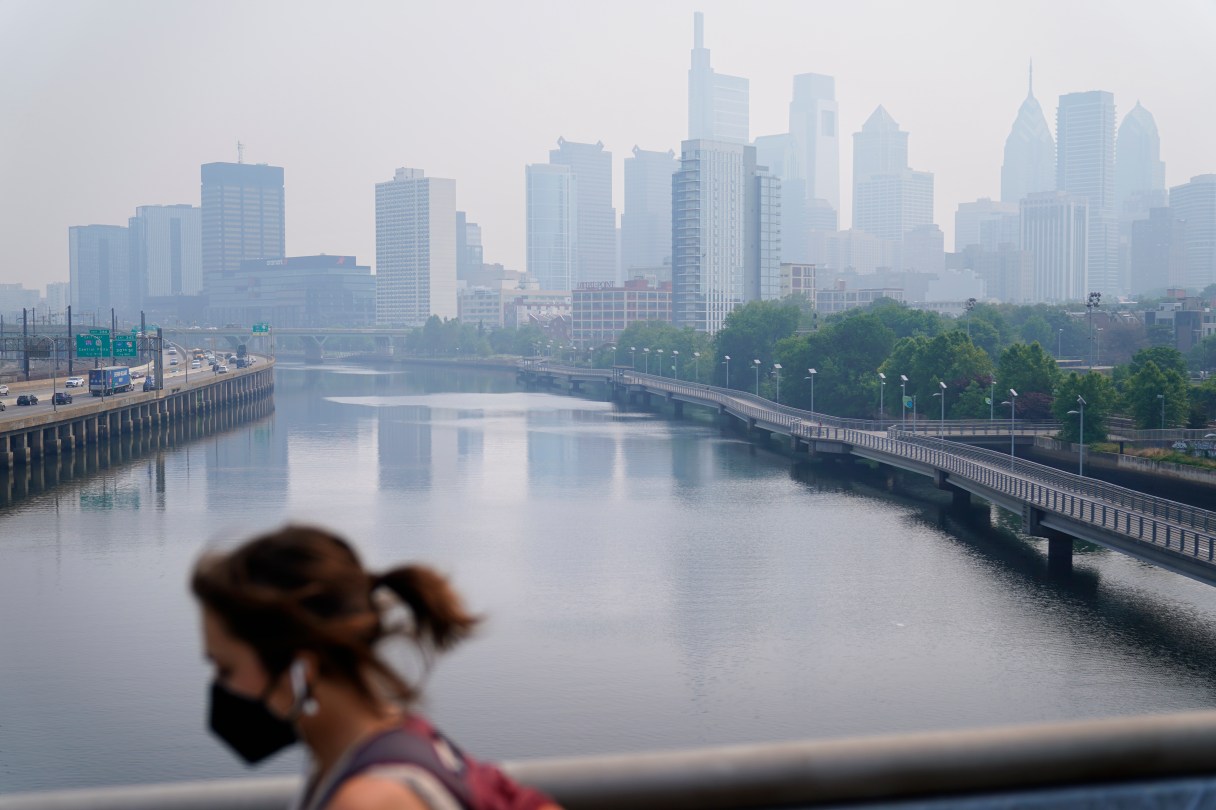
NEW YORK (AP) — Images of smoke obscuring the New York skyline and the Washington Monument this week have given the world a new picture of the perils of wildfire, far from where blazes regularly turn skies into hazardous haze.
A third day of unhealthy air from Canadian wildfires may have been an unnerving novelty for millions of people on the U.S. East Coast, but it was a reminder of conditions routinely troubling the country’s West — and a wake-up call about the future, scientists say.
“This is kind of an astounding event” but likely to become more common amid global warming, said Justin Mankin, a Dartmouth College geography professor and climate scientist. “This is something that we, as the eastern side of the country, need to take quite seriously.”
Millions of residents could see that for themselves Thursday. The conditions sent asthma sufferers to hospitals, delayed flights, postponed ballgames and even pushed back a White House Pride Month celebration. The fires sent plumes of fine particulate matter as far away as North Carolina and northern Europe and parked clumps of air rated unhealthy or worse over the heavily populated Eastern Seaboard.
At points this week, air quality in places including New York, the nation’s most populous city, nearly hit the top of the U.S. Environmental Protection Agency’s air-pollution scale. Local officials urged people to stay indoors as much as possible and wear face masks when they venture out.