
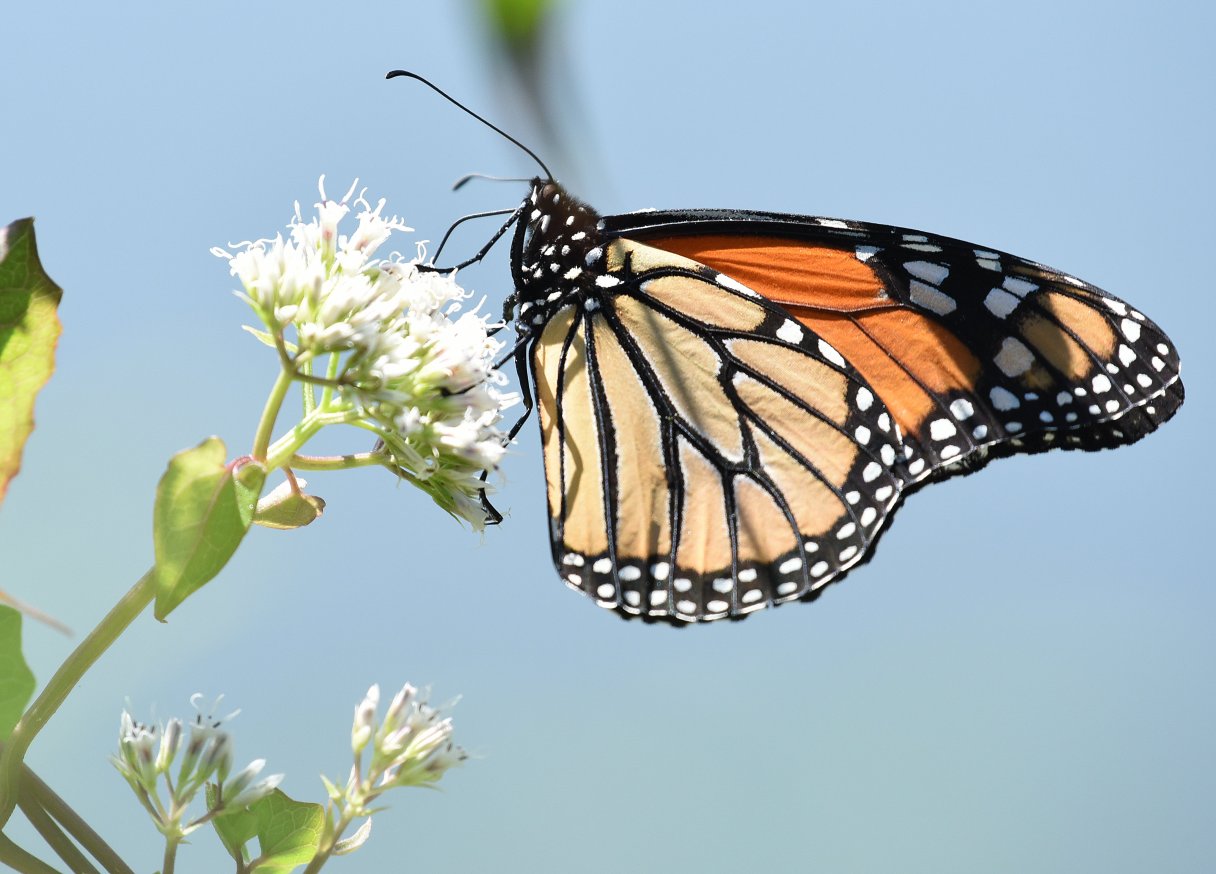
When people think of pollinators, they often think of the monarch butterfly with its instantly recognizable orange, black and white wings.
“Pollination and butterflies and the conservation surrounding it,” said Jenna Paler, the Tennessee Aquarium’s plaza maintenance supervisor, in an interview. “Oftentimes monarchs are kind of like the logo of that. Everybody readily knows what they are.”
Pollination in general is vital to the nation’s food economy. According to the U.S. Department of Agriculture, more than 100 crops grown in the U.S. rely on pollinators like the monarch. In total, pollinators add more than $18 billion in revenue to crop production every year.
But the vital part of the food ecosystem is under threat as pollinator populations have seen significant declines in recent decades due to, among other things, pests, pesticides and climate change, according to the U.S. Department of Agriculture.