
PHOENIX — Zion Rose is well aware that Major League Baseball’s percentage of Black players from the United States has been on the decline for decades.
But the 18-year-old catcher from Chicago, still sweaty from a workout during MLB’s draft combine this past week at the Arizona Diamondbacks’ Chase Field, said he’s got some news: That’s not going to be the case for long.
“You’ll see,” he said. “We’re starting to come through.”
Rose was one of more than 300 players of all backgrounds in Phoenix to take part in the combine, which featured workouts, interviews and games in an effort to showcase some of the sport’s best amateur talent at the high school and college levels before this year’s draft, which will be held July 9-11 in Seattle in conjunction with MLB All-Star Game activities.
MLB said approximately 15% of the players at the combine were Black. The hope is that the next Mookie Betts, Aaron Judge or Andrew McCutchen — maybe even several players of that caliber — will be in that bunch.
A recent study from the Institute for Diversity and Ethics in Sport at the University of Central Florida found Black U.S. players represented just 6.2% of all players on MLB opening day rosters in 2023, down from 7.2% last year. Both figures are the lowest recorded in the study since it began in 1991, when 18% of players were Black. Last year’s World Series between the Houston Astros and Philadelphia Phillies was the first since 1950 without a U.S.-born Black player.
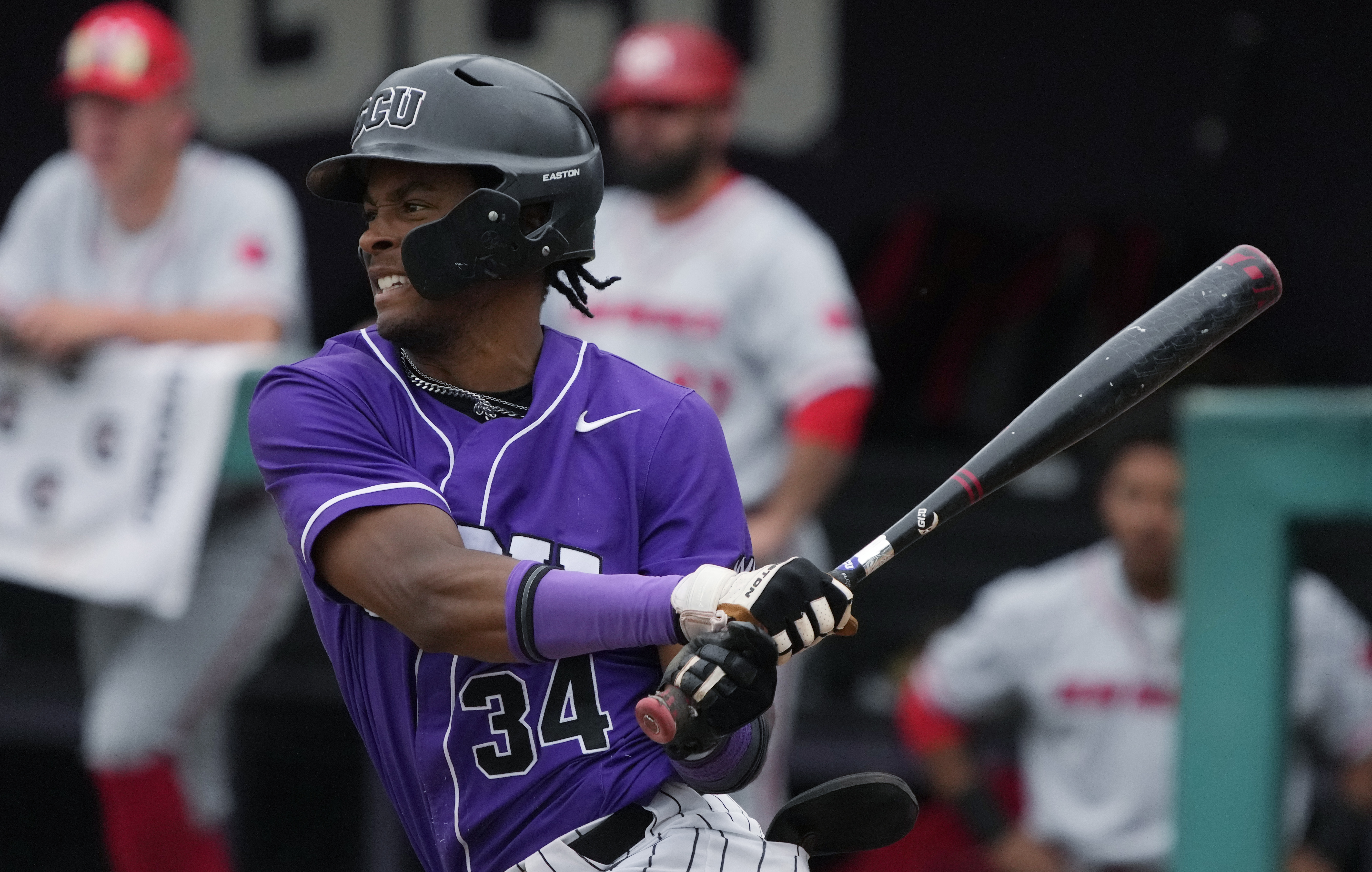 AP photo by Rick Scuteri / Grand Canyon junior Homer Bush Jr. bats during a game against New Mexico on March 14 in Phoenix. Bush, whose father played in the major leagues, said baseball is doing a better job of being savvy with social media, which could help MLB connect with younger Black players from the US.
HOPE ON HORIZON
There are tangible reasons to believe the percentage of such players might be on the upswing soon.
Four of the first five players picked in last summer’s amateur draft were Black, a first for MLB. Those four were among the hundreds who had participated in diversity initiatives such as the MLB Youth Academy, DREAM Series and the Reviving Baseball in Inner Cities program. MLB has also pledged $150 million in a 10-year partnership with the Players Alliance. The nonprofit organization of current and former players works to increase Black involvement at all levels.
Many of those programs started several years ago, and the younger participants are starting to hit draft-eligible age.
Rose is among them. He said the diversity initiatives didn’t just provide exposure to scouts, it also opened a vital pipeline for minority players to connect, share experiences and see faces similar to their own. The catcher said that Black former MLB players and coaches were also in attendance at many of the tournaments, providing role models. He cited Cincinnati Reds pitcher Hunter Greene as a big influence.
“I met most of my best friends at those camps,” Rose said. “Just being able to see people your color playing the game, being able to relate to them, that’s been important.”
Homer Bush Jr. — whose dad played in the big leagues for seven seasons for the Miami Marlins, New York Yankees and Toronto Blue Jays — said baseball is also doing a better job of being savvy with social media. The outfielder just finished his junior season in college at Grand Canyon.
Bush said it’s important that baseball portrays itself as a fun sport. MLB’s trend of elaborate celebrations for home runs and big hits — like the Pittsburgh Pirates’ swashbuckling routine — is a good start. He also said he believes having more Black players in the majors should create a snowball effect that brings more young minority players into the game.
“I could talk about it for hours,” Bush said. “But I feel like one of the biggest things is just representation. I had a dad who played in the big leagues, so I had someone to look up to and admire. But most guys, when you click on MLB Network or ESPN, there’s not a ton of Black baseball players.”
EXPENSIVE GAME
Of course, there are other variables to getting more minority players to the big leagues — mainly money and time.
Simply put, developing a pro ballplayer is usually expensive. There’s the equipment, the costs of joining a travel team and the pricey individual instruction that is sometimes needed — expenses than can easily total thousands of dollars per year. There’s also the time commitment, with weekends filled with two and sometimes three games each day.
“We took a lot of videos of other players for their parents who couldn’t make it,” said Shaun Rose, Zion’s dad.
Karin Rose, Zion’s mom, said she was fortunate she has a job as a school nurse, which allowed her to travel with her son during much of the summer baseball season while Shaun worked at his barber shop. Money wasn’t a huge problem, because both parents had good jobs and some other family members chipped in.
Rose took the additional step of transferring from Brother Rice High School in Chicago to IMG Academy in Bradenton, Florida, for his senior season so he could take advantage of the facilities and year-round baseball weather in the Sunshine State. He’s ranked by MLB.com as the 144th-best prospect in this year’s draft pool, projecting for roughly the fifth round, when the recommended signing bonus is around $400,000.
“We understood the sacrifice, but it was Zion’s will to be a great player that put us in this position,” Karin said. “We’ve been really blessed with travel ball, lots of support from friends and family.”
Several Black former MLB players were in Phoenix to help with the combine, including Chris Young, who played in the big leagues for 13 seasons and was a National League All-Star with the Diamondbacks in 2010. He said the sport’s diversity inititaves are a good way to lighten the financial load, but it will never go away completely.
“I don’t think baseball is going to get any less expensive anytime soon,” the 39-year-old Young said. “It’s an expensive game. It was an expensive game even back when I was a kid.”
He also hopes that more Black athletes will choose baseball over football or basketball, sports that have claimed top baseball prospects in the past such as Arizona Cardinals quarterback Kyler Murray. Ater playing both baseball and football at Oklahoma, Murray was drafted ninth overall by the Oakland Athletics but went first in the NFL draft to the Cardinals.
Another of this year’s top prospects — Duce Robinson — is trying to decide between pro baseball or playing tight end at the University of Southern California.
“We have to make it worth their while,” Young said. “If you’re getting guys like that — I don’t want to overspeak — but you’re getting athletes like Mike Trout. Then it’s just up to each team’s player development.”