
It’s easy to believe nothing has changed. It’s easy to believe that nothing even can change given the grip of gun culture on the U.S. Supreme Court and the Republican Party. Republican politicians coast to coast have put themselves wholly at the service of the gun industry and the gun fanatics who enrich it. And the Supreme Court’s conservative majority has codified gun obsession with ever more tendentious opinions that shatter not only precedent and reason, but a good many human bodies, too.
Yet as we sort through the recent gun massacre in Texas, and await the next gun massacre elsewhere, while taking in stride the gun murders, suicides and shootings too routine to merit public attention, it’s worth noting that the political landscape is far from static. The politics of gun violence are different today than they were a few years ago, both for better and for worse. It’s hard to imagine, for example, any Democratic senator voting, as four did just one decade ago, against a proposal for expanded background checks. It’s even harder to imagine such a vote in the wake of a massacre of children.
In essence, while gun fixation has taken over one party (and that’s bad), it has been run out of the other party (and that’s good). Polarization on guns has followed a track similar to polarization on other issues. But it also received a stiff shove from the National Rifle Association. Mark Pryor, then a Democratic senator from Arkansas, joined with Republicans in 2013 in opposing background checks on people who buy firearms online or at gun shows. The NRA rewarded Pryor’s cravenness with a seven-figure advertising buy supporting Pryor’s Republican opponent, who won. The NRA, once bipartisan, is now exclusively a GOP interest group, as are other militant gun organizations. Gun zealots have increased their power with Republicans. But they have lost allies elsewhere.
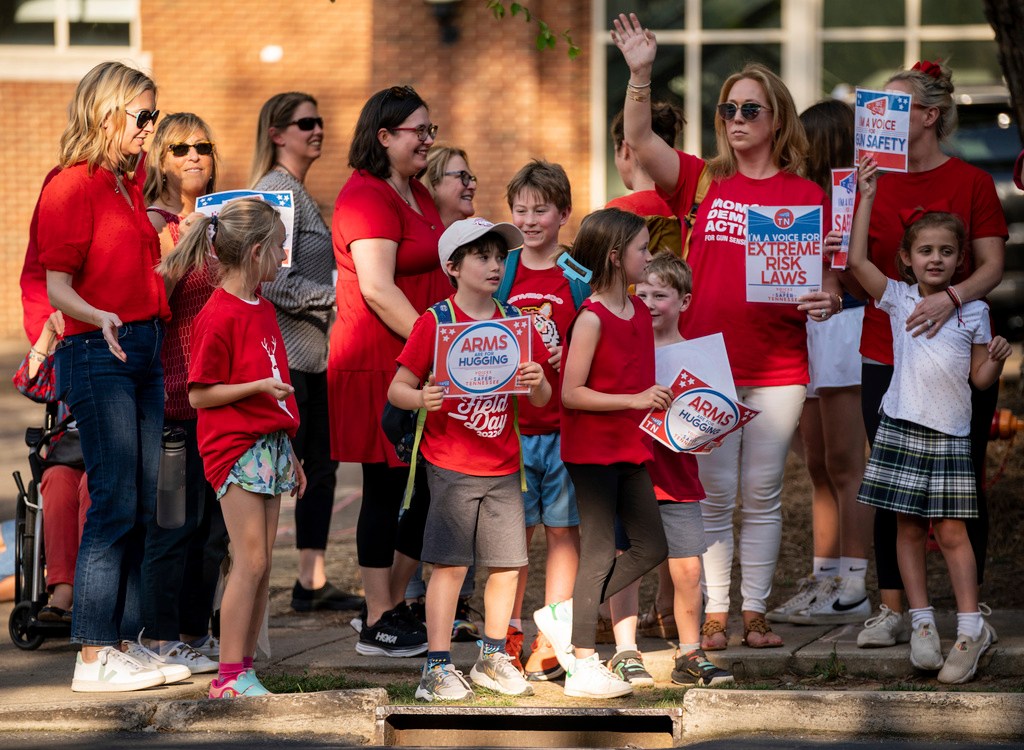
Meanwhile, the “gunsense” lobby is larger, better funded and more potent than at any time in history. It eagerly courts bipartisan allies, seeking to move Republicans incrementally when they can be moved at all. The most successful organizations lobbying for gun safety laws didn’t exist in the 20th century. (One of these organizations, Everytown for Gun Safety, is backed by Michael Bloomberg, founder and majority owner of Bloomberg LP.)
States including California, Connecticut, Hawaii and Washington have strengthened their gun restrictions, from red-flag laws to ammunition background checks to a ban on semi-automatic rifles. And the steady accumulation of academic research on gun violence has obliterated the gun lobby’s claims of social benefits flowing from widespread gun possession. A similar vein of research on the history of gun regulation would likely shame the Supreme Court if the court were capable of such reactions.