
In a world beset by wars in Gaza and Ukraine, it’s good news when two superpowers step back from frictions that increased the danger of another war in Asia.
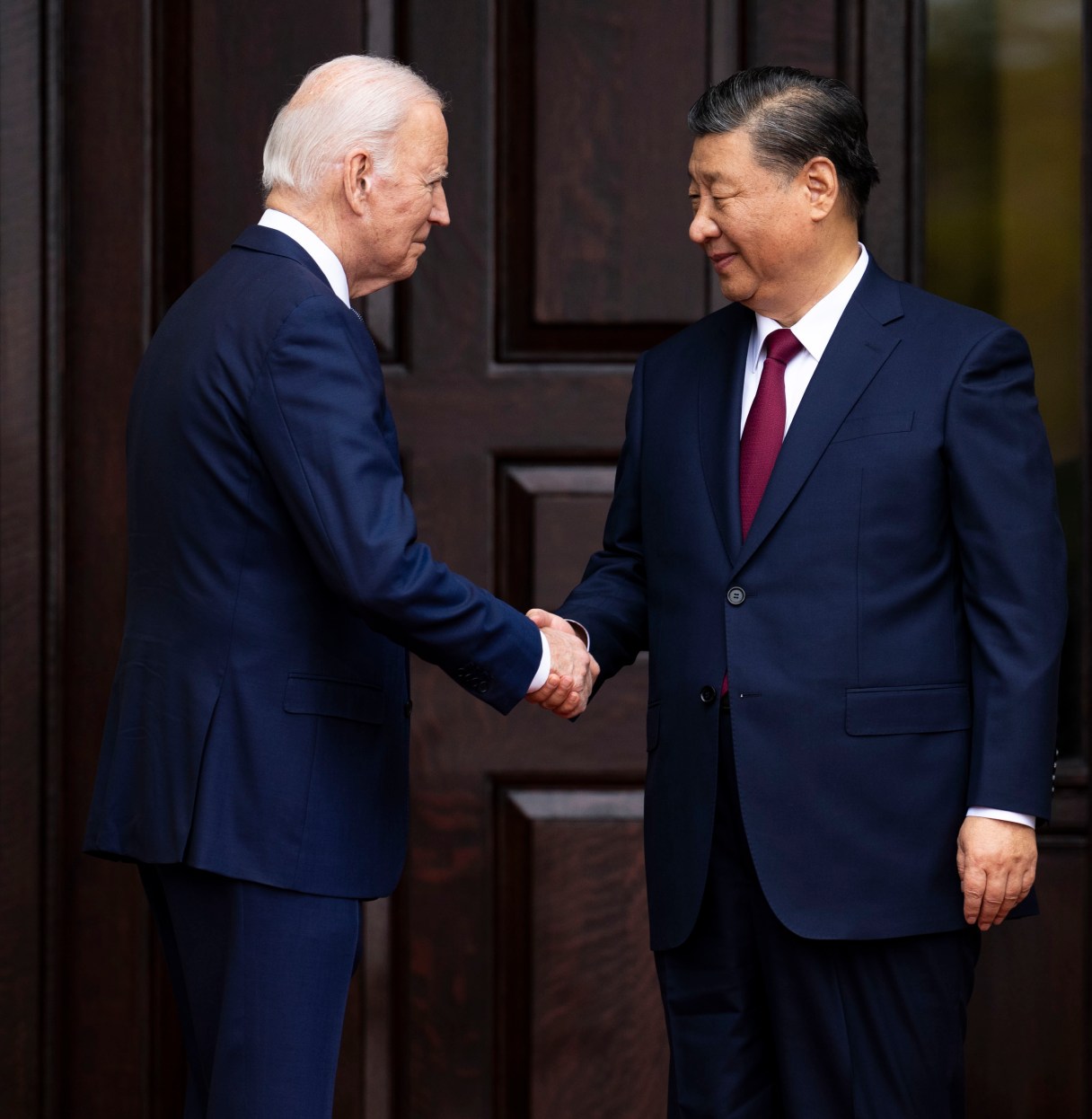
That’s what happened last week when President Joe Biden met with China’s Xi Jinping at a country estate in the ridges west of Silicon Valley.
The two presidents met after a year of frosty noncommunication, touched off by China’s suspected espionage balloon that wandered across U.S. airspace last winter, by aggressive Chinese military actions in the Taiwan Strait and the South China Sea, and by U.S. restrictions on advanced technology.
The presidents agreed to bury a few of their differences for the simple reason that neither needs another crisis right now.
Beijing’s stock has been falling literally and figuratively. Its economy, once the world’s powerhouse, has slowed to a low-for-China growth rate of 5%. Foreign investors are pulling money out of the country, a reversal of a decades-long trend.
On the diplomatic front, Xi appears to have recognized that he needs to soften China’s image as a bully, which has driven other countries into the arms of the United States.
Biden also hoped to ratchet down tensions. In the coming presidential election year, he doesn’t want to contend with a third foreign policy crisis on top of Gaza and Ukraine. He probably won’t get much credit from voters for lowering friction with China, but he might win points if Xi delivers on his promise to choke off the supply of chemicals used in fentanyl production.
Xi acceded to U.S. requests on other issues, too. He agreed to reopen talks among the two countries’ military leaders, including a “red line” for communication in emergencies like near-collisions in the waters and airspace around Taiwan.
The Chinese leader was clearly on a charm offensive. He told American business leaders that China wants to be “a partner and a friend,” not an adversary.
Those were easy concessions; they don’t cost much in economic or political terms.
Still, China watchers were skeptical about how much Beijing will actually deliver.
“It’s a little early to pop the cork on the Champagne,” said Bonnie Glaser, a China scholar at the German Marshall Fund. “I’m not convinced that they are actually going to take serious action to prevent military accidents. I’m not sure they’re going to answer the phone in an emergency.”
Whether China keeps its specific promises should be easy to measure. If there’s a reduction in the supply of ingredients for fentanyl, we’ll know it. If Chinese officers show up for joint military conferences, we’ll see that — although it’s unclear how much cooperation will result.
And if a FedEx cargo plane arrives with pandas aboard, we’ll know that, too.
The more important test is whether those small steps lead to larger openings such as cooperation on nuclear arms control or peace efforts in Gaza and Ukraine.
“The Biden administration is testing the proposition that we can have intense competition and cooperate with China at the same time,” Glaser said.
But it’s equally noteworthy that there was no discernible movement on the big, fundamental issues that divide the two countries — beginning with their military standoffs over Taiwan and the South China Sea.
That’s where collisions — both figurative and literal — are not only possible but likely, and where basic differences are impossible to paper over.
In superpower relationships like this one, breakthroughs don’t often happen.
The test is whether collisions can be averted, and whether those that occur can be managed more successfully than the months-long spat over the spy balloon.
Breakthroughs would be nice. But when they aren’t available, stability will do fine.