
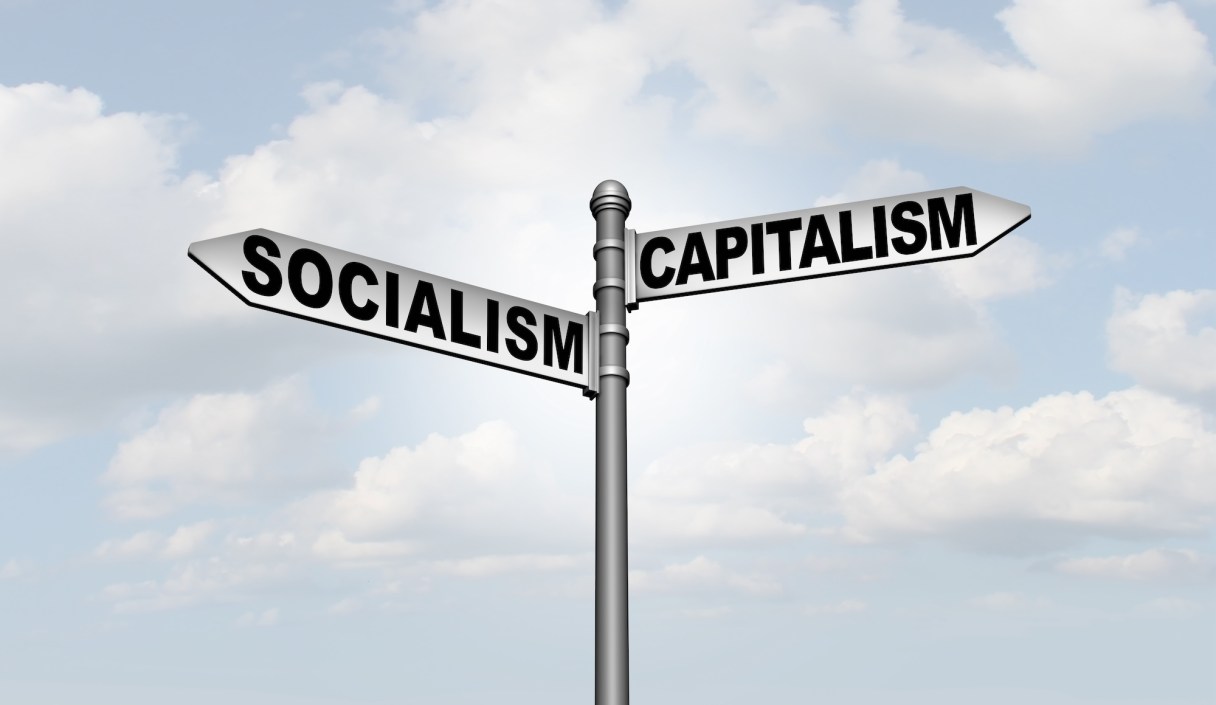
Before we explore this divisive issue, I want to be clear that I believe capitalism has done more to lift people out of poverty than any other social and economic system in history. But don’t kid yourself that we live in a country that embraces “free market” capitalism. As we embark on this exploration, please know that I’m not suggesting we embrace policies that create disincentives to work, and work hard. Nor am I suggesting that we embrace policies that guarantee equal outcomes for all Americans. Rather, we need to evolve capitalism and break out of the political narratives that constrain that objective.
I write a lot about dogma and political narratives and how they are shaping our culture. One of the primary political narratives that impede progress is the notion that the GOP’s “conservative” policies are responsible for driving economic growth. Another, and the one that I want to explore today, is the narrative that the Democratic Party’s economic policies are tantamount to “socialism.” The crux of the issue is that the political right has weaponized the word “socialism” to vilify any policy that helps the working class. To highlight the absurdity, Fox News once used “socialism” to criticize Warren Buffett when he publicly supported raising taxes on the very wealthy.
So here’s my question: Philosophically, is there really a difference between what the GOP asserts as “socialism” and, let’s say, the Paycheck Protection Program and employee retention credit monies, or trillion-dollar bailouts, or massive tax cuts for the ultra wealthy that the GOP supports and advocates for? If you’re able to see the proverbial elephant in the room, you’ll be forced to conclude that the only difference is … the recipients of the money. When the top quartile (e.g., the investor or shareholder class) gets a government subsidy, then it’s the epitome of “free market capitalism,” but when the bottom 70% get it, then it is” socialism.”
Let’s remember that most countries in the world — including the United States of America — have mixed economies, and none of them fit neatly into one economic model. The word “socialism” has basically lost all practical meaning in political discourse.
Unfortunately, both sides of the aisle have demonized and reframed words like “socialism” and “capitalism” to their own political ends. Yet, the political parties in America rarely align their ideology with either system. The fact is that the traditional definitions of socialism and/or capitalism don’t actually fit the current political narratives in the United States.