
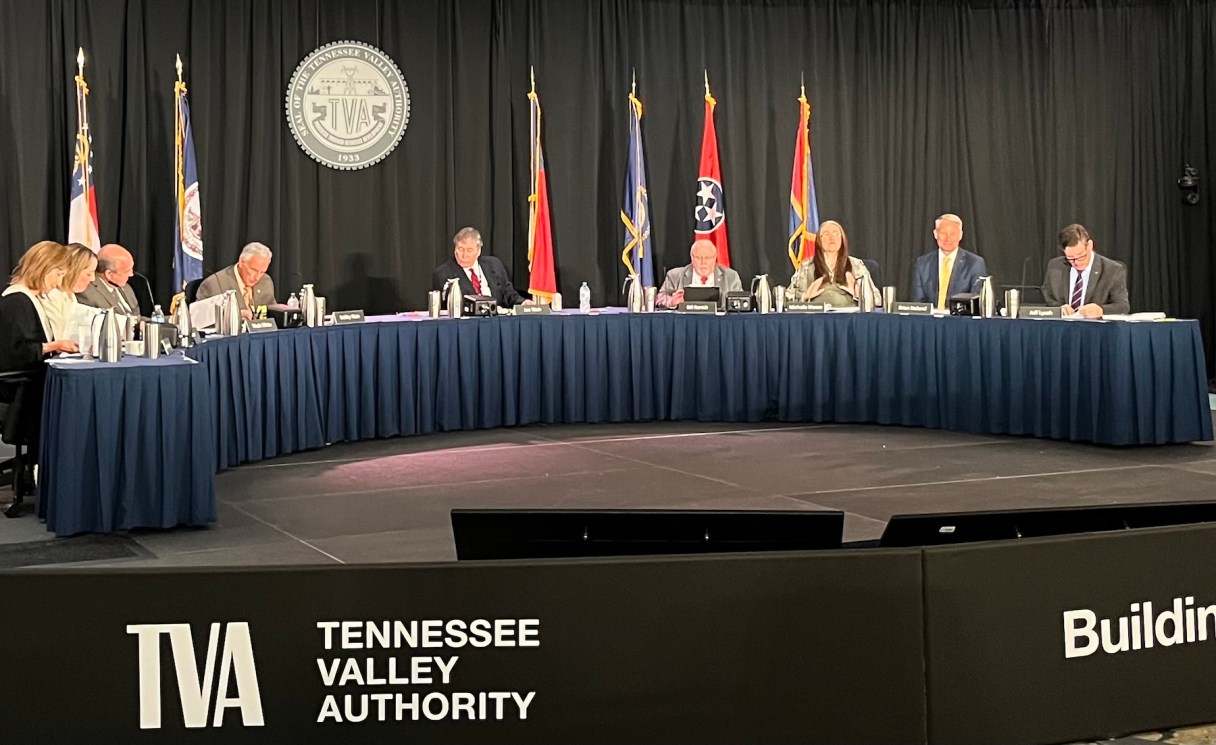
FLORENCE, Ala. — The Tennessee Valley Authority will raise its wholesale rates for electricity by the biggest amount in 16 years this fall.
TVA directors voted Thursday to raise wholesale power rates by 5.25% on Oct. 1, adding $4.35 a month to the typical power bill from EPB and the other 152 local utilities that distribute power to the 10 million people in TVA’s seven-state region.
The rate increase, which will help TVA raise more than $500 million of extra revenue in the next year, follows a similar 4.5% wholesale rate hike adopted last year. But TVA President Jeff Lyash said after this fall’s rate hike, the utility hopes to avoid any further wholesale power rate increases for at least the next three years.
“Our objective is that this is the last rate increase for several years, but I always put a caveat with that because we don’t know exactly what will happen with regulations, interest rates or supply costs,” Lyash said in an interview.
TVA officials said the increase is needed to cope with higher inflation and interest rates and to meet electricity demand as more data centers are built, more cars become electric and more people and businesses move into the Tennessee Valley. After a decade of relatively stagnant power demand, Lyash projects electricity usage in the Tennessee Valley could double by 2050. He said the rate increases adopted in each of the past two years are needed to meet the utility’s $12.5 billion spending plan approved by the TVA board Thursday for the next fiscal year.
“At TVA, we don’t like price increases any more than you do, and that’s why we continually work to reduce expenses by hundreds of millions of dollars each year,” Lyash said in a statement after the board approval of the rate hike. “We have done everything possible to absorb costs as we invest in the reliability of our existing plants, construct new generation to keep up with growth and maximize solar to produce more carbon-free energy.”
TVA Chief Financial Officer John Thomas said higher supply, labor and interest costs are pushing up TVA expenses. Thomas said TVA’s borrowing costs are still rising with higher interest rates and more debt needed to add new generation and offset the planned closing of all of its coal plants by 2035. Earlier this month, TVA sold $1 billion of bonds at a 4.375% rate, replacing five-year notes that previously carried an interest rate well under 2.8%, according to TVA.
(READ MORE: TVA projects faster growth in electricity use)
To address the need for more electricity with the population of the Tennessee Valley growing three times the U.S. growth pace, Lyash said TVA is investing nearly $16 billion over the next three years to add new generation and infrastructure. TVA is building another 3,500 megawatts of natural gas plants and buying or building more solar and battery storage to reach its goal of 10 gigawatts of solar capacity by 2035.
CHEAPER FUEL
Despite the increase, TVA rates remain below the national average. TVA said its residential power rates are below 70% of all U.S. utilities and its industrial rates are below 90% of U.S. utilities.
Thomas said fuel costs for TVA dropped by 18% in the past year, due primarily to a decline in natural gas, and those savings more than offset last year’s base rate hike.
“As we had lower natural gas costs in 2024, all of that flowed to our customers in real time in 2024,” he said.
As a result, TVA’s delivered cost of power has been down by 3% this year from 2023 levels due to lower fuel costs. Lyash said TVA power rate increases are likely to be similar or even lower this year than many of its neighboring utilities. Georgia Power, for instance, is increasing its rates by 12% over three years just to pay for construction cost overages at its new nuclear reactors at Plant Vogtle in Georgia.
“Even with our price increase, TVA is becoming marginally more competitive because, on average, those around us are raising their rates even more than we are,” Lyash said.
Over the past decade, TVA’s wholesale rates have risen just over 11%, which is about a third of the overall U.S. inflation rate of 33% from 2014 to 2024.
The average residential bill for households in the Tennessee Valley will increase from $138 a month to $142.25 per month, according to TVA. The 5.25% rate hike adopted by the board Thursday marks the biggest wholesale rate increase since TVA boosted its base rates by 9.1% in fiscal 2009.
EPB, which buys its electricity from TVA and passes along such costs to more than 180,000 customers in the Chattanooga area, also raised prices for its share of the bill last year but is not planning to do so again next year, EPB Vice President J. Ed. Marston said in a telephone interview.
(READ MORE: TVA. EPB expand energy efficiency rebates)
Lyash said TVA generates about 60% of its power from nuclear plants, hydroelectric dams and solar power and plans to boost such carbon-free generation in the future to further reduce its fuel costs. Although TVA is building eight new natural gas power plants in Tennessee, Alabama and Kentucky to replace aging coal power plants and meet peak power demands, Lyash said TVA hedges its gas purchases to avoid gas price volatility.
TVA distributes its electricity to most of the 10 million people in the Tennessee Valley through 153 municipal utilities and power cooperatives such as Chattanooga’s EPB. Most of those local power companies have signed rolling 20-year power purchase agreements with TVA, but distributors could shorten contracts and potentially look for cheaper power elsewhere if TVA raises its wholesale rates by more than 10% in any five-year period.
(READ MORE: Local power companies sign long-term TVA contracts)
During a public listening session by TVA directors Wednesday, most of the leaders of the municipal utilities and power co-ops that buy TVA power voiced support for the federal utility and none voiced direct opposition to the pending rate hike.
TRANSPARENCY
Some environmental leaders opposed to TVA’s growing investment in more natural gas generation questioned the cost and whether it is contributing to higher rates.
“If TVA builds costly gas plants, local power companies and their customers are on the hook, whether the plants are needed or not,” Sierra Club campaign manager Amy Kelly told the TVA board during Wednesday’s public listening session. “This is a raw deal and calls TVA’s current capital expenditure plans and likely reason for the rate increase into question.”
Kelly said giving local power companies more flexibility to pursue their own energy production and offering more incentives for customers to turn to solar power could provide a cheaper way to handle growing power loads.
Stephen Smith, executive director of the Southern Alliance for Clean Energy, also questioned the lack of transparency in TVA’s budget-making process.
The TVA board adopted its fiscal 2025 budget Thursday that includes the 5.25% rate increase without any outside review or public release of its spending plan. Smith said investor-owned utilities in other parts of the country must release their budget plans and rate plans for public review and justify their spending plans to independent regulators at state public service commission.
“Only in an Orwellian world of misinformation do we see our nation’s largest ‘public’ power utility pass a massive rate increase while providing the public the least amount of information compared to ‘private’ utilities,” Smith said in a statement. “It’s highly unusual for a utility the size of TVA to issue a rate increase with zero independent review. This is a broken process, and every ratepayer in the Tennessee Valley is literally paying the price.”
Contact Dave Flessner at dflessner@timesfreepress.com.
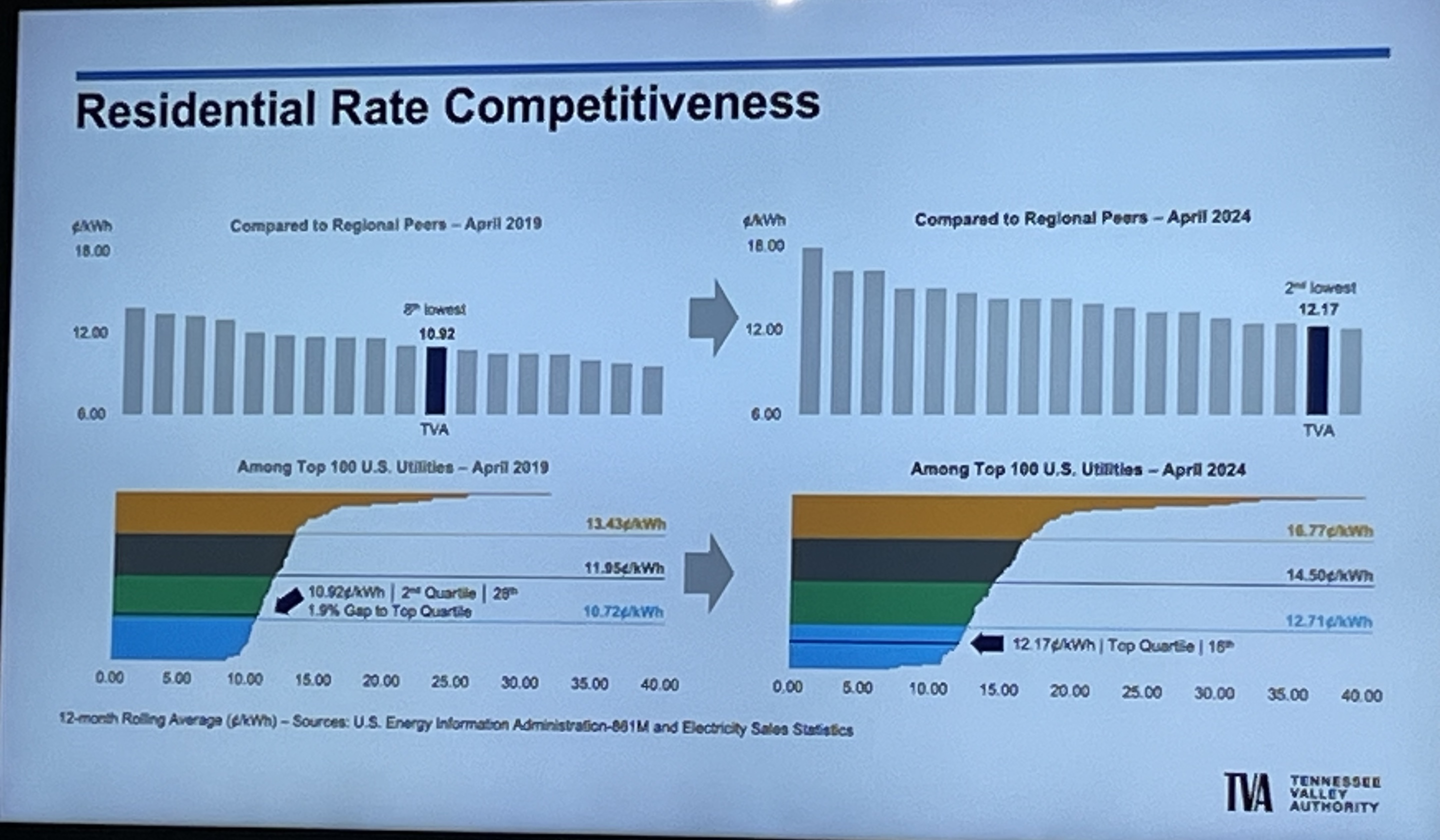 Photo by Dave Flessner / Despite wholesale rate increases by TVA in fiscal 2024 and 2025, retail electricity rates in the TVA region are still below most other utilties in the region.