
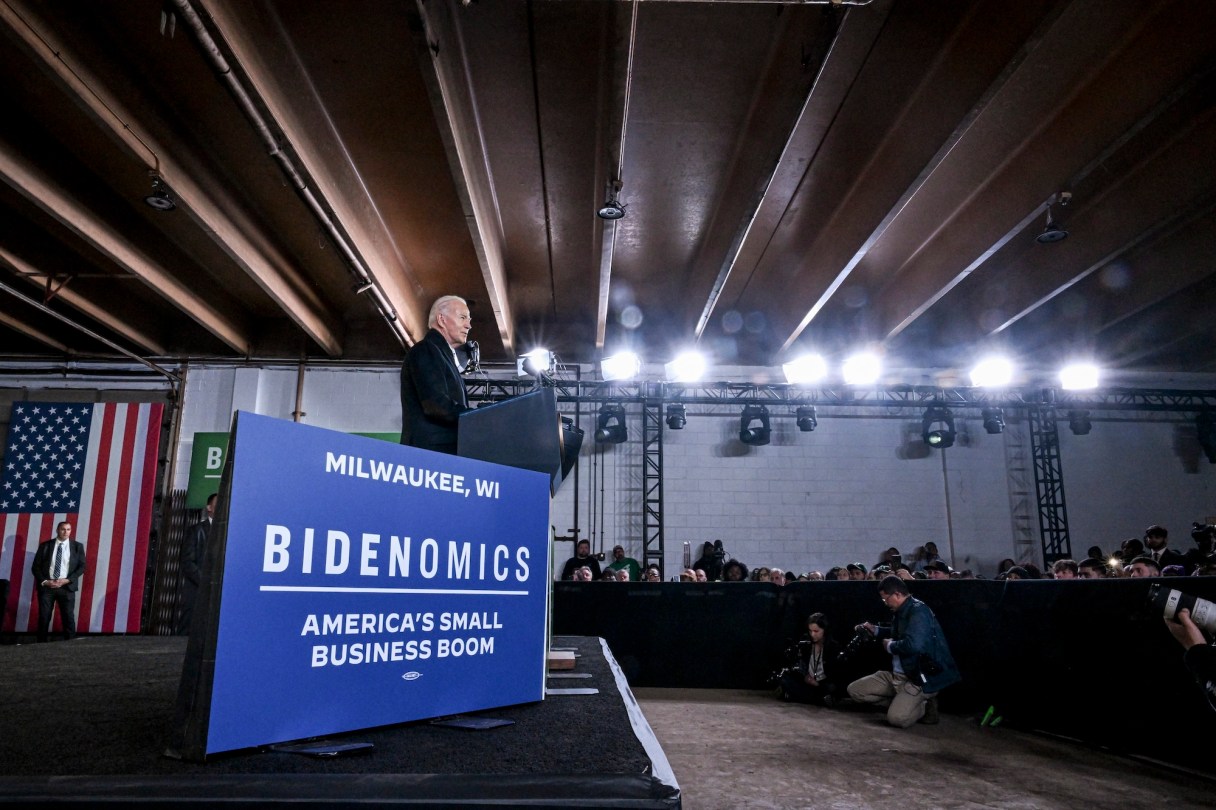
Vice President Kamala Harris has begun to set out her economic agenda. Unsurprisingly, her program is shaping up to be Bidenomics 2.0 — which is mostly a good thing. An emphasis on the energy transition and wider economic opportunity is quite right. The question is whether her administration will aim to strengthen the first version or double down on its weaknesses.
The spending plans Harris has started to outline are a more expansive version of President Joe Biden’s latest budget. Notably, they include substantially bigger increases in the Child Tax Credit (with a credit of $6,000 for newborns). Desirable as this and other new outlays might be, they aren’t free, and there’s little sign yet of how they’ll be paid for.
Without Harris’s enhancements, the administration’s budget envisaged deficits of close to 5% of gross domestic product over the coming decade, with net public debt remaining well over 100% of GDP. This assumes higher taxes on corporations, robust economic growth and no new downturns. It also assumes that most of Donald Trump’s 2017 tax cuts are allowed to expire at the end of next year. Yet Harris affirms Biden’s promise that taxes won’t go up for the vast majority of Americans (those making less than $400,000). How will the additional costs be covered? No answer.
Harris says she’s committed to fiscal responsibility and plans to make the richest Americans and the biggest corporations pay their “fair share.” In truth, without higher taxes on many middle-class households, the government’s debts will continue to mount unsustainably. She can reject broadly based tax increases or be a fiscally responsible president — but, with these new spending ambitions, she can’t honestly promise both.
Along with fiscal excess, the other main defect in Bidenomics has been failing to see how market forces can enhance or cripple well-intentioned interventions. Harris rightly promises to increase the supply of housing, recognizing that the gap between supply and demand is why home prices have surged. Yet she also promises first-time buyers a subsidy of $25,000 — again, a more generous version of a proposal in Biden’s budget. Aside from the budgetary cost, the problem is obvious: With demand outpacing supply, this new credit will mostly push prices higher and be collected by sellers.