
This article was originally published by Healthbeat. Sign up for their public health newsletters at healthbeat.org/newsletters.
Heading into the fifth U.S. winter of COVID-19, an Emory University lab has found the presence – or absence – of a particular antibody in the nose of patients can predict how severe their illness would be.
The presence of the antibody, called anti-interferon alpha, indicated the infection would likely be limited to mild symptoms like coughing or sore throats, according to a study published last month in Science Translational Medicine. Those without the antibodies in their nostrils often experienced shortness of breath, indicative of a more severe case of COVID-19.
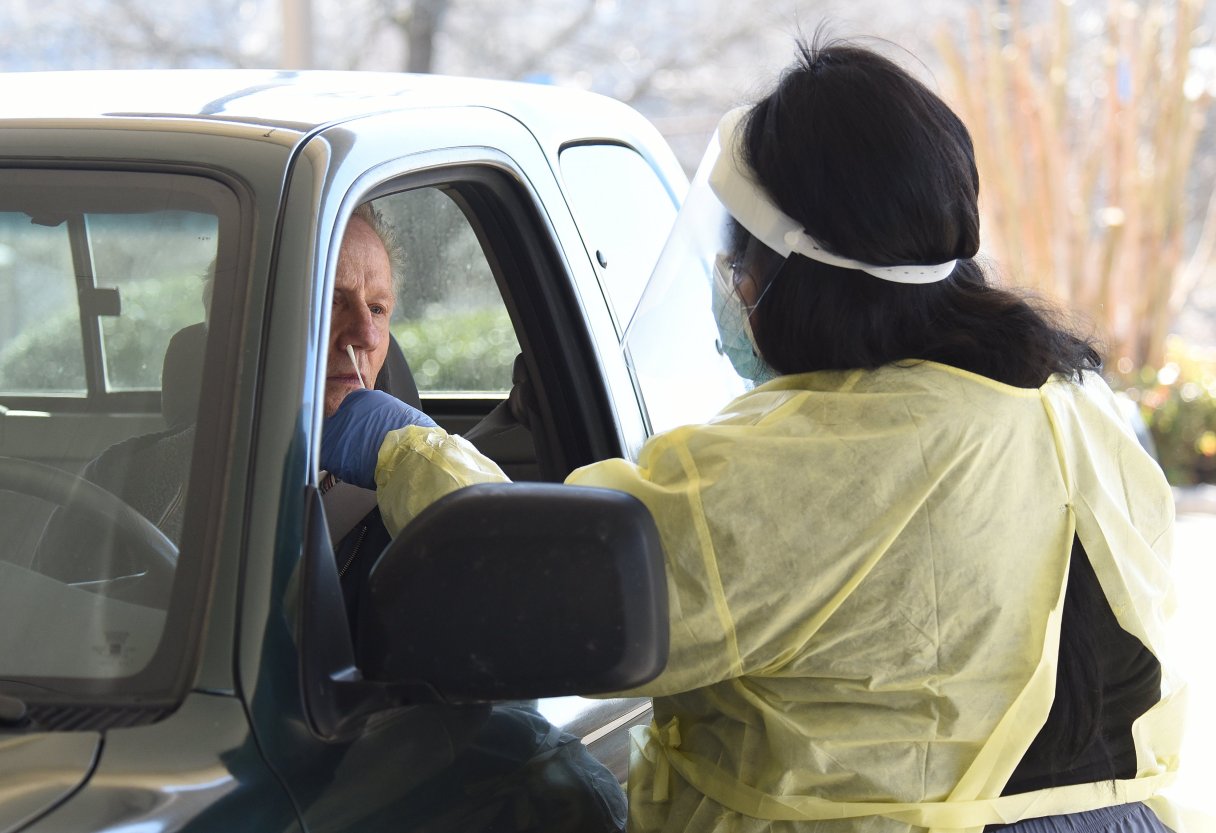
Emory and University of California San Francisco researchers developed diagnostic technology to test for the antibodies in nasal swabs for the disease, like those found in over-the-counter tests. Eliver Ghosn, an Emory Vaccine Center researcher and the study’s senior author, said if clinicians could use a commercialized version of this technology with the standard tubular tests, they may be able to determine which patients need more care.
“You have a lot of biological waste,” he said. “Because those tubes that we collect (and) the nasal swab, they go as biological waste. Our proposal is, why not collect that waste?”