
On any given day, three or four people will come to Phil Trammell looking for nonprofit advice.
Trammell, the executive director of Chattanooga’s Nonprofit Resource Center, regularly helps people in Chattanooga and beyond start new organizations, form boards and handle tax questions.
In the past few years, a decline in philanthropic giving from individual donors has added to the long list of things local nonprofits have to worry about, Trammell said.
“It’s harder than ever to raise money,” Trammell said by phone. “It’s even harder for medium and small nonprofits.”
Nationally, nonprofits have seen a “near-universal decline” in dollars raised and the number of donors since the pandemic, according to a report from the Fundraising Effectiveness Project.
The Chattanooga area, home to around 3,500 nonprofit organizations, has seen a similar trend, Trammell said.
In general, the number of people making donations has declined while the sizes of some gifts are increasing, meaning a smaller group of donors is making up a larger share of money raised, nonprofit leaders said.
(READ MORE: Ochs Community Fund)
‘ESSENTIALS OF LIFE’
The pandemic divided nonprofits into two subsectors: ones that provide the “essentials of life” and ones that cater more to “quality of life,” Trammell said.
Organizations providing essentials — like food and shelter — saw an outpouring of support in 2020 and 2021, he said.
“The community responded, the federal government responded, state and local government responded and made funds available,” he said.
That meant those groups may have done less fundraising work during that time, Trammell said. So when the government assistance and public attention went away, fundraisers were left without a sustainable source of money.
Nonprofits aimed at improving quality of life, like those promoting art and music, have still not bounced back from the hit they took in the pandemic, Trammell said.
Ochs Community Fund
To donate to the Ochs Community Fund, formerly called Neediest Cases, please visit timesfreepress.com/ochs-fund.
RADICAL GENEROSITY
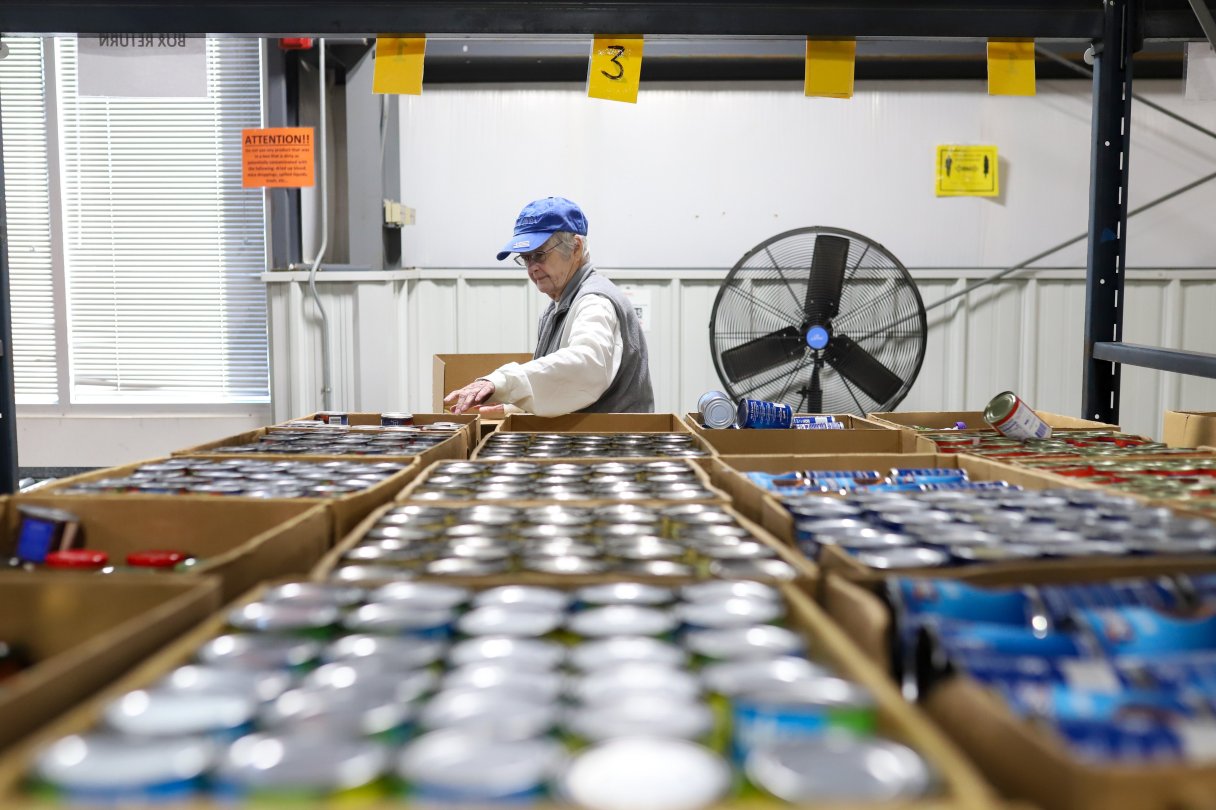
The Chattanooga Food Bank definitely got a pandemic bump in 2020 and 2021, spokesperson Jeannine Carpenter said.
“People valued their food banks so much more than they had in recent years during the pandemic and recovery,” Carpenter said by phone. “We really hit this peak, almost radical generosity during that period. That is now declining. But of couse, the need has not declined.”
The number of people coming to the food bank’s Foxwood Food Center, its main distribution point, still goes up every month, Carpenter said.
The food bank’s costs have also increased, just like anyone’s grocery bill, she said. Some longtime donors are opting to give less money than in previous years. They’ve also gotten more support from local governments in counties around Hamilton, Carpenter said.
(READ MORE: About half of Tennessee’s children live in families facing financial hardship)
To compensate for declining donations, the food bank set a goal to apply for 25% more grants, which Carpenter said can be risky.
Grants are often given for specific programs and can’t always be relied upon to cover operational costs or employee salaries, Trammell said.
“Don’t make it your replacement, make it your plus,” he said. “Grant giving is fickle.”
Some donors to the Southeast Tennessee chapter of the American Red Cross have started getting involved in other ways, Executive Director Julia Wright said. Many of them want to know the actual impact of their donations or specify exactly where their money goes.
“Many people want to serve where they give,” Wright said in an email. “It’s not just about the financial support. It’s about getting involved and making a hands-on difference.”
Wright said she’s also seen a rise in non-traditional giving methods, including donor-advised funds and stock donations.
“These options provide more flexibility and can offer some great tax benefits,” she said.
GETTING BACK TO LIFE
The United Way has seen a decline in donations, but some of its larger donors are stepping up to fill the gap, Terran Anderson, vice president of community and corporate engagement, said.
“I think people got very, very generous around 2020 and 2021,” Anderson said. “Then I think some of us got back to life and forgot about the hard work that was happening.”
The most common amount donated through workplaces that partner with United Way is $52, Anderson said.
“What that tells me is that, more often than not, people are hearing our message and going, ‘I can give a dollar a week,'” Anderson said by phone. “I don’t care if you’re giving me a dollar a week or $10,000 a week, you are a philanthropist.”
United Way operates the Times Free Press Ochs Community Fund, which bears the name of Adolph Ochs, who launched the fund in 1914 while he was publisher of The Daily Times in Chattanooga. The fund receives donations from Times Free Press readers, and the money is administered and distributed to individuals and families in need by the United Way of Greater Chattanooga and partner agencies.
Recipients must be working or on a fixed income and be able to demonstrate ongoing stability and self-sufficiency after receiving Ochs Community Fund grants. The fund took in $37,496 last year.
Inflation and rising costs aren’t just impacting donors, Anderson said — they take a toll on nonprofits. Salaries and the cost of doing business are still going up, she said.
“If I’ve been asking the same person for $1,000 for the last 10 years, that $10,000 doesn’t go nearly as far,” Anderson said.
Contact Ellen Gerst at egerst@timesfreepress.com or 423-757-6319.