
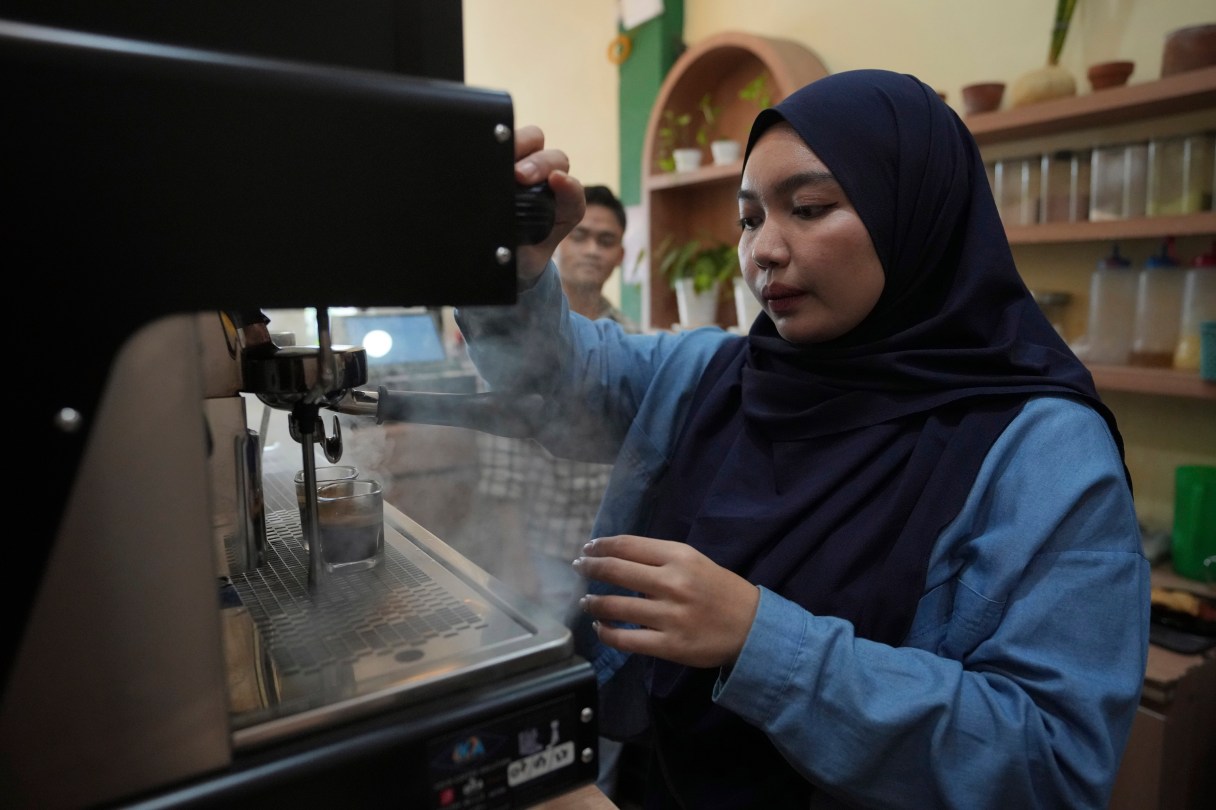
LHOKNGA, Indonesia (AP) — Qurrata Ayuni, a 28-year-old survivor of the earthquake and tsunami that devastated her hometown two decades ago, has transformed her resilience into purpose. Defying Aceh’s male-dominated coffee culture, she runs a café that serves as a welcoming space for everyone, especially women, by employing and empowering them in the region worst hit by the tragedy.
On Dec. 26, 2004, a powerful 9.1-magnitude earthquake, off the coast of the Indonesian island of Sumatra, triggered a tsunami that killed around 230,000 people across a dozen countries, reaching as far as East Africa. Some 160,000 of those were in Aceh, at the northwestern tip of Indonesia.
Ayuni survived the tsunami by chance, staying at her aunt’s house in Banda Aceh instead of her family home in Lampuuk, Aceh Besar district. However, the disaster shattered her childhood, claiming the lives of her parents and younger sister, who was only 6 when their home was hit by the giant waves.
Infrastructure in Aceh has been rebuilt and is now stronger than before the tsunami. Early warning systems have been set up in areas closer to shores, to warn residents of a potential tsunami.
About 14 kilometers (9 miles) from Ayuni’s coffee shop, in a public high school in Lhoknga, students regularly take part in disaster simulations, especially when there is a warning of an earthquake, and get ready to evacuate ahead of a possible tsunami.