
Thursday, November 12, 2026Nov 12

Surge in syphilis cases leads some providers to ration penicillin

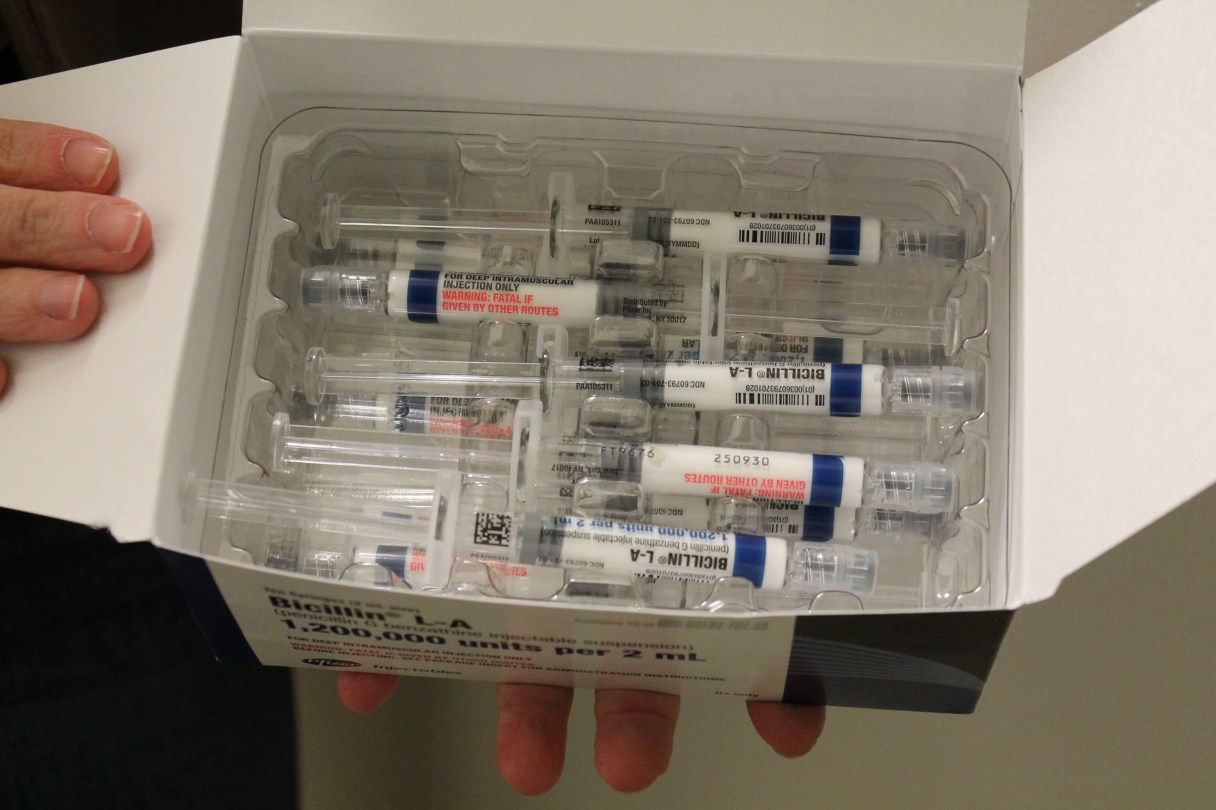
Vials of injectable penicillin in cold storage at seen at the Metro Public Health Department in Nashville. Injectable penicillin is the go-to treatment for syphilis and the only treatment considered safe for pregnant people with the disease. In mid-2023, the Health Department began rationing the injectable to just pregnant people because of a nationwide antibiotic shortage. Patients who test positive for syphilis and are not pregnant are given an oral antibiotic instead. (Catherine Sweeney/WPLN)
Vials of injectable penicillin in cold storage at seen at the Metro Public Health Department in Nashville. Injectable penicillin is the go-to treatment for syphilis and the only treatment considered safe for pregnant people with the disease. In mid-2023, the Health Department began rationing the injectable to just pregnant people because of a nationwide antibiotic shortage. Patients who test positive for syphilis and are not pregnant are given an oral antibiotic instead. (Catherine Sweeney/WPLN) Vials of injectable penicillin in cold storage at seen at the Metro Public Health Department in Nashville. Injectable penicillin is the go-to treatment for syphilis and the only treatment considered safe for pregnant people with the disease. In mid-2023, the Health Department began rationing the injectable to just pregnant people because of a nationwide antibiotic shortage. Patients who test positive for syphilis and are not pregnant are given an oral antibiotic instead. (Catherine Sweeney/WPLN)


When Stephen Miller left his primary care practice to work in public health a little under two years ago, he was shocked by how many cases of syphilis the clinic was treating, he said.

For decades, rates of the sexually transmitted infection were low. But the Hamilton County Health Department in Chattanooga was seeing several syphilis patients a day, Miller said. A nurse who had worked at the clinic for decades told Miller the wave of patients was a radical change from the norm.

What Miller observed in Chattanooga is reflective of a trend that is raising alarm bells for health departments across the nation.

Nationwide, syphilis rates are at a 70-year high. The Centers for Disease Control and Prevention said Jan. 30 that 207,255 cases were reported in 2022, continuing a steep increase over five years. Between 2018 and 2022, syphilis rates rose about 80%. The epidemic of sexually transmitted infections — especially syphilis — is “out of control,” said the National Coalition of STD Directors.