
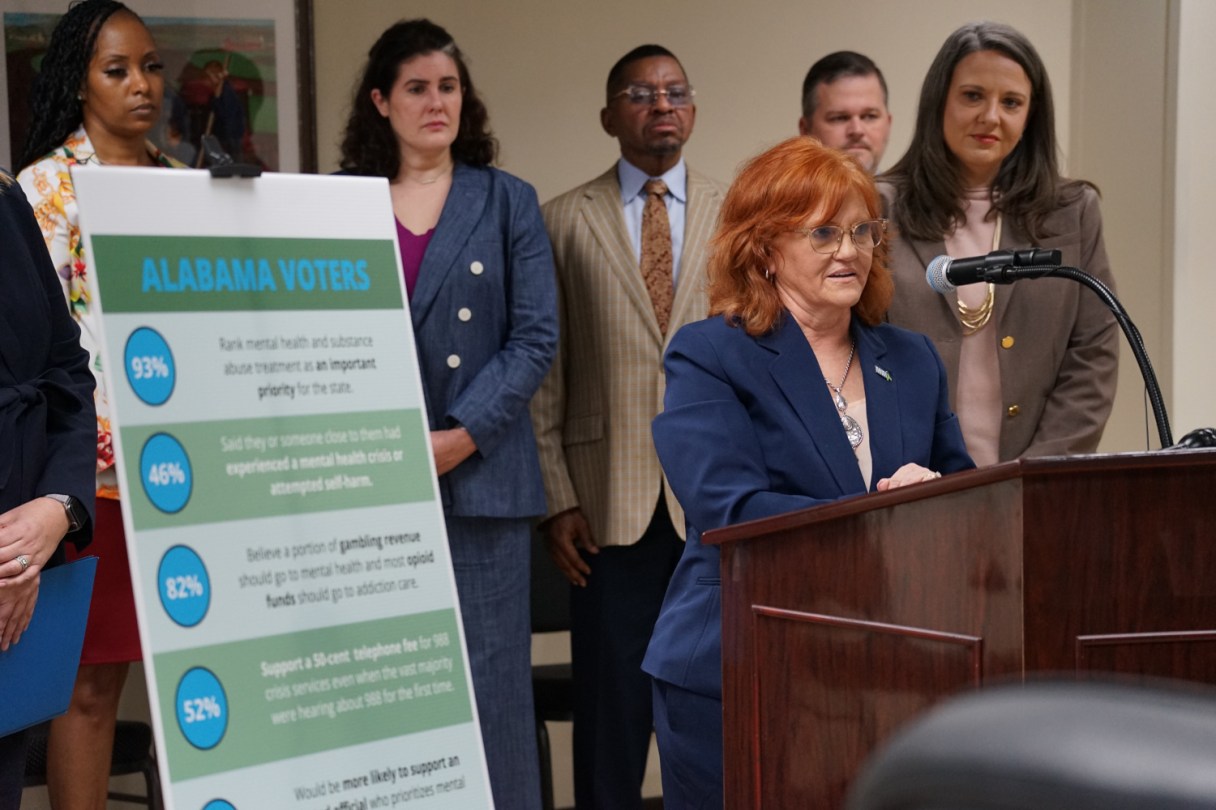
A poll found that a majority of Alabamians believe mental health and substance abuse services are a priority for the state and favor additional funding to improve access to those services.
The poll of over 600 Alabamians, conducted by Cygnal on behalf of the Alabama Council for Behavioral Healthcare; the Behavioral Healthcare Alliance of Alabama; and NAMI Alabama revealed strong support for more access to mental health and substance abuse services. NAMI is short for National Alliance on Mental Illness.
The poll was released Wednesday.
“Alabamians want to see more resources devoted to mental health, with overwhelming majorities supporting the use of gambling proceeds and opioid settlement funds to increase access to care,” said Holly McCorkle, executive director for the Alabama Council for Behavioral Healthcare, at a news conference Wednesday.
988
If you or someone you know is in a crisis, call, text or chat the Suicide and Crisis Lifeline at 988. For a list of crisis centers in Alabama, visit the Alabama Department of Mental Health’s website. For help with grief and loss, the American Foundation for Suicide Prevention offers advice and resources.
According to the survey, 80% of Alabamians don’t know of the 988 crisis line, over three years after it was first established in 2020 through the National Suicide Hotline Designation Act. It was implemented nationwide in 2022.
(READ MORE: North Alabama county opens mental health court)
But 90% of Alabamians identified mental health care as a key priority in the state, and over 50% said they believed mental health issues are worse than they were a few years ago. While the survey did not provide reasons for that, about 48% of those surveyed said mental health and substance use treatment in the state is inaccessible.
Almost half of Alabamians (46%) report personal experiences with mental health crises or self-harm attempts, according to the survey.
Fifty-two percent expressed support for a 50-cent phone user fee to support 988 crisis services. That was without knowing the services it would fund.
McCorkle said a 50-cent fee on cellphone lines would bring in about $30 million, which would fund 988 call centers and mobile crisis response across the state. Another $30 million would be needed to fund beds for long-term care.
“Whether it’s the general fund, we’re not trying to be picky about where the revenue comes from. We’re just saying that there needs to be sustainable revenue sources to fund these services,” McCorkle said.
Alabama legislators and advocates’ attempt to establish a 98-cent fee on phones for 988 services failed to pass in 2023. Advocates believe educating Alabamians about the 988 crisis line and the potential impact of a phone fee could garner more support for expanding mental health services across the state.
Even though the state has expanded mental health services over the past few years, mental health care is viewed as being the most underserved area of health care by a margin of 4-1.
“Cost of treatment, lack of nearby treatment, resources, wait times, lack of health insurance — all of these were noted as barriers to getting the help they needed when they were in crisis. So that’s the bad news,” said Kelly Emerson, executive director of NAMI Alabama.
The Senate general fund budget committee chair, Sen. Greg Albritton, R-Atmore, was excited to learn mental health advocates are focusing on providing more long-term mental health care, but he doesn’t know where the $30 million funding for 200 beds would come from.
“First off, I don’t believe that. That is way low if you’re going to put 200 beds up in a facility that’s going to be long-term care, with staffing and all the other accouterments to go with that,” Albritton said in a phone interview Wednesday.
Since the 50-cent charge would only fund 988 call centers and mobile crisis response, the additional $30 million for long-term mental health care would come from the general fund. Albritton doesn’t see that happening without having to shift money from another program or establishing new sources of revenue.
He suggested that revenue could help fund more mental health services.
Nearly 82% of those surveyed believed a portion of proceeds from anticipated gambling legislation should fund mental health and gambling addiction treatment, and 82.5% thought most of the state’s opioid settlement funds should be directed to substance abuse treatment and prevention.
Legalized gambling in Alabama would bring around $700 million in state revenue, according to a report prepared by a governor’s task force in 2020.
“You either shift money around or you tax people,” he said. “I don’t think people or the Legislature is in the mood for taxing.”
Leigh Few, a mental health advocate who survived several suicide attempts, stressed the importance of timely access to care and expressed hope the poll results would lead to increased mental health services, saying that she is “living proof of what can happen when you get the help get the help that you need.”
“If it was not for the therapists, if it was not for that mental health center, I don’t think I’d be here today,” she said.
Cygnal’s survey of 620 likely voters in Alabama, conducted by text message and online portal from Dec. 11-12, has a margin of error of ±3.93%.
Read more at AlabamaReflector.com.
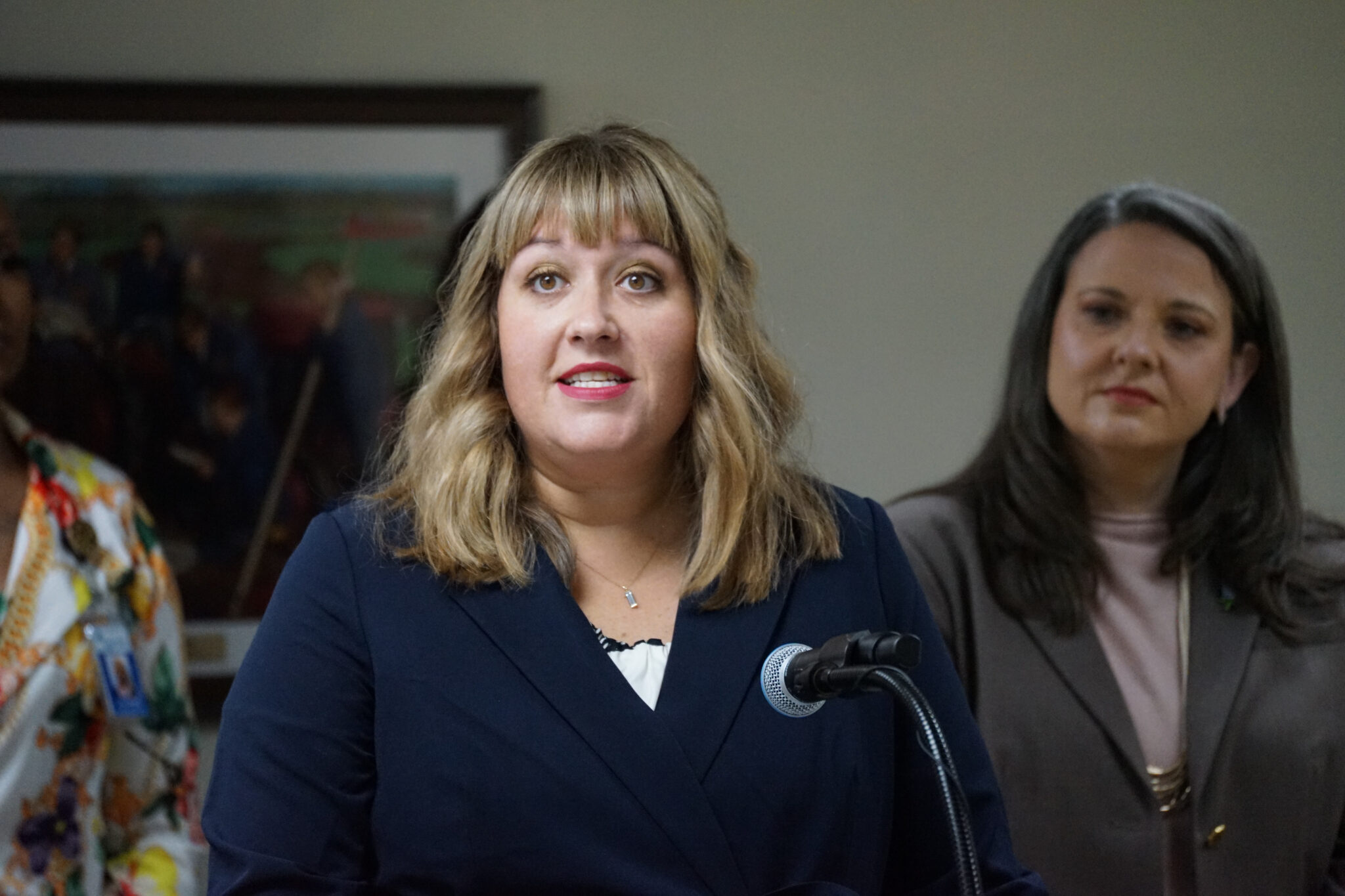 Holly McCorkle, executive director for the Alabama Council for Behavioral Healthcare, presents Wednesday in Montgomery, Ala., the survey of likely General Election voters on their views on mental health in Alabama. (Alander Rocha/Alabama Reflector)