
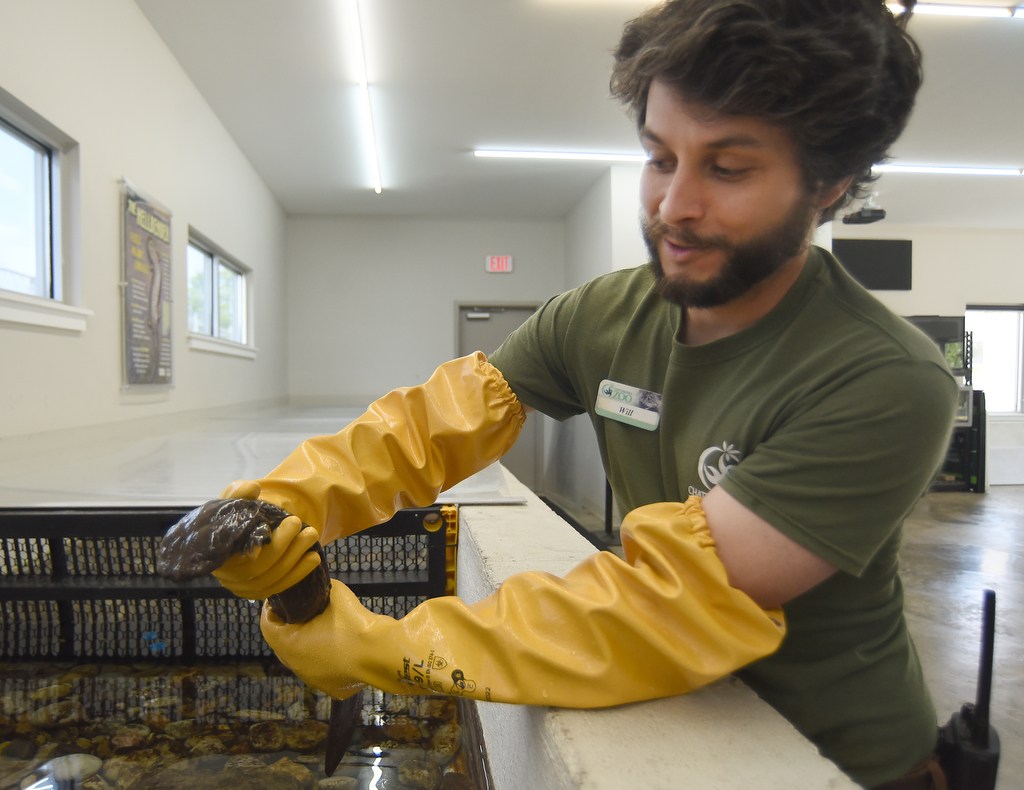
An aquatic creature the size of a human forearm lurks in the creeks of the Cherokee National Forest — a living fossil whose frame has remained largely unchanged over the past million years.
A wrinkly, brown critter that can blend into the rocky basin of a riverbed, hellbender salamanders have become something of an Appalachian icon, according to Will Ternes, herpetology keeper at the Chattanooga Zoo.
“I’m from Northeast Ohio, and up there, no one knows anything about hellbender salamanders,” Ternes said in an interview. “I moved to Virginia, and some people knew about hellbender salamanders. I moved to East Tennessee, and so many people know.”
(READ MORE: Chattanooga Zoo offers rare opportunity to experience the elusive hellbender up close)
Although habitats are returning to normal, years of copper mining around the Cherokee National Forest produced sulfuric acid that ended up in streams, threatening the hellbender population, Ternes said. Deforestation and runoff from pesticides and fertilizers have also been culprits behind the decline.