
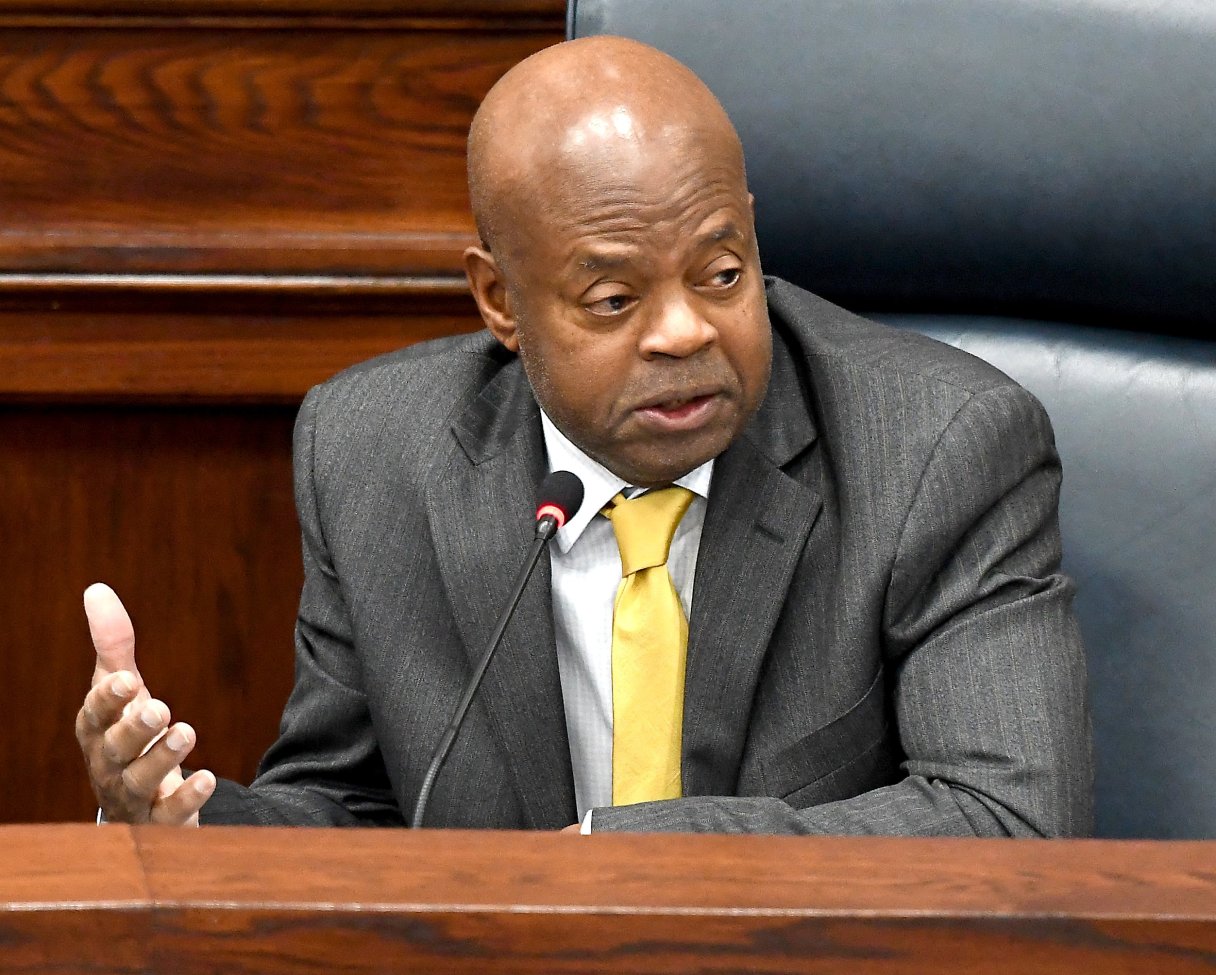
A lawyer from the Tennessee District Attorneys General Conference will not pursue criminal charges against Commissioner Warren Mackey, D-Lake Vista, after a comptroller’s investigation found Mackey received at least $27,000 in questionable reimbursements from Hamilton County.
On April 11, Hamilton County Criminal Court appointed conference attorney Michael Dunavant to step in for Hamilton County District Attorney Coty Wamp after she recused herself.
“After a thorough review of the comptroller’s investigative findings, as well as a consideration of the actions of the Hamilton County Commission on May 1, 2024, General Dunavant declined criminal prosecution in this matter and asked the comptroller’s division of investigations to close their file,” a spokesperson for the conference, Elizabeth Dixon, said in an email. “Therefore, the final charging decision has been concluded, and there will be no further statement on this matter.”
Neither the conference nor the comptroller’s office identified Mackey as the commissioner, but Mackey acknowledged the investigation during a county commission meeting May 1, where he sponsored a resolution setting minimum requirements for satellite offices. Offices used for storage and meetings with constituents now must have electricity, heat and air, an accessible restroom and parking facilities.