
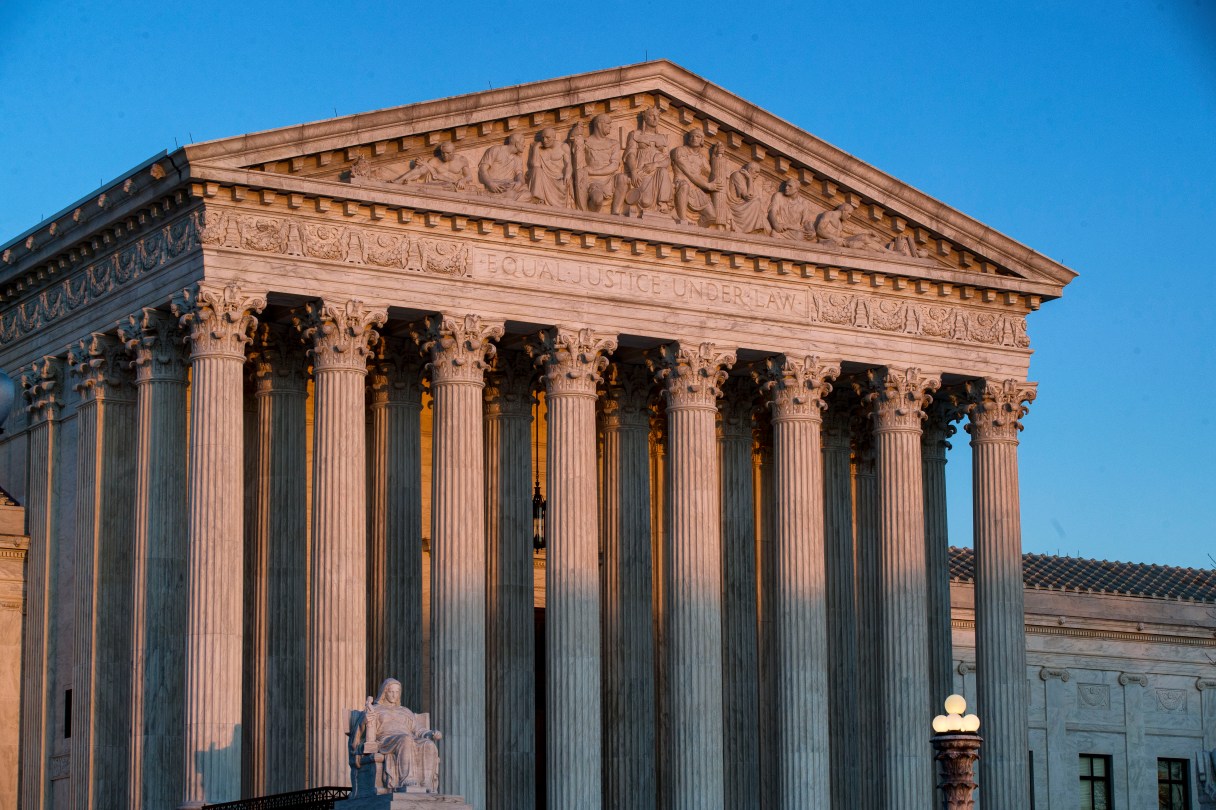
Conventional wisdom suggests that the Supreme Court, like the country, is deeply divided along partisan and ideological lines. But this overlooks the court’s historic recent run of unanimous decisions and the fact that the liberal and conservative justices often don’t vote as blocs.
Court critics tend to respond to these inconvenient realities by saying something like, sure, but on the big cases, the culturally divisive ones, the conservatives form the majority and the liberals the dissenting minority.
This is obviously true sometimes. The Dobbs decision, which overturned Roe v. Wade, is a paradigmatic example. While I think Dobbs was correctly decided on the merits, it also was an important, polarizing ruling along ideological lines.
I’m happy to concede that, but why can’t critics concede the reverse? When the court doesn’t rule along ideological lines on important cases, they simply stop calling the cases important. As legal analyst Sarah Isgur (my colleague at the Dispatch) and economist Dean Jens recently put it in Politico, “If one defines ‘important’ as the most politically divisive, then it becomes circular.” Which cases are divisive? The important ones. Which cases are important? The divisive ones.
Gun rights are an obvious example of partisan polarization. And last week, the Supreme Court issued a decision on the subject along the dreaded conservative-liberal axis. All six Republican-appointed justices voted to overturn a ban on bump stocks.