
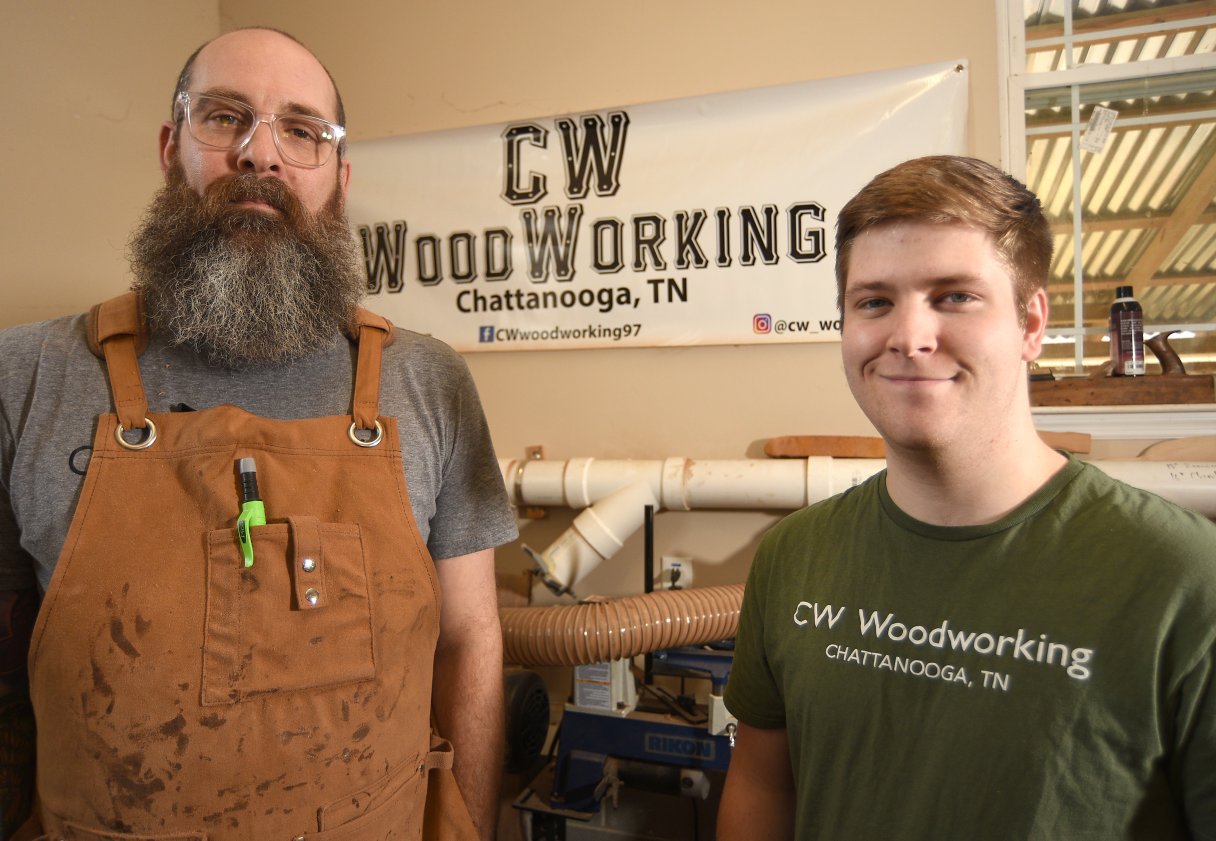
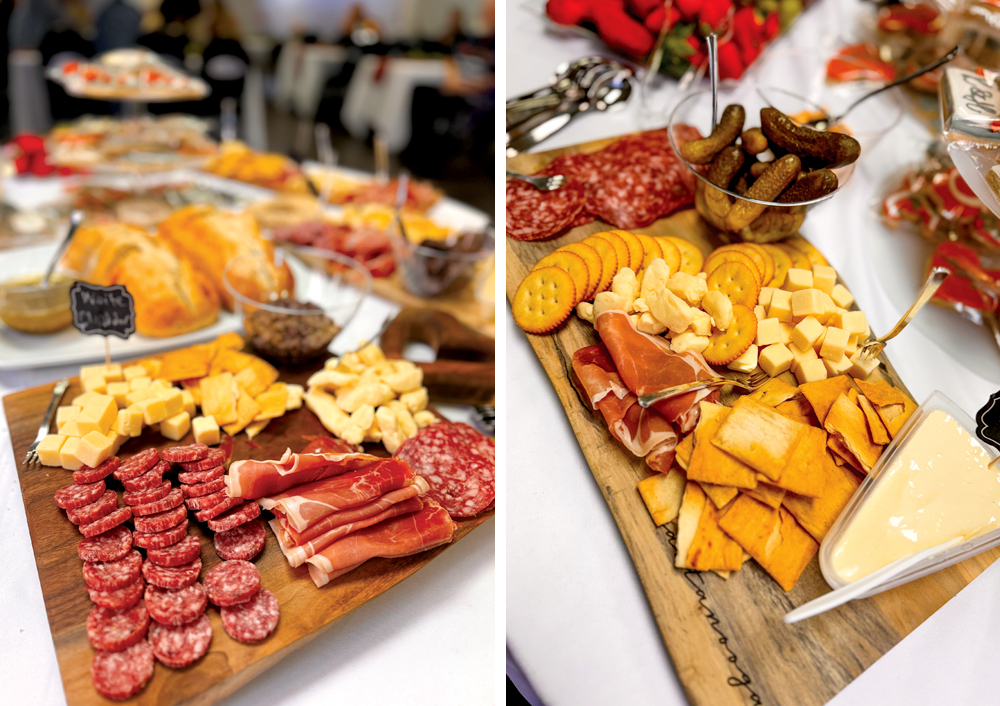
The popularity of charcuterie boards is catching on. It seems that anything placed atop a well-crafted piece of hardwood simply tastes better. While the typical charcuterie spread normally includes such fine provisions as meat, cheese, crackers and dried fruits, people are branching out beyond the brie and breadsticks to include anything from wings to waffles to wedding cake.
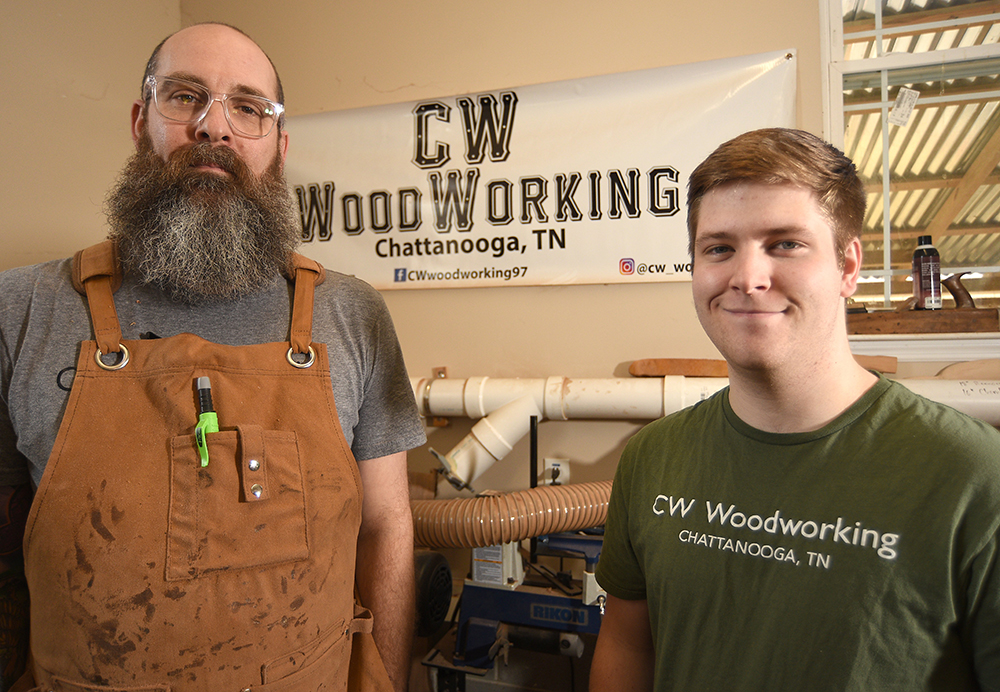
“I know people who’ve made charcuterie boards of chicken nuggets and french fries,” says Garit Sullivan, the man behind CW Woodworking. Sullivan, who refers to the concept of charcuterie boards as “grown-up Lunchables,” says that pretty much anything goes, food-wise, “as long as you put it on a board.”
But then, he also has something of a board bias. He’s a skilled woodworker and craftsman, so he appreciates the wooden cuisine-conveyor itself as much as the food you put on it.
Wood You Care for Seconds?
“Wood is just warm,” he says. “To me, it’s welcoming.”
It’s so welcoming, in fact, that it brings people together. Sullivan chalks up the current charcuterie board craze to the cross-cultural love most people share for gathering around food.
“Meals are a good time. Whether it’s sitting around an island, just picking at stuff, or a full family meal, people love to gather around food,” he says. “And we like to create pieces that people gather around.”
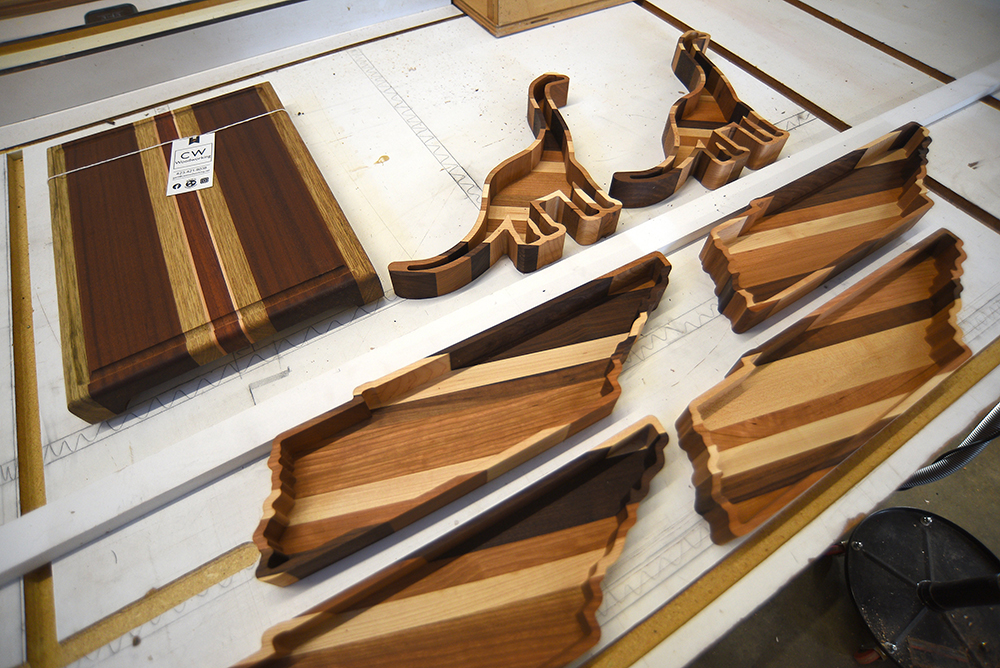
Those pieces include beautiful wooden charcuterie boards, cutting boards and wooden trays — in fun shapes such as the state of Tennessee or a Christmas tree at the holidays — which he sells at the Chattanooga Market and on his newly launched website. His various wooden masterpieces range in size from 8 inches to a board big enough to fit half a Chinese buffet — the longest charcuterie boards measure as much as 4 feet long.
Family Trees
Sullivan is the fourth generation of woodworkers in his family. He learned the trade from his father and grandfather, first by “tinkering” and honing his skills on such projects as helping to build his own wooden skateboard ramp for the backyard as a kid. He inherited (and still has today) his great-grandfather’s tools, complete with old hatchets and the leather strap formerly used to sharpen them, which Sullivan now wears as a belt. And CW Woodworking is named for Sullivan’s grandfather, Charles Waldrup.
Clear Cutting
Though he’s been something of a wood wizard since an early age, Sullivan began getting into woodworking a lot more extensively about 8 years ago, when he decided to get sober. “I was drinking really heavily. It was either stop or hit rock bottom,” he explains. “So I needed something to keep my hands busy.”
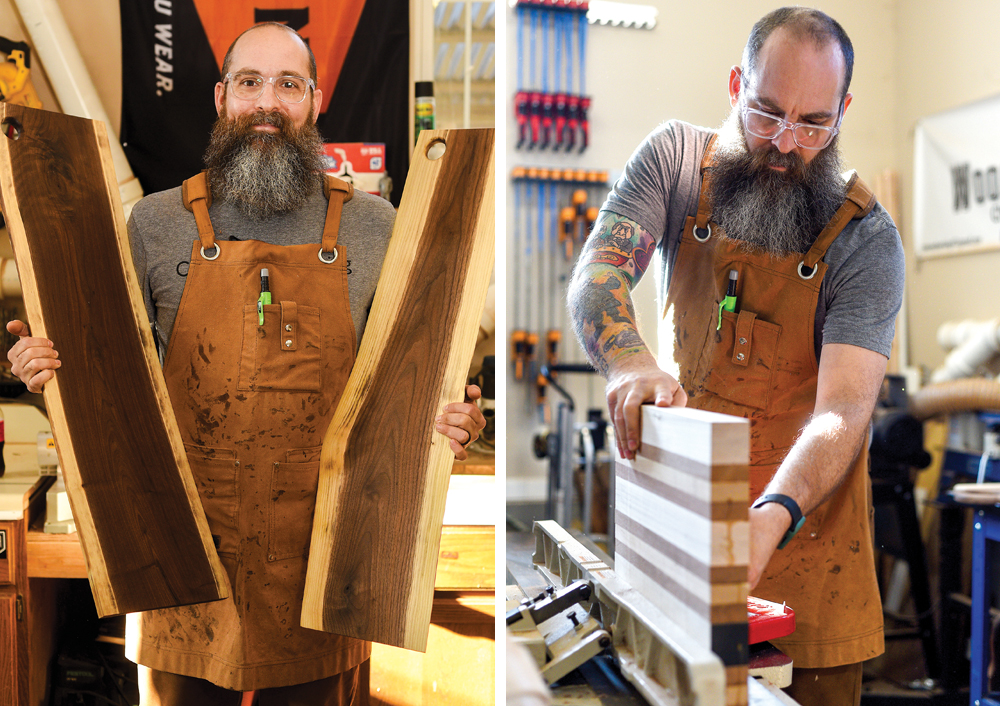
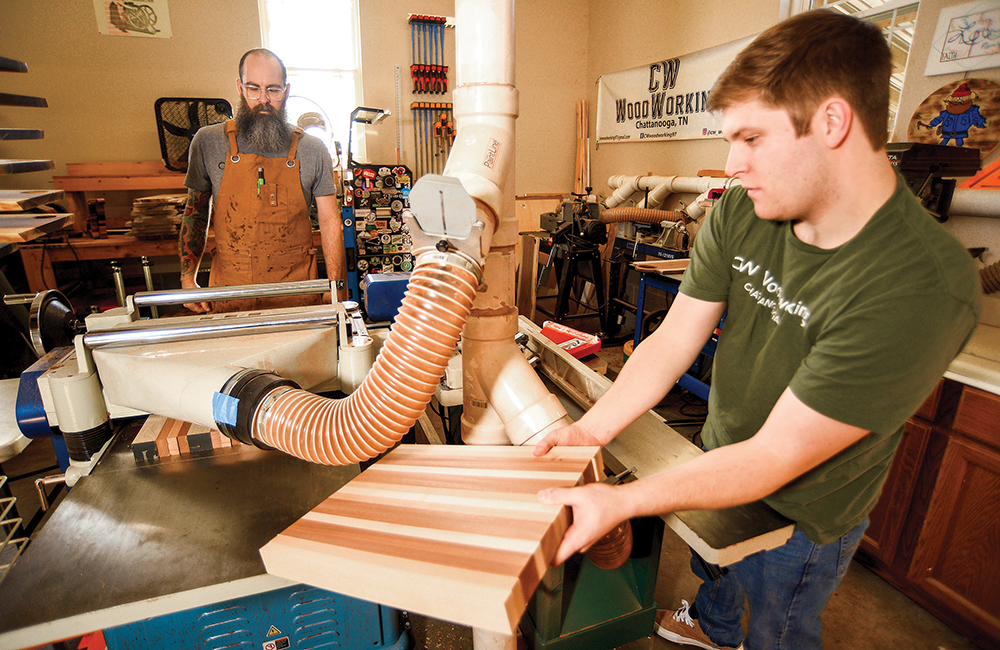
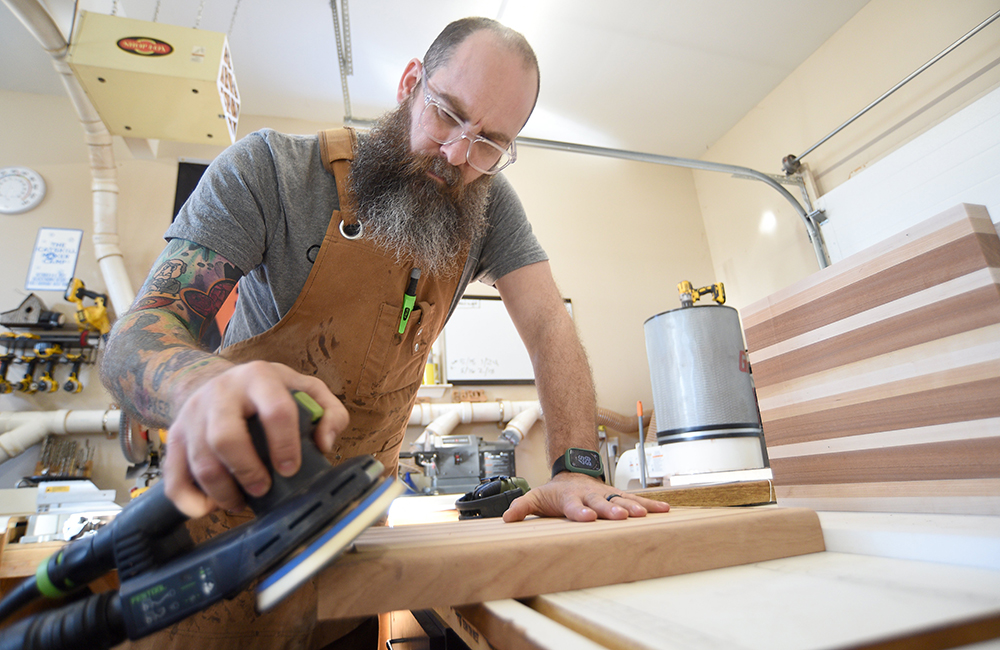
And so he turned to woodworking. Eight drink-free years later now, and Sullivan still appreciates that his craft keeps him focused and sharp — because his tools and machinery are even sharper. And dangerous. And, in his own words, “terrifying”: “Table saws. Joiners. Planers. Chop saws. Routers. Orbital sanders. And we use a lot of clamps,” he says of the many tools of his trade. “Every single machine in here can kill you.”
Because of both the risk and the precision required to create amazing things out of wood, Sullivan couldn’t do what he does if he weren’t sober. And now, that’s one of the things he loves most about woodworking. “I love the fact that, in here, I have to have my head clear,” he says, speaking of the workshop he built in his parents’ garage.
He also loves the feeling of accomplishment and gratification he gets when he finishes a piece and still gets excited every time someone buys one of his boards.
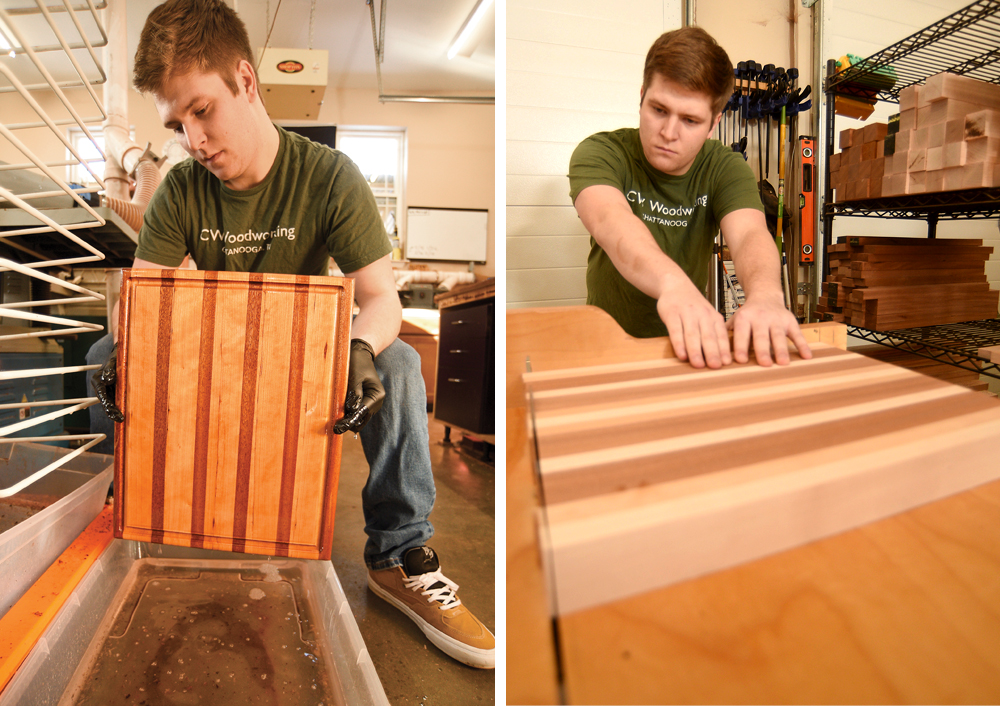
Sullivan first started out making just a few cutting boards for friends, and that gradually morphed into the successful small business he has now. He estimates that last year, he sold around 400 cutting boards and charcuterie boards combined, along with approximately 500 trays, with the help of his trusty apprentice, Trent Stephens.
He Came. He Sawed.
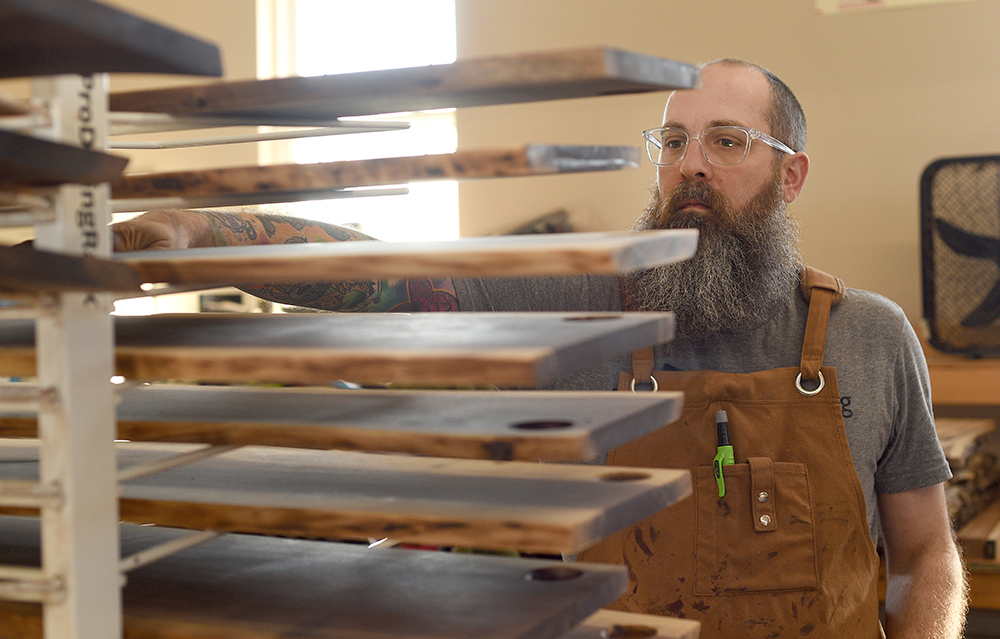
Sullivan says that it takes about three days to turn a chunk of maple wood, cherry, or walnut — or maybe something more exotic, like olive wood or African mahogany — into an artisanal object that someone would bring into their home to serve or prepare food on.
He and Stephens source their lumber locally, cut it down to size and mill it into strips. Then, they select and assemble wooden strips of different colors and grains that fit well together, like a wooden patchwork, to make a one-of-a-kind design (each board is unique). The next step is gluing the strips together, clamping the board, flattening it, routing the edges and sanding the heck out of it. Finally, they slather it with a food-safe oil and let it cure for a few days, and the board is now a beautiful yet functional piece of handcrafted home decor.
“When people ask me what I do, I tell them that I cut big sticks into little sticks to glue up to make big sticks,” Sullivan jokes.
With all the sawing he does, Sullivan says that he produces as much as 50 pounds of sawdust every two days during peak production.
“My grandfather always told me never to trust a clean wood shop,” Sullivan says. “Anyone who has a clean workshop isn’t working.”
He donates all this sawdust — which would equal the weight of four kangaroos in just a month’s time — to local farmers and gardeners.
On the Cutting Edge
Not only does Sullivan work wonders with a power saw, but he also helps support the hip, charcuterie-chic habit that is all the rage now. But while his boards feed the Lunchable-loving masses, they also feed the trend of small-business, local, homemade, DIY, “maker”-produced handicrafts that has seen a resurgence ever since the pandemic.
“People understand the quality of what they’re buying,” he says. “When you purchase something from me, you’re seeing the person who made it.”
For more information, find Garit Sullivan and CW Woodworking on Facebook or at cwwoodworking.net.