
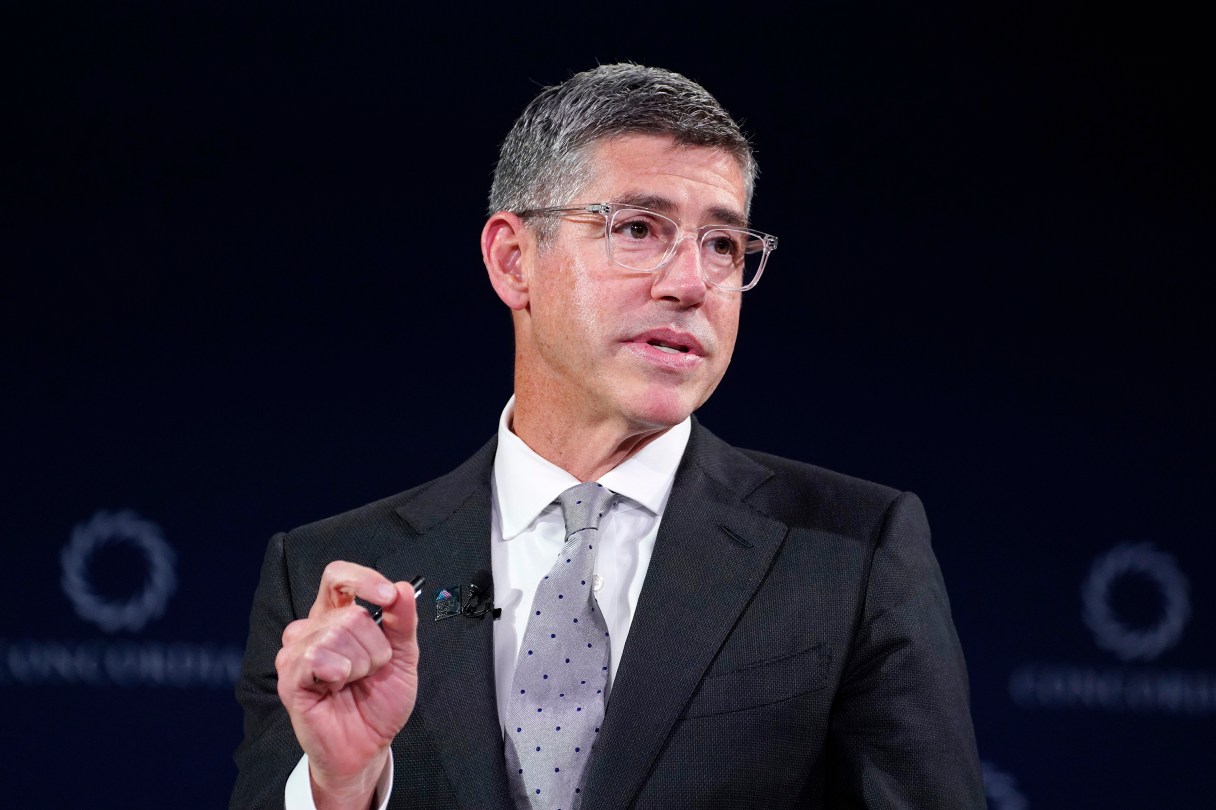
WASHINGTON — Brendan Carr, President-elect Donald Trump’s nominee for chair of the Federal Communications Commission, has called for the agency itself to clamp down on social media companies over accusations of censorship, a stance critics see as the kind of overreach that Republicans typically decry.
Carr is the senior Republican commissioner on the five-member FCC. Appointed to the body in 2017 by Trump, Carr contributed a chapter to the Heritage Foundation-led Project 2025, intended to be a blueprint for a second Trump administration but one that Trump disavowed during the campaign.
“Commissioner Carr is a warrior for Free Speech,” Trump said in a statement on Sunday. “He will end the regulatory onslaught that has been crippling America’s Job Creators and Innovators, and ensure that FCC delivers for rural America.”
Posting on social media Sunday, Carr said that as FCC chair he would aim to “dismantle the censorship cartel and restore free speech rights for everyday Americans.”
Carr listed reining in Big Tech and ensuring FCC accountability and good governance as top policy priorities in the Project 2025 document. Notably, he called for the FCC to reinterpret the content moderation law known as Section 230 that allows social media companies to avoid liability for user-generated content on their platforms. This would eliminate “the expansive, non-textual immunities that courts have read into the statute,” Carr said in the Project 2025 document.