

Women are outpacing men in college enrollment and degrees — that’s a trend that’s been growing for nearly 50 years.
During the late 1970s, there were about 200,000 more women than men enrolled in colleges across the U.S. Today, women make up nearly 60% of all college students.
Yet, despite their educational advantage, women in corporate roles continue to face a persistent barrier: they are less likely than their male counterparts to be promoted from entry-level positions to leadership roles.
CURRENT COLLEGE VIEWS
Now in her final year at the University of Tennessee at Chattanooga, Carly Owen is glad she decided to enroll. But it wasn’t always an easy decision.
“I went to college because I didn’t want to be embarrassed. I didn’t want my friends to say, ‘Oh, you’re not going to college.’ But, hell no I didn’t want to go. … Now I’m here and I really love college and I don’t want to leave, but it took me a long way to get here,” she says.
Owen says she feels there is less pressure on guys to go to college, because they have other avenues, like the military or trade work. But for females, she feels the social pressure is heavier because there are fewer female-oriented non-college options.
When asked her thoughts on the possibility of achieving a world where females and males can reach equity and parity in terms of pay and leadership roles, Owen isn’t especially optimistic.
“I don’t think that’s going to happen because, as of right now, we do live in a male-dominated country,” she says. “… Women are still the ones having kids. They’re still the ones who are typically going to be staying at home. They’re still the ones who are, in a family dynamic, typically have a much different load than men.”
Ben Stephens, also a senior at UTC, believes the widening female-to-male enrollment ratio is partly due to differences in emotional maturity during the high school and college years. It’s been his experience that females tend to take academic studies more seriously.
“I think guys … might think more day-to-day as compared to long term,” he says. “It seems like most women are more driven in school.”
He agrees that there are more “masculine” non-college job options, and adds that the young men he knows also tend to have an aversion to authority, a trait he himself once shared.
While he remains skeptical about whether academics are truly preparing him for the work world, he acknowledges that the university experience is helping him learn how to manage deadlines, tackle assignments and follow orders.
COMPANY COMMITMENT
“What you would expect is once you have a higher percentage of women in college, that would translate to work and leadership, but that’s not the case,” says Wade Hinton, CEO of Hinton & Company, a Chattanooga-based management and consulting firm that focuses on culture and leadership development.
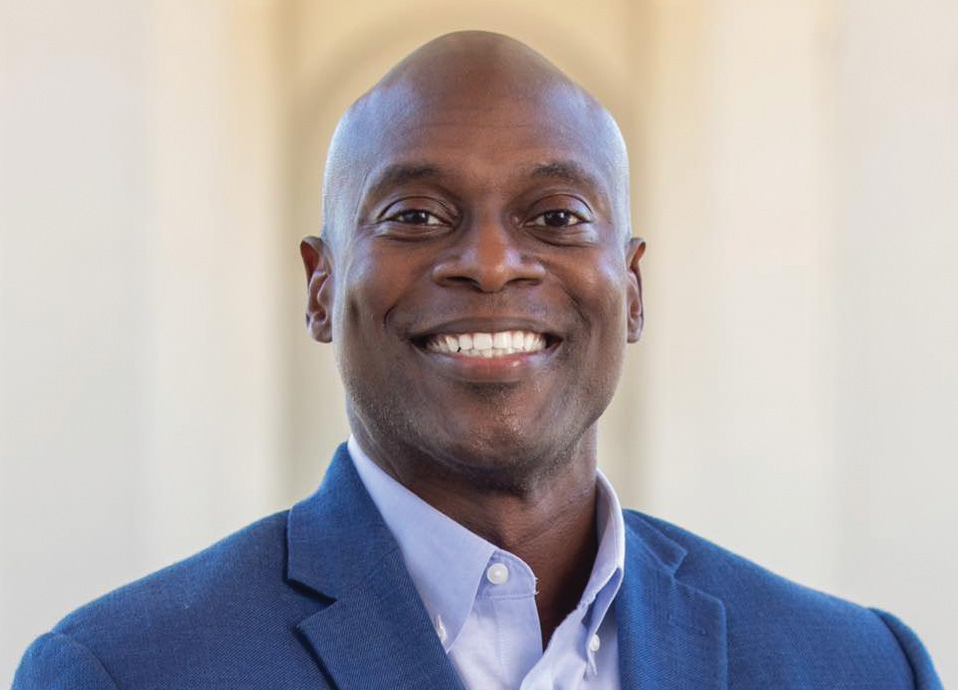 Contributed photo / Wade Hinton
“But once you get to mid-level manager and senior leadership, there is a significant drop off. … You’ve done the work, you’re at the organization, but somehow you can’t make it to that next level, or senior leadership.”
For women to achieve equal pay, organizations must operate an as ally, committing to the goal, he says. The workplace must to be willing to make changes in its infrastructure, which means examining the way hiring decisions are made, the types of interview questions that are being asked, and how succession and leadership planning are handled.
“It’s one thing to say you’re committed to parity and equity, and it’s another to put the policies in place that will create fairness across the board,” he says.
Overall, Chattanooga has some catching up to do in terms of women in leadership positions, says Melody Shekari, a local lawyer and current Executive Director of the Women’s Fund, a policy and advocacy nonprofit focused on improving the lives of women and girls in Tennessee. She points to the 2024 Major Employers List, a list of local companies with 100 employers or more, posted on the Chattanooga Chamber of Commerce website as an example.
 Contributed photo / Melody Shekari
Of 77 companies listed, six are led by women, which is about 8%.
She also notes that the earnings gap between male and female pay checks persists. On average, women earn about 84% of what men make, which translates to about 16 cents less for every dollar. While that may seem small, those 16 cents add up significantly over the course of a lifetime.
The difference can result in women carrying more student debt, struggling to afford retirement or health care, and facing challenges in meeting family household needs.
“In Chattanooga, we have many women who are heading their households, so for them, not getting paid as much impacts their entire family,” says Shekari. “It’s not just whether they can retire, but whether their kids get what they need, whether they can they afford reliable transportation — and the spiral that goes with that. One big expense wrecks your entire budget.
“What would happen if we paid women the same amount as men? For starters, it would bring many children and families out of poverty.”
 Contributed photo / Deborah Duncan
Deborah Duncan is the human resources representative for Tennessee American Water and the 2025 president-elect for the Chattanooga chapter of the Society of Human Resources Management. Before Tennessee American, she spent nearly nine years working at UTC, where she observed the student enrollment trend widen. For her, the lack of female representation in leadership positions can be broken into four main points:
Lack of female archetypes: We often discuss stereotypes, but rarely do we address archetypes — culturally accepted models of behavior. When we think of leadership, it’s typically framed in “masculine” terms such as “powerful, decisive, driven, financially astute, influential.” A woman can take the same actions and be seen as “aggressive, pushy or nagging.”
‘The Broken Rung’: Women are underrepresented in management positions, often because they are assigned administrative tasks such as taking notes while their male counterparts take on more challenging operational roles like leading a team. Despite being essential to the organization, administrative tasks are undervalued, while operational assignments carry more weight and visibility. As a result, men are more likely to be considered for promotions, while women are frequently overlooked for those same opportunities.
Less feedback and mentoring: Most female supervisors report to male managers, who often feel less comfortable providing feedback and mentorship to female employees. Men typically feel more at ease giving feedback and mentoring other men. As a result, male supervisors may focus more on their male reports, leaving female employees overlooked and excluded from the inner circle. Consequently, women are less likely to be considered for opportunities and promotions.
More responsibilities: Women typically bear the majority of caregiving responsibilities, not just for children but also for aging parents and household chores. These duties limit their ability to work late, travel, or respond to work demands on short notice. Consequently, their responsibilities outside the workplace reduce their flexibility and availability.
“Companies must also understand the value women bring,” Duncan says. “They’re (women) going to be coming with more education and more experience. Skills commonly thought of as ‘female’ — multitasking, administration, leadership, empathy, delegation — are crucial to business success.
“We can go after inherent bias and discrimination, but it’s company culture that needs to change.”
EQUITY OUTSIDE THE OFFICE
Truly achieving gender equality and parity will require a change in company culture. But perhaps even more importantly, it will require a shift in the way we think about females and males on a personal level, says Dr. Ruthie Wienk, behavioral and social sciences department chair at Lee University in Cleveland, Tennessee.
It comes down to the division of labor in the home and finding solutions for affordable child care.
 Contributed photo / Ruthie Wienk
For women to truly catch up in the work place, she says, our culture and companies need to talk about high quality child care — and how it could be offered to women at a wide variety of income levels.
“There is a ‘mommy tax’ or ‘motherhood penalty.’ Studies show that women lose tens of thousands of dollars for every child she has. But there is no ‘daddy tax,'” she says. “When I was raising my child, I paid more for childcare than I did for the mortgage. If childcare is more than $1,000 a month, does it make sense to work or to stay home?
“If staying at home is something a woman wants to do, then good. But not if they’re being pushed into it. We’re not going to have gender equality until we have affordable childcare.”
There are other subtle and probably unintentional ways our language reinforces gender biases, she says, such as referring to time off work to have children as “maternity leave” rather than “parental leave.” Women are often seen as liabilities due to the perceived additional costs of hiring them, while men are not viewed the same way.
 Contributed photo / Chris Vidmar
Chris Vidmar, UTC assistant professor of sociology, says progress toward equity and parity is happening, but is slow.
“If we go back to the late 1970s, early 1980s, the post-Civil Rights area, people expected equality to advance by leaps and bounds. But it hasn’t. … Education is part of this picture, but it’s only one part, and it’s not enough on its own. If that’s all we rely on, it’s going to take a long time.”
He says there is evidence of a growing shift in mindset around valuing women in the workplace and redefining the division of labor at home, but there often seems to be a disconnect. Too often, this change remains lip service, unsupported by meaningful action.
Natalie Blanton, also an assistant professor of sociology at UTC, says our culture’s tightly-defined roles of what is appropriate female and male behavior is a loss for everybody. In her opinion, men are being robbed of the opportunity to be caring, nurturing husbands and fathers — and to share some of the emotional burden of child rearing with women.
“It makes me sad that men have not been allowed into that space, be it by the realm of patriarchy … and that women are being sequestered into that space, that we don’t believe they have prowess in the workplace,” she says.
 Contributed photo / Natalie Blanton
The truth about gender norms and expectations, is that they begin even before a child is born, she says. And to become a culture of equality will require reexamining those deeply-seeded beliefs, and actively working to change them.
Blanton also brings up affordable childcare as a factor in holding women back professionally.
“Many people talk about wanting children, but not being able to afford it, or not having enough maternity leave. … We’re not making it welcoming for people to have kids and also work,” she says.
“There are so many articles that have been written: Can women have it all? Are men stepping up? It’s an issue that affects all of us.”
ARE EQUITY AND PARITY POSSIBLE?
A recent report from LeanIn.org shows that there have been advancements for women in the workplace, particularly in leadership positions. The report notes a 5% increase in female directors, a 7% rise in vice presidents, a 6% increase in senior vice presidents, and a 12% boost in women occupying C-suite roles compared to a decade ago.
But the report also reveals that the corporate ladder is troublesome for women from the beginning. For every 100 men promoted to manager, the same applies to only 81 women.
“I think it’s going to happen naturally,” says Duncan, with Tennessee American. “But we need to have more women in leadership so that they’re not unicorns. Then we’ll start establishing our archetypes.”
But womens’ expectations of work life is also changing, she says. Women will begin going to go to companies that value them, and feel less tied to the employers that don’t.
“You’ll see a talent train away from companies that don’t have these things in place. They’ll have the competitive balance,” she says.
UTC’s Vidmar and Blanton both agree it’s possible, albeit probably slower than most people would like. But ultimately, we as a culture created the current rules of behavior, and we have the power to change them.
“We know that social norms hit a tipping point,” says Vidmar. “Once you get past a certain point of normalcy, they tend to accelerate.”
We now see more women in the workforce, he says, and more men recognizing the harm certain aspects of masculinity can cause. As these issues are talked about and understood more, social acceptance will begin to accelerate.
Hinton says he can also envision a world where parity and equity exist. It’s something he hopes his daughter will experience.
“We have some dynamic leaders at the CEO level in Chattanooga. But we’ve also got work to do,” he says. “But we can’t wait for someone to figure this out for us. We can’t wait for it to be convenient.
“It’s needed now.”
LOCAL ENROLLMENT RATES
* Covenant College: Female 53%, Male 47%
* Bryan College: Female 49%, Male 51%
* Lee University: Female 63%, Male 37%
* Southern Adventist University: Female 53%, Male 47%
* UT-Chattanooga: Female 59%, Male 41%
Source: Niche.com