
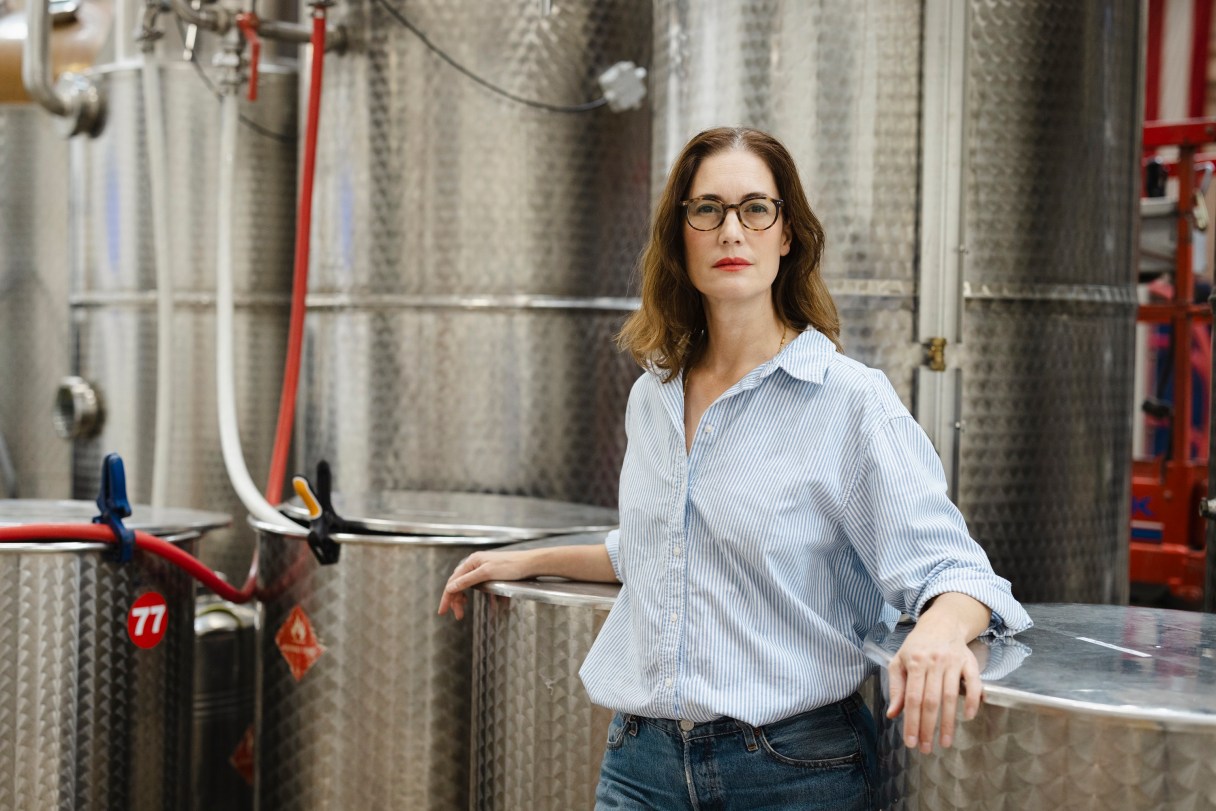
When you’re in the whiskey business, you’re always making predictions about the future.
From the time grain grown around the Midwest enters Sonat Birnecker Hart’s distillery on the North Side of Chicago, it will be four to 10 years before the whiskey is shipped to buyers. So running her business requires careful projections about demand.
Those calculations have become harder of late. With the U.S. presidential election looming, many businesses around the world are facing uncertainty about the future of American trade policy and the tariffs that products will face in global markets.
For the whiskey industry, the stakes are particularly high. In March, a 50% tariff on American whiskey exports to Europe will snap into effect unless the European Union and the United States can come to an agreement to stop the levies.
The outcome may depend on who is in office. Both former President Donald Trump and Vice President Kamala Harris have embraced tariffs, but their plans differ significantly. Harris’ campaign has said she would use tariffs in a “targeted” fashion — possibly mirroring the approach of President Joe Biden, who recently imposed tariffs on Chinese electric vehicles, silicon chips and solar panels. Like Biden, she has emphasized working closely with allies.