

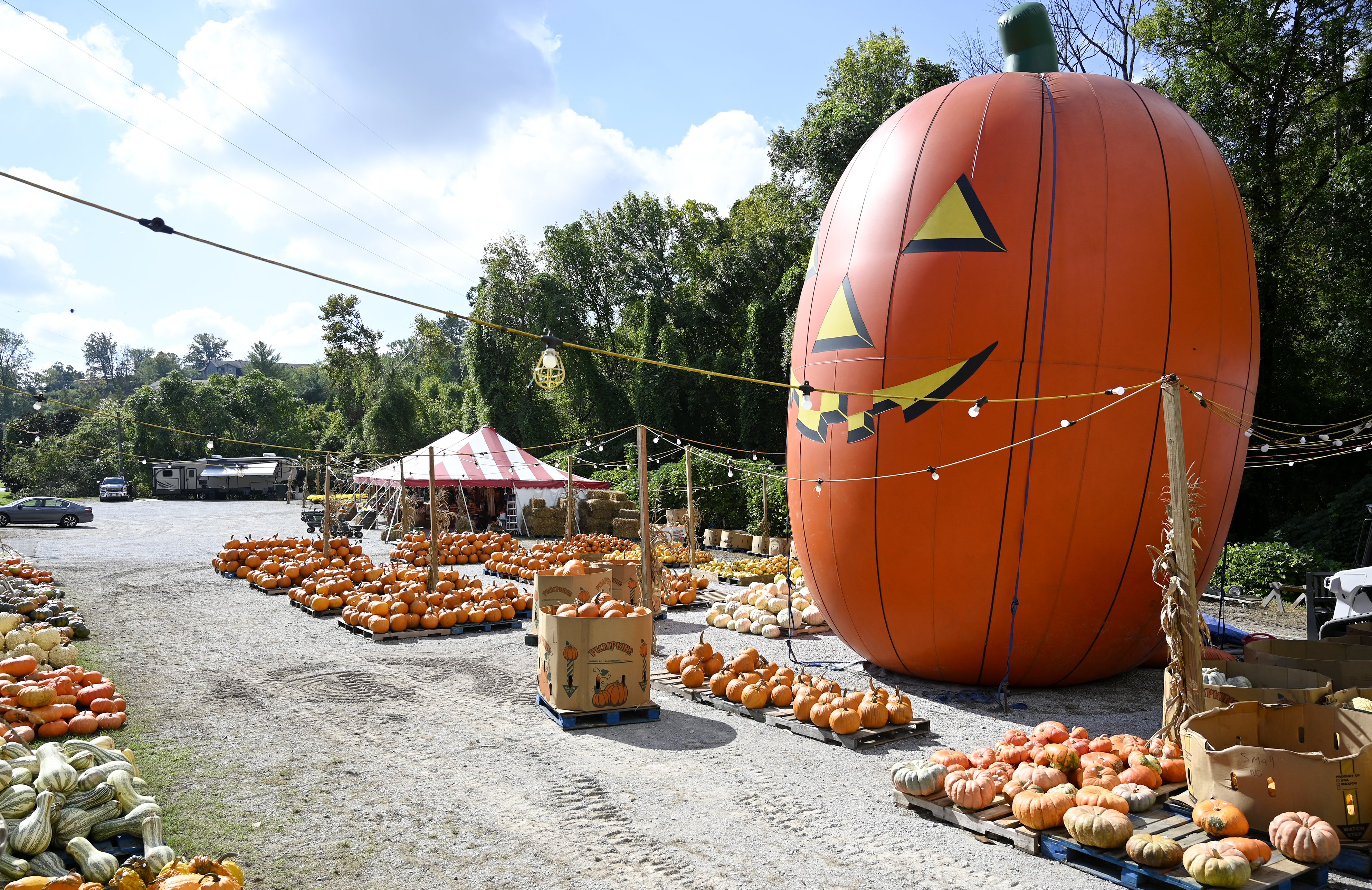
A massive jack-o’-lantern beamed at passing motorists as they raced along Signal Mountain Road on Friday morning.
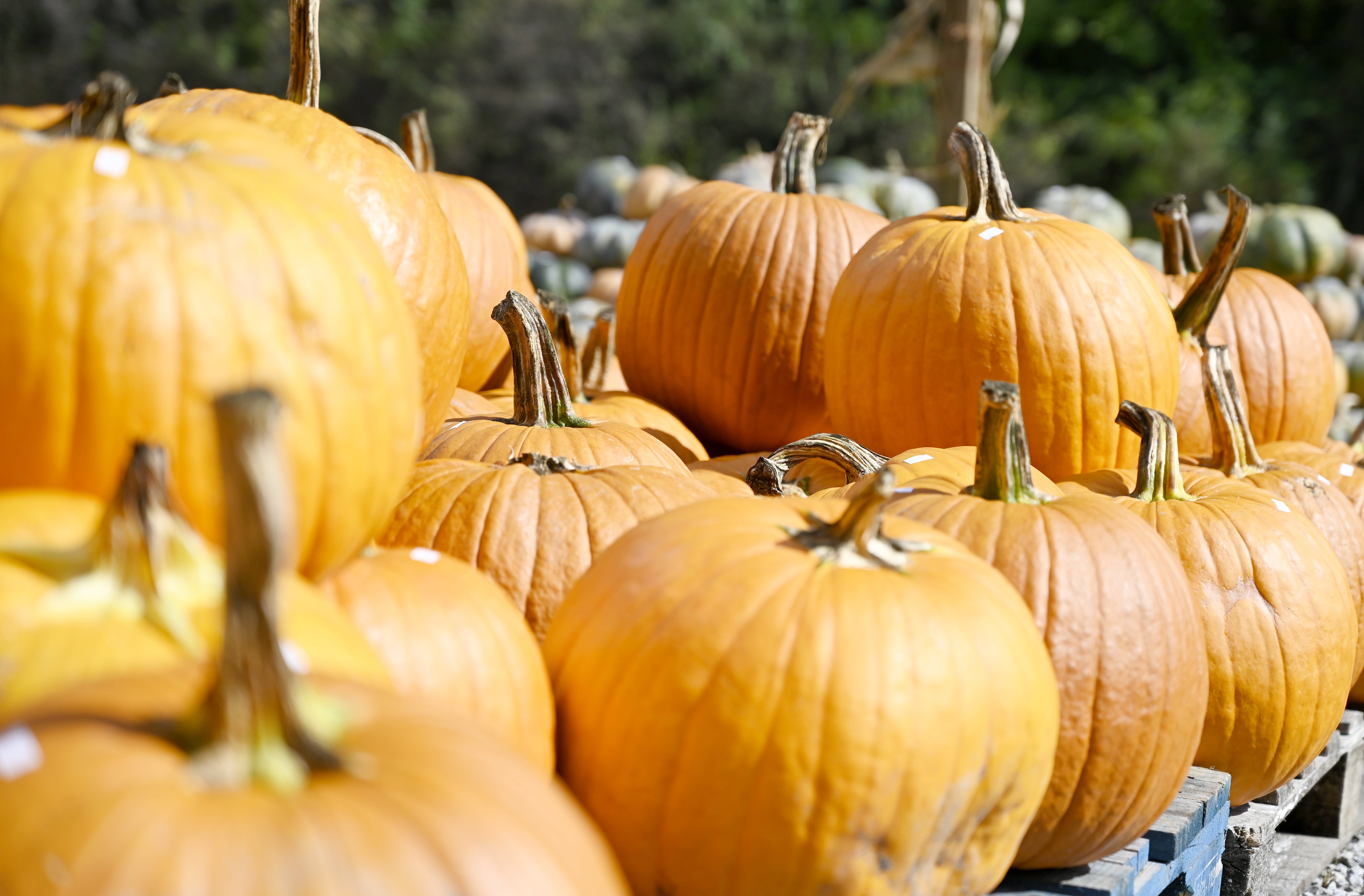
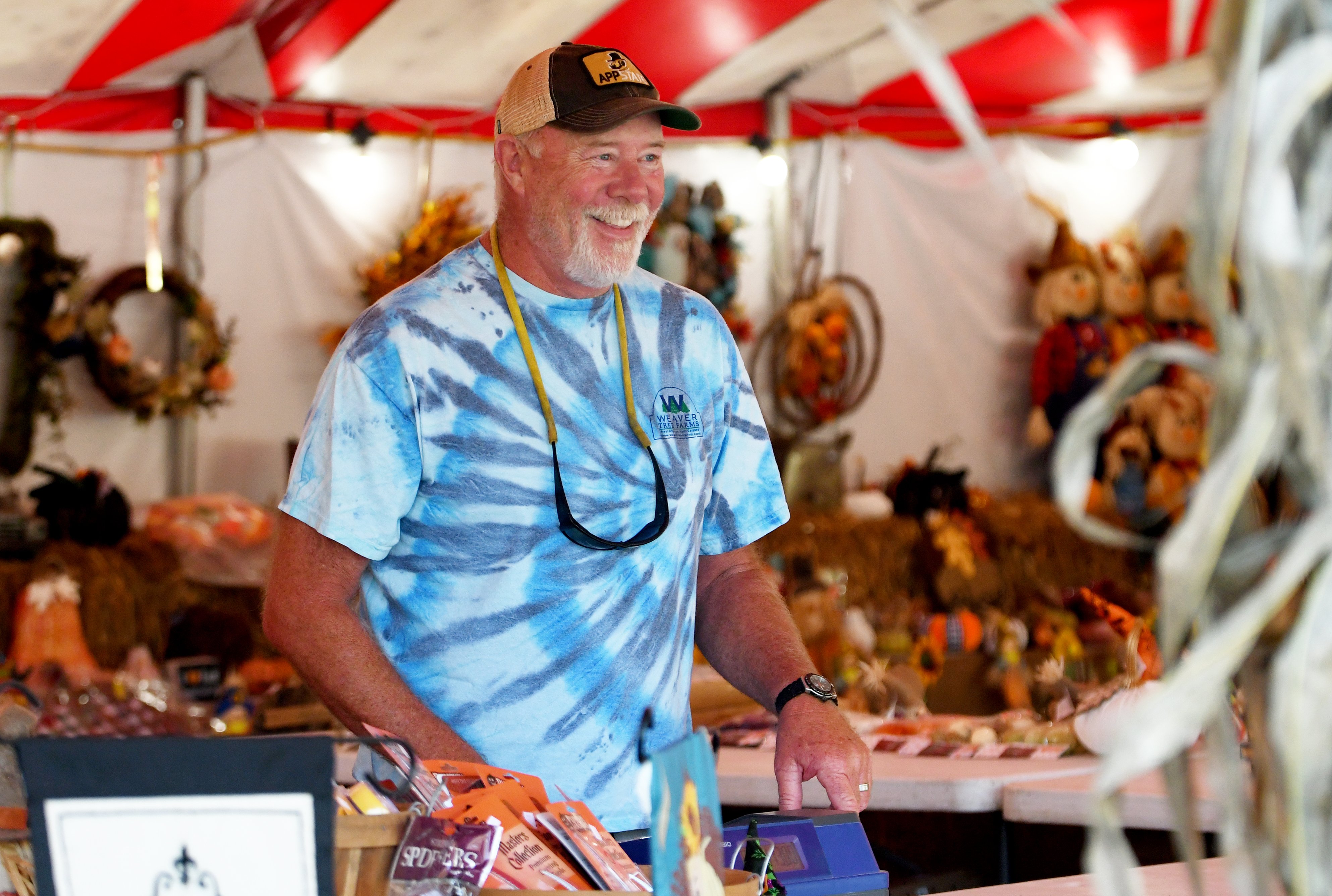
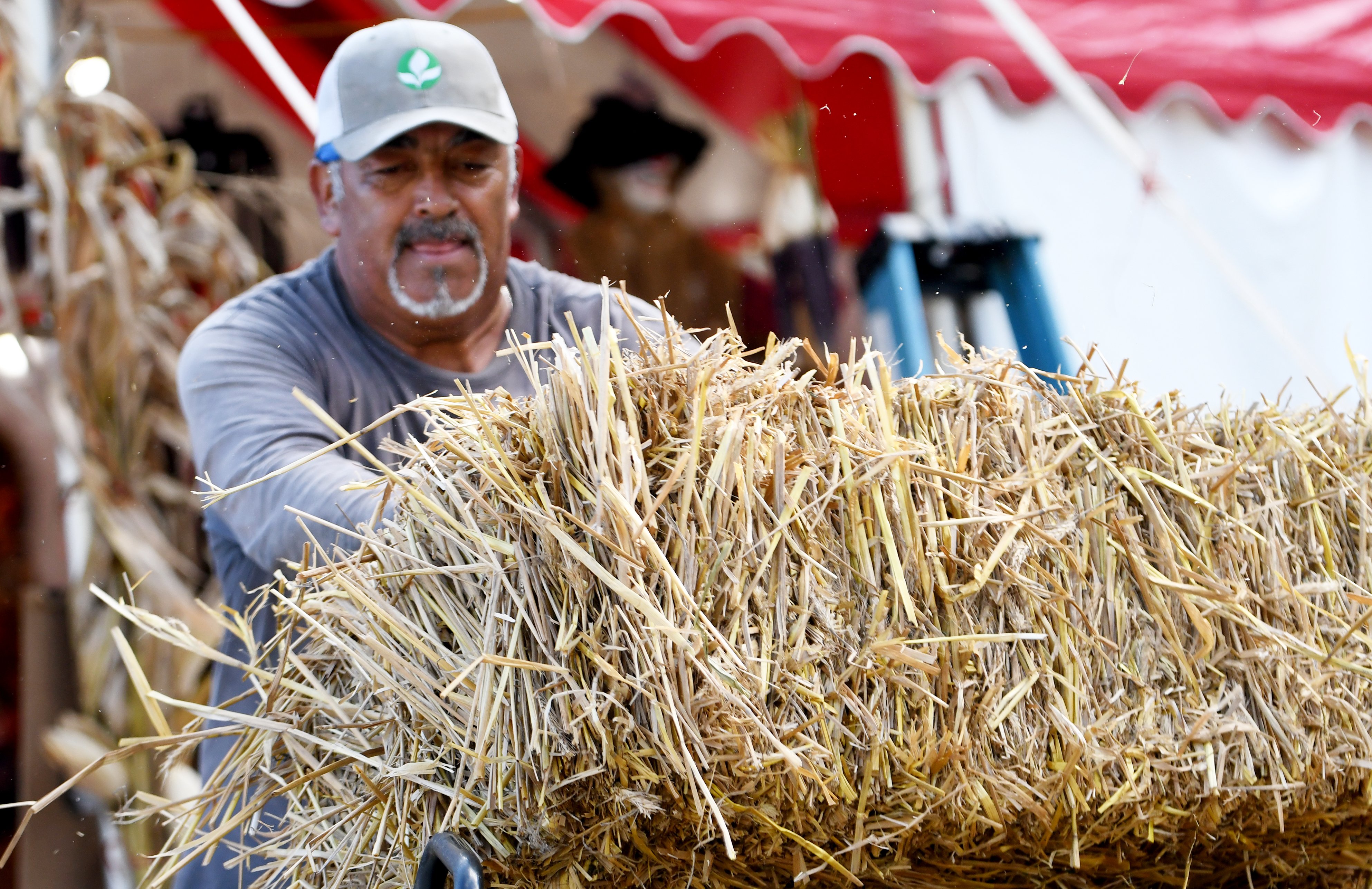
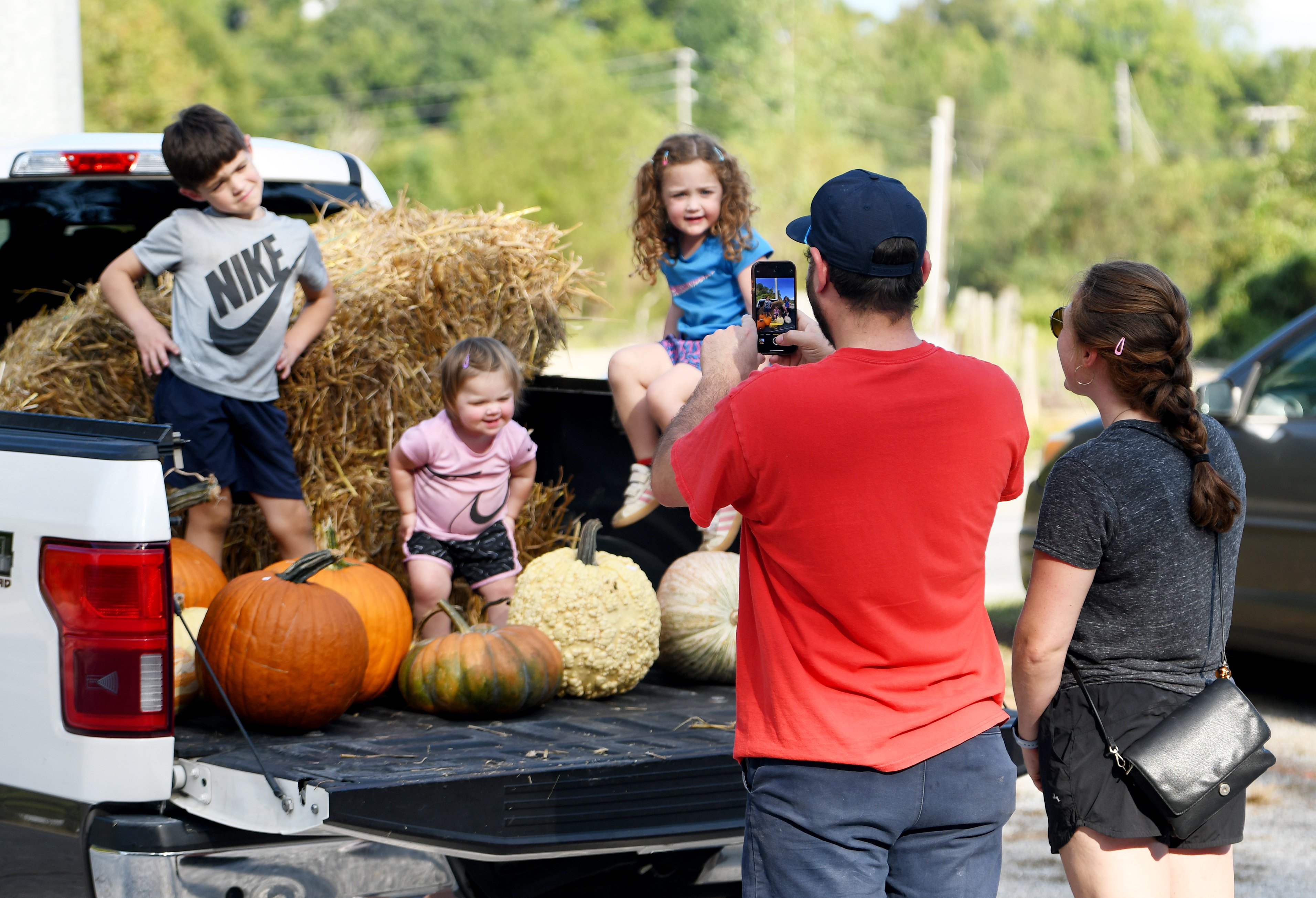
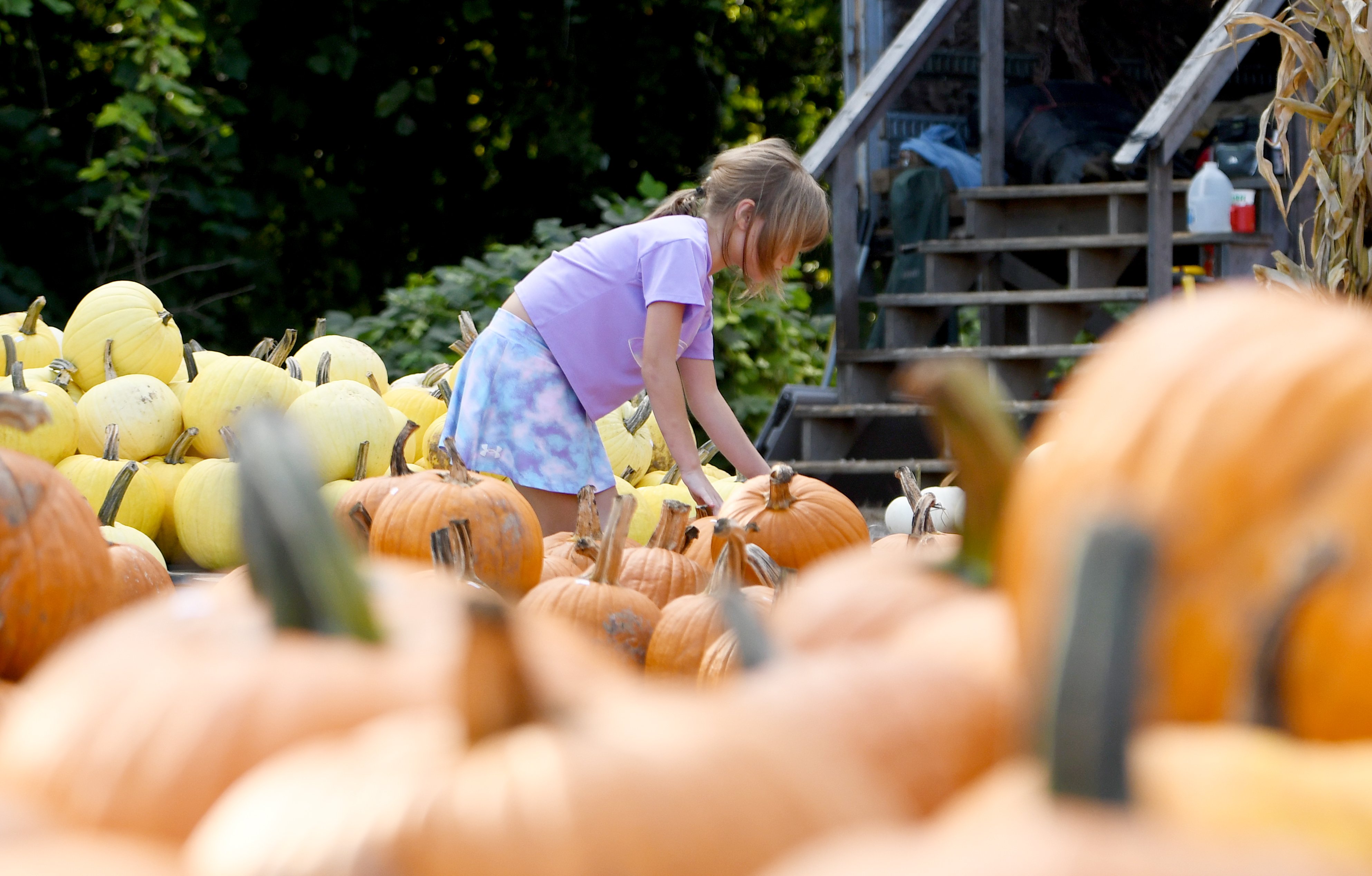
It marks the spot of a festive pumpkin stand operated by John Weaver and his family, which sits in a gravel lot near the entrance to Baylor School. As the sun peeked through gray clouds, families perused mounds of orange, white and green gourds, which sat in ordered displays around the property. The Weavers are now in their 39th year selling pumpkins — and soon Christmas trees — in Chattanooga.
“I’ve got 39 years of my life invested in it,” Weaver said in an interview. “When I first came down here, I had hair, and I was 25.”
Weaver grows his products at a farm about 300 miles away in West Jefferson, North Carolina, and he is now accustomed to the approximately five-hour drive from Weaver Tree Farms to Chattanooga. However, storm damage wrought by Tropical Storm Helene required him to take some detours this year, adding about two hours to the trek. This holiday season, damaged roads may complicate the process of transporting his goods.
“In business, sometimes you have to make a lot of sacrifices, and you have to pay a little more freight to get stuff in and out,” Weaver said. “It’s costing more because we have to go further out of the way, and of course everything else is up, too. It just is what it is.”




(READ MORE: Extent of Helene devastation in northeast Tennessee comes into clearer focus)
Weaver expects his business will weather pumpkin season, but he does have some concerns about Christmas, especially if roads remain closed. The buying period for Christmas trees is usually about 22 days, Weaver said, which is about half the approximately 40 days he has to sell pumpkins each year.
“We’ll just have to play it by ear because there’s a lot, a lot of Christmas trees coming out of our area,” he said.
Weaver’s home is in Ashe County, North Carolina, which is the single largest Christmas tree producing county in the United States, according to the Ashe County Christmas Tree Association. The county has about 12,000 acres of Christmas trees in production, amounting to about 20 million trees, the group says on its website. Trees and greenery contribute more than $85 million to the Ashe County economy each year.
A SEVERE STORM
Although his family had to repair some roads on their property, Weaver said his home and farm, which sit on top of a mountain, have been largely spared by the torrential rain that flooded many communities in his state. Weaver’s wife has been cooking meals for friends without power and they’ve let neighbors use their shower. Thousands of residents in his county don’t have electricity, he said, and Weaver’s youngest daughter hasn’t been to school all week because of the storm.
“No sports, no practices, no nothing,” Weaver said. “I’ll be surprised if they don’t do the same thing next week.”
Weaver remembers hunkering down during Hurricane Hugo, which tore through the Caribbean Islands and the Carolinas in 1989. The storm was responsible for dozens of deaths and billions in property damage, according to the National Weather Service. Helene has been worse, he said.
“Hugo was nothing compared to this thing,” Weaver said. “I’ve never seen this much rain before.”
Transportation officials in Tennessee and North Carolina said crews are still fixing roads.
Mark Nagi, a spokesperson for the Tennessee Department of Transportation’s easternmost region, said 49 state route segments were closed due to Hurricane Helene, which has since dropped to 20. That includes 10 bridges and 10 roads in Carter, Cocke, Greene, Unicoi, Washington, and Johnson counties, which sit near the tip of Northeast Tennessee. It’s too early to tell when repairs will be complete, Nagi said.
“This is a multi-generational storm,” Nagi said in a phone call. “We haven’t seen anything like this before in our area, mainly because of its wide scope.”
David Uchiyama, a spokesperson for the North Carolina Department of Transportation, said there were about 560 road closures in the state as of Thursday evening. The agency has identified more than 1,700 damaged sites and 100 affected bridges, which are in various states of functionality. Crews are still in the process of clearing fallen trees and vegetation, especially on secondary roads.
Interstate 26 is open from the Tennessee state line to the South Carolina state line, he said. However, Interstate 40 in North Carolina is closed from mile marker 20 to the Tennessee state line. There are stretches where the eastbound lanes of I-40 have fallen into the Pigeon River. That section is closed indefinitely, Uchiyama said.
FINGERS CROSSED
Not all businesses in the Chattanooga area have experienced hurdles because of Helene.
Food City receives about 50-60 trailer loads of pumpkins every year, a third of which go to Chattanooga. Most of those deliveries come from Southwest Virginia, although a few come from Sparta, North Carolina. Joe Greene, vice president of produce and floral operations at Food City, said extreme heat has had a greater impact on the company’s pumpkin suppliers this year than the storm. That could affect the harvest.
(READ MORE: Soul-searching and regret over unheeded warnings follow Helene’s destruction)
“The hotter it is, the more possibility for decay,” Greene said in a phone call, adding that temperatures haven’t cooled down this year as early as they usually do.
Food City officials haven’t heard any issues from their Christmas tree suppliers, Greene said. Similar to pumpkins, most of the company’s trees come from Southwest Virginia, including some from Sparta, North Carolina.
Suzanne Smith, receiving manager at The Barn Nursery in Chattanooga, said many of the garden center’s pumpkins come from Amish growers in Ohio and Pennsylvania, although they do also receive produce from local farmers. That supply hasn’t been interrupted by the storm.
However, all of the Christmas trees sold in the area come from North Carolina, Smith said. With Interstate 40 closed near the North Carolina-Tennessee line, there are some questions about how easy it will be for growers to transport the trees to the Chattanooga area.
The Barn Nursery typically receives its Christmas trees around the middle of November, and the company’s supplier near Boone, North Carolina, said their crop should be fine. The business will often sell 600-700 trees in a given year and thousands of pumpkins, Smith said.
“We’re just kind of crossing our fingers,” she said in a phone call.
Contact David Floyd at dfloyd@timesfreepress.com or 423-757-6249.