
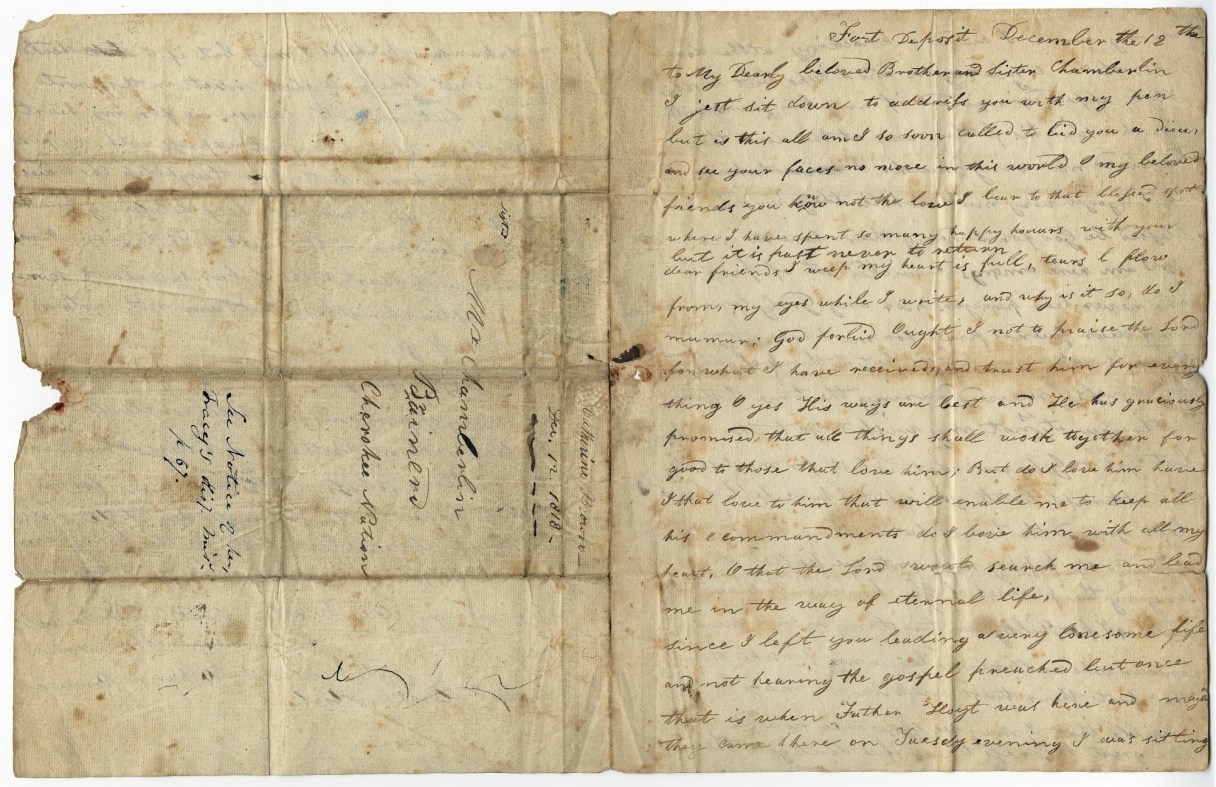

An exhibit at the Chattanooga Public Library sheds new light on the 1838 removal of regional Native American tribes.
The display features a collection a ration logs and letters that date to the period when the exodus from their homeland became a harsh reality for tribes across the region.
The exhibit is called “Records of Removal: Ration Books from the Trail of Tears,” now open and available at the downtown branch and online, according to Christina Socco, spokesperson for the library. According to a library news release, the exhibition is free and open to the public through Feb. 28.
“To have a meaningful understanding of our present, you must understand our shared past,” Jessica Sedgwick, the library’s head librarian of local history and genealogy, said in the release. “I hope visitors to this exhibit come away with a deeper understanding of what indigenous families experienced during the forced removal and what lessons can be learned by critically examining the impact of government policies and their lasting legacies.”
___
DOCUMENT
___
Records of Removal provides public access to original log books detailing the weekly food and supply rations issued to individual Cherokee and Muscogee families between 1836 and 1838, library officials said in the release. During the removal, the indigenous families were held at Ross’s Landing and nearby internment camps to prepare for the difficult and often deadly journey that would become known as the Trail of Tears.
The forced march west was enforced and carried out by the U.S. military and government agencies, officials said. Records from this period are scarce and scattered. Some of the best information about th0se events comes from documents kept by federal agents.
The exhibit opens as the National Trail of Tears Association comes to town Oct. 14-16 for its 27th annual conference and symposium. The conference is occurring alongside a commemorative event for the 20th anniversary of Chattanooga’s Moccasin Bend National Archeological District and a lecture by Cherokee Nation Chief Chuck Hoskin Jr., both happening Monday.
(READ MORE: Gov. Lee: No new mental health hospital on Moccasin Bend)
Officials with the association applauded the new exhibition. The association, according to its website, is a national nonprofit with a mission to identify, protect and preserve Trail of Tears National Historic Trail resources and to promote awareness of the trail’s legacy, including the removal stories of the Cherokee, Chickasaw, Choctaw, Muscogee (Creek) and Seminole.
“The Trail of Tears Association is thrilled and honored to be partnering with the Chattanooga Public Library to make these valuable records accessible to researchers, academics and especially the Cherokee and Muskogee people,” Michael Wren, association board member and chair of its research committee, said in the release.
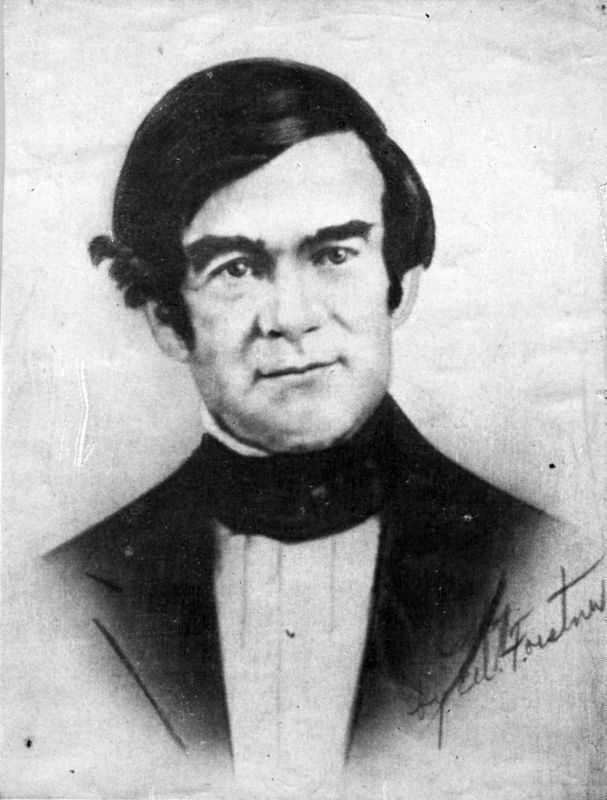 Chattanooga Public Library / John Ross, principal chief of the Cherokee Nation, is shown in this photo contained in a new exhibit, “Records of Removal: Ration Books from the Trail of Tears,” available through Feb. 28 at the Chattanooga Public Library or on the libary’s website. The portrait was taken sometime in 1838 or 1839 at the time of the forced march west known as the Trail of Tears.
The timing of the opening of the exhibit as tribal members and officials arrive in town for the anniversary celebration, Moccasin Bend Lecture Series lecture by Hoskin and Trail of Tears Association events was no accident.
“It was very intentional,” Sedgwick said in a follow-up phone interview. “When we heard that the National Trail of Tears Association would be here, we knew this was the perfect time to put that history out there in a way that it’s more accessible to people. This is the first time these originals are really out to be viewed in quite a long time. It’s evidence of what happened, and I think it makes it hit home.”
The ration books have been in the library’s collection since the 1940s, and now all of them have been scanned and are available, but not all have been transcribed from the original 19th-century handwriting for easier reading, Sedgwick said. The transcription work is ongoing.
“There were thousands of people held in camps here in Chattanooga as the government got ready to figure out how they were going to move an entire people 800 miles out to the West,” she said. “What the ration books really document is, as they were holding people here figuring out that process, they took them out of their homes. Just to keep them alive, they had to give them subsistence rations, and that’s the actual substance of the ration books as they’re given out to different Cherokee heads of families from week to week.”
While work continues to create a searchable name index from the collection, an account missing from the records bothers Sedgwick.
“What has stood out to me as I’ve worked on the exhibit, I’ve tried to think of the broader context and the impact that this had,” she said. “One thing that stands out to me is we don’t have records about who died along the way, who they were or even accurate numbers of how many people died throughout this process, and yet we have these meticulous records about the volume of corn that was issued out to people. I don’t know, I just find that hard to grapple with.”
Library officials will continue their partnership with the Trail of Tears Association to create a database for the association, she said.
“The ration books tell one really small slice of a bigger story,” she said. “But it’s an important piece.”
The ration books can now be viewed at the library’s Local History Digital Collections site at collections.chattlibrary.org or by visiting the downtown library during the branch’s regular operating hours, 9 a.m. to 6 p.m. Monday through Saturday.
Contact Ben Benton at bbenton@timesfreepress.com or 423-757-6569.
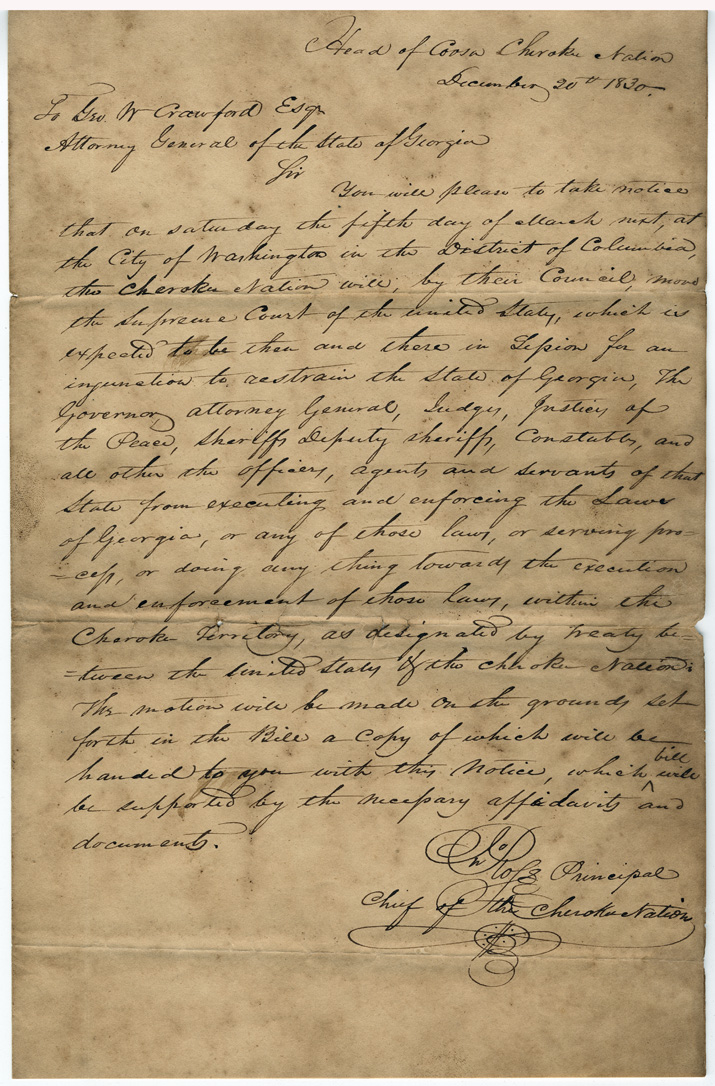 Chattanooga Public Library / A Dec. 20, 1830, letter from Cherokee Principal Chief John Ross to Georgia Attorney General George Crawford is part of a new collection at the Chattanooga Public Library called “Records of Removal: Ration Books from the Trail of Tears,” on display through Feb. 28. Ross, who served as chief from 1828 to 1866, protested the removal of the Cherokee through legal action. This letter to Crawford advises him of Ross’s efforts to stop Georgia from enacting or enforcing laws in the Cherokee Nation.