
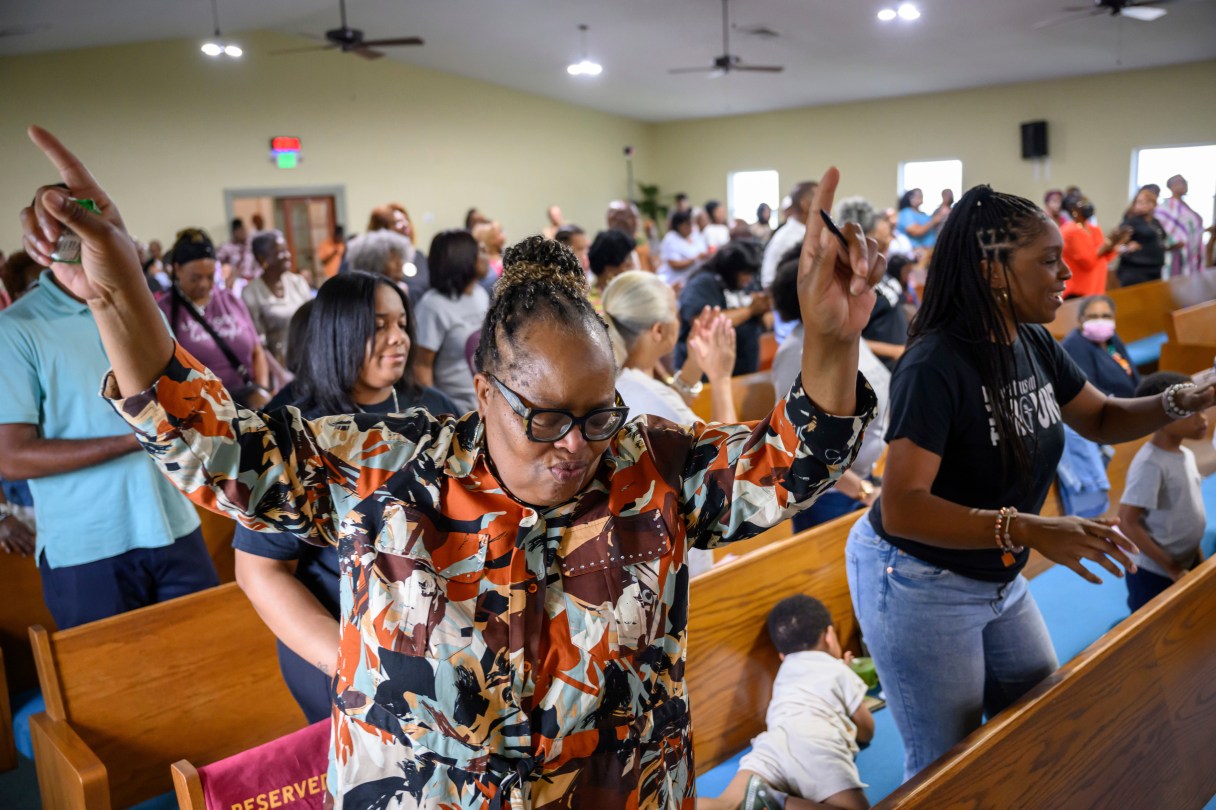
TURNER STATION, Md. (AP) — As the dust settled after the deadly collapse of Baltimore’s Francis Scott Key Bridge, as the initial shock wore off and the breaking news coverage subsided, residents of this tiny peninsula found themselves facing an uncertain future.
Many had spent decades living in the shadow of the Key Bridge, an iconic landmark that placed the community of Turner Station firmly on the map. For their working-class, historically Black neighborhood, it was a lifeline to the outside world, a source of both pride and convenience.
Within seconds, it was gone. Six construction workers died after a massive container ship lost power and veered off course, striking one of the bridge’s support piers in the overnight darkness of March 26.
Turner Station was already struggling with population loss and economic decline long before the bridge collapse — and its newest chapter promises even more challenges.