
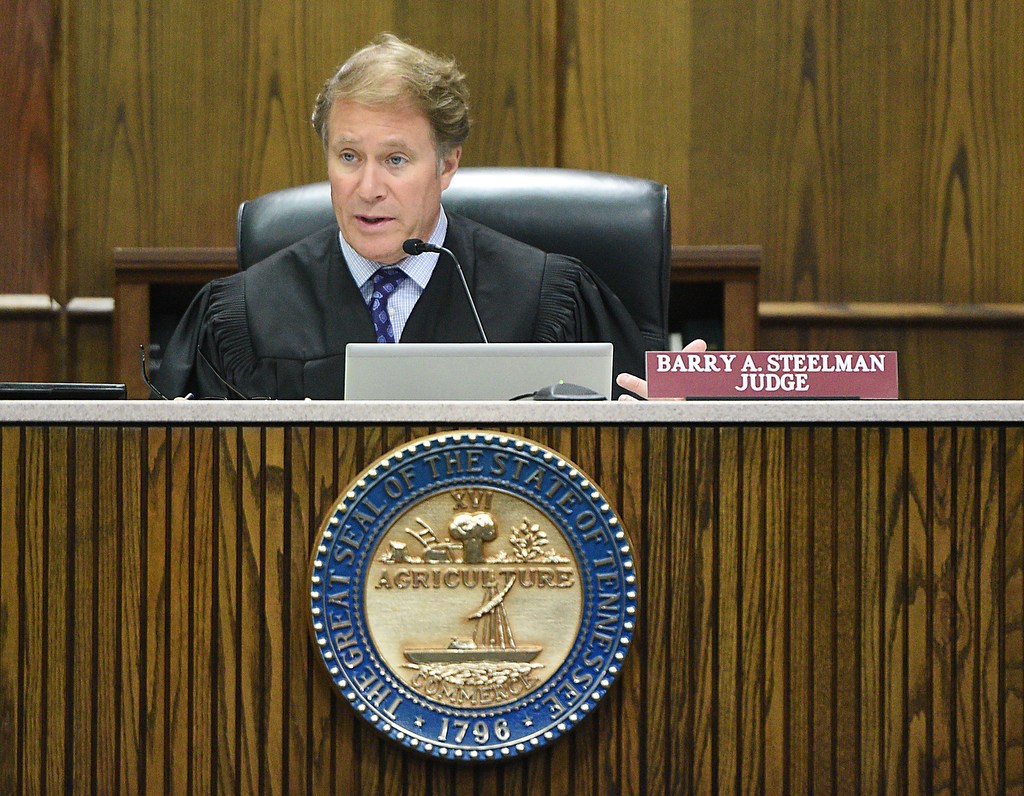
A Chattanooga man accused of possession of cocaine for resale had his jury trial postponed Monday, as prosecutors and a judge remain at odds over a proposed review of the case’s evidence.
The debate in Wendell Glass’ case revolves around the Chattanooga Police Department’s use of confidential informants. An informant allegedly made two controlled drug buys from Glass, which led to a 2021 warranted search of Glass’ Hal Drive home. His attorney, Ryan Wheeler, challenges that any controlled drug buys took place.
The officer who obtained the warrant in Glass’ case, Kenneth Scriven, also previously handled botched cases involving an informant who planted evidence, Wheeler argued.
The court has not concluded that Scriven is dirty, Hamilton County Criminal Court Judge Barry Steelman said from the bench.
Steelman ordered police and the district attorney earlier this month to hand over certain evidence, such as marked cash and copies of the evidence log for private inspection in what is called an “in-camera review.”
While Steelman was away at a judicial conference last week, he said, the district attorney’s office was responsible for two separate appeals that could prevent the review from happening.
Prosecutors filed one motion for an appeal “to prevent irreparable injury” from the disclosure of any information pertaining to the informant, Steelman said.
Then before Steelman could respond, prosecutors persuaded the state attorney general to file another appeal, which questions if Steelman had the authority to order a review of the evidence, Steelman said.
Steelman would be the only person reviewing information about the informant, so he couldn’t justify the state’s implication that he would reveal who he or she was, according to his statements.
The district attorney’s suggestion that Steelman may somehow leak the identity of the informant is completely baseless, Wheeler said in a written statement shared with the Chattanooga Times Free Press.
“The refusal of the state to comply with a court order for basic oversight is deeply concerning, especially given the Chattanooga Police Department’s troubled history with confidential informants,” Wheeler said. “This extreme position by the DA only serves to shield the police from further scrutiny and accountability.”
The fact that the state is “so resistant” and “being so cagey” has only heightened concerns that the controlled buys may have not happened as police say they did, Steelman said.
“It causes the court to wonder why you wouldn’t comply with it when you said you were going to comply with it,” he said.
Steelman asked prosecutors via text last week if they received the case evidence from Chattanooga police, but they didn’t respond, he said. He then asked again more than once Monday.
“We can’t answer that question,” Assistant District Attorney Miller Leonard said.
Leonard said that even Steelman knowing the informant’s identity could place the informant in danger.
“We’ve had people killed for cooperating with police,” Leonard said.
(READ MORE: Chattanooga man questions officer’s history with confidential informants)
Steelman referenced what he called a negative expose in the Times Free Press about the police department’s history with informants. Steelman said the expose was in part a result of how the district attorney’s office has chosen to proceed in this case.
Hamilton County District Attorney Coty Wamp apparently laughed from the audience in response.
“General, you think that’s funny?” Steelman said to Wamp.
“No, sir,” she responded.
“Why would the district attorney let it get to that level?” Steelman asked.
Contact Sofia Saric at ssaric@timesfreepress.com or 423-757-6476.