
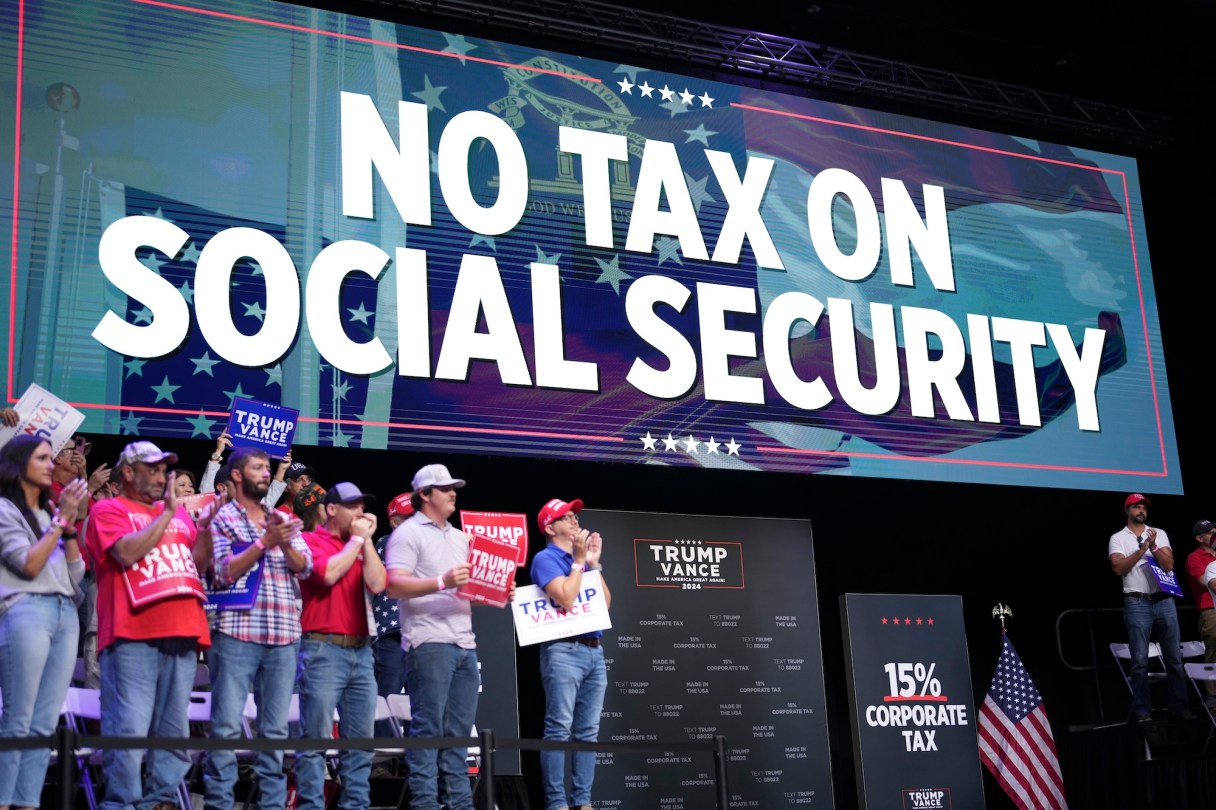
Remember when George W. Bush tried to privatize Social Security? I was very involved in that debate, and one thing I learned was that well-off Americans, who typically have substantial sums stowed away in their 401(k)s and have other assets besides, often have little sense of just how important Social Security is to their less-affluent fellow citizens. Benefits from the program make up more than half of many retirees’ incomes; a substantial number have almost nothing else to live on.
So it’s important to be aware that one effect of Donald Trump’s economic proposals, if enacted, could be to drive Social Security into bankruptcy, impoverishing many older Americans — not in the distant future, but within about six years.
First things first: Social Security is a government program, counted as part of federal spending. So how is it possible for an individual program to go bankrupt if the federal government as a whole remains solvent?
The answer is that Social Security has its own, separate budget. If you get pay stubs, you’ll see that there’s a deduction for FICA, the federal payroll tax. Your employer pays an equal amount, and when you include the employer share, about two-thirds of Americans pay more in payroll taxes than they do in income taxes. Most of these payroll tax receipts are dedicated to Social Security. (The rest support part of Medicare.)
This system, in which contributions from working-age Americans pay for benefits to seniors, has been placed under pressure from an aging population. But everyone knew long ago that baby boomers would eventually stop paying in and start taking money out, so, way back in the 1980s, steps were taken to shore up Social Security’s long-term finances. These steps included increasing the payroll tax rate, making benefits subject to income tax and gradually raising the age of eligibility for full benefits to 67 from 65.