
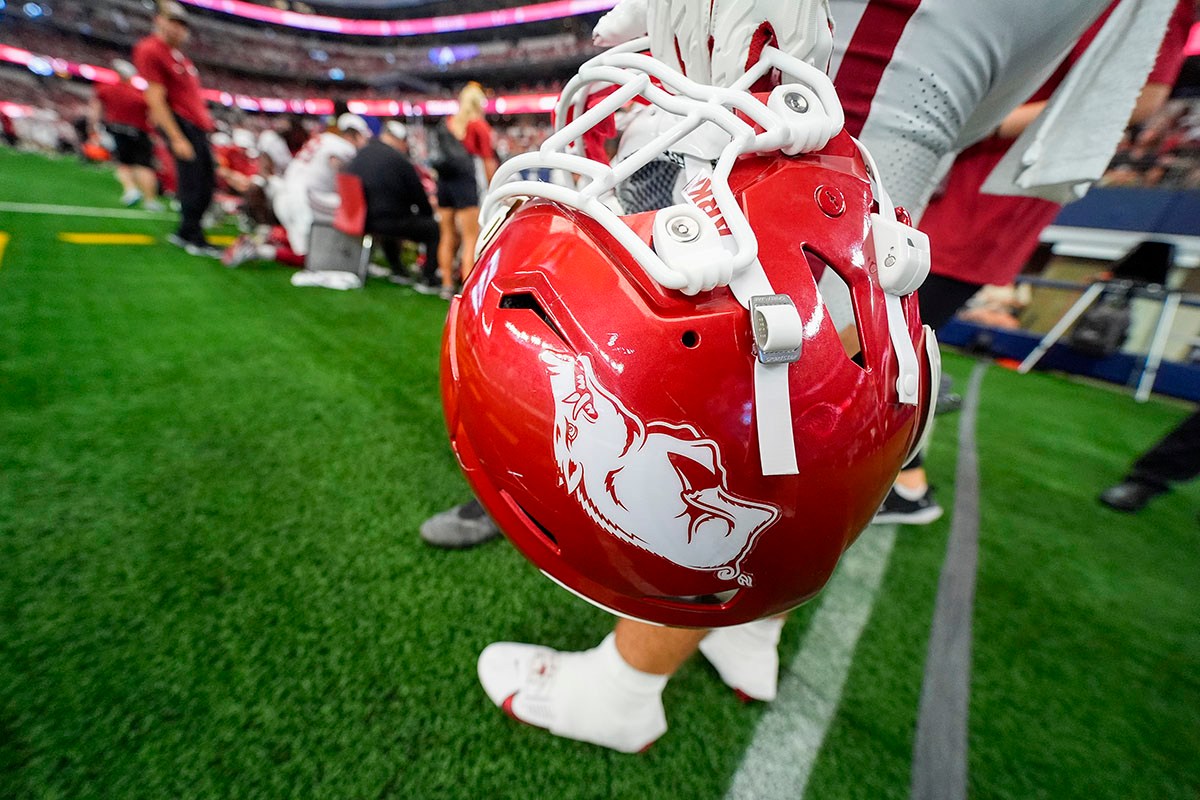
Football coaches have been communicating with players through their helmets on unencrypted frequencies in games involving power conference teams this season, leading to the possibility that plays could be intercepted by unauthorized people using certain scanners.
The Southeastern Conference acknowledged it was aware of the problem, first reported by The Athletic on Wednesday, and that it was in touch with other conferences and the helmet maker, GSC, about the issue.
“We are not aware of any instances of the system being compromised during games,” the SEC said in a released statement. “GSC has developed an update to resolve the issue and we have made our schools aware of their ability to update their systems at a time of their choosing.”
All of the conferences in the Football Bowl Subdivision are using helmet communications this season after the NCAA passed a rule allowing them. The four most powerful leagues — the Atlantic Coast Conference, Big 12, Big Ten and SEC — hired GSC, which is also the company the NFL uses.
The Big Ten told The Associated Press it has not had any trouble related to the encryption problem.
The Athletic reported the vulnerability was discovered Sept. 28 in an SEC game between Arkansas and Texas A&M, saying it was possible, but not easy, for frequencies to be accessed by unauthorized people using scanners.
The vulnerable communications are limited to the plays and instructions that coaches relay to players via their helmets — usually a quarterback on offense and a linebacker on defense — by pressing a button to activate the system. Communications are cut off when the play clock reaches 15 seconds.
Last year, the Big Ten suspended Michigan’s head coach at the time, Jim Harbaugh, for three games after allegations that the Wolverines were using video to steal opponents’ signals. The NCAA approved the helmet rule about six months after starting an investigation into the allegations.