
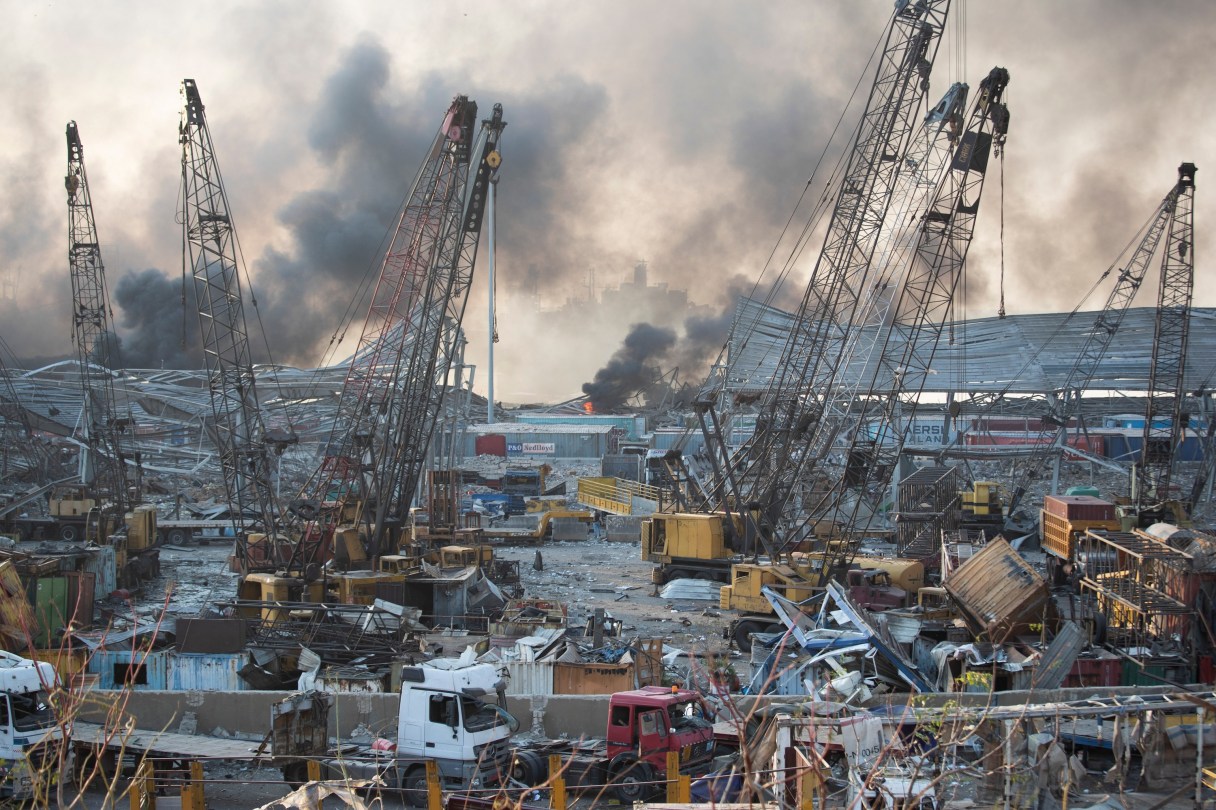
BEIRUT (AP) — Chris Knayzeh was in a town overlooking Lebanon’s capital when he heard the rumbling aftershock of the 2020 Beirut port blast. Hundreds of tons of haphazardly stored ammonium nitrates had exploded, killing more than 200 people and injuring thousands.
Already struggling with the country’s economic collapse, the sight of the gigantic mushroom cloud unleashed by the blast was the last straw. Like many other Lebanese, he quit his job and booked a one-way ticket out of Lebanon.
Knayzeh, now a lecturer at a university in France, was visiting Lebanon when news broke Tuesday of a deadly attack in which thousands of handheld pagers were blowing up in homes, shops, markets and streets across the country. Israel, local news reports said, was targeting the devices of the militant Hezbollah group. Stuck in Beirut traffic, Knayzeh started panicking that drivers around him could potentially be carrying devices that would explode.
Within minutes, hospitals were flooded with bloodied patients, bringing back painful reminders of the port blast four years ago that left enduring mental and psychological scars for those who lived through it.
A day later, a similar attack struck walkie-talkies. In total, the explosions killed at least 37 people and injured more than 3,000, many of them civilians. Israel is widely believed to be behind the blasts, although it has neither confirmed nor denied responsibility.