

It’s been nearly 40 years since Mike Dougher started booking bands at what’s now the Boathouse restaurant on Amnicola Highway.
“It was the Sand Bar then,” says Dougher, 73. “The jam-band scene was emerging in the South, and (bands) had to drive through Chattanooga to get to anywhere.
“We’d run blues on Monday, acoustic on Tuesday and Wednesday, alternative on Thursday, whoever we could get on Friday and Saturday and reggae on Sundays,” he adds. “I booked Hootie and the Blowfish in the early 1990s — the one band I didn’t charge a cover for because I knew nobody would come.”

Today’s Chattanooga is home to an assortment of live-music venues, ranging from the 70-seat Woodshop in St. Elmo to the Barrelhouse Ballroom (550 seats) and The Signal (1,300 seats) downtown. The 1,700-seat Tivoli Theater, also downtown, is offline for renovation and the multi-purpose Soldiers and Sailors Memorial Auditorium seats nearly 4,000 for concerts.
Chattanooga needs at least one more music venue — a 6,000-seat outdoor amphitheater, with half those seats under cover and the other half on lawn space. That was the finding of a 2024 study commissioned by Chattanooga Tourism Co., conducted last year by Conventions, Sports & Leisure International, based in Dallas.
“Music is a cultural asset, integral to the visitor experience in Tennessee and Chattanooga,” Chattanooga Tourism President/CEO Barry White wrote in a text message. “It offers a taste of who we are and sets the stage for showcasing local talent.”
He notes in a phone interview that, while the Riverbend and Moon River festivals have been paused, Chattanooga is set to host the International Bluegrass Music Association’s World of Bluegrass September 25-27. That event, which will include a convention, trade show, awards and a two-day festival, is expected to draw upwards of 50,000 fans.
“Huge win for the community,” he says. “Very excited to have it here.”
White says a 6,000-seat outdoor amphitheater would “fill a gap” in the city’s portfolio of music venues. Max Finley Stadium, which seats 22,000 and is home to the University of Tennessee at Chattanooga football team and the Chattanooga Football Club, has seldom hosted concerts in its 28-year history. Country music star Kane Brown, a native Chattanoogan, played there in 2022 and drew about 15,000.
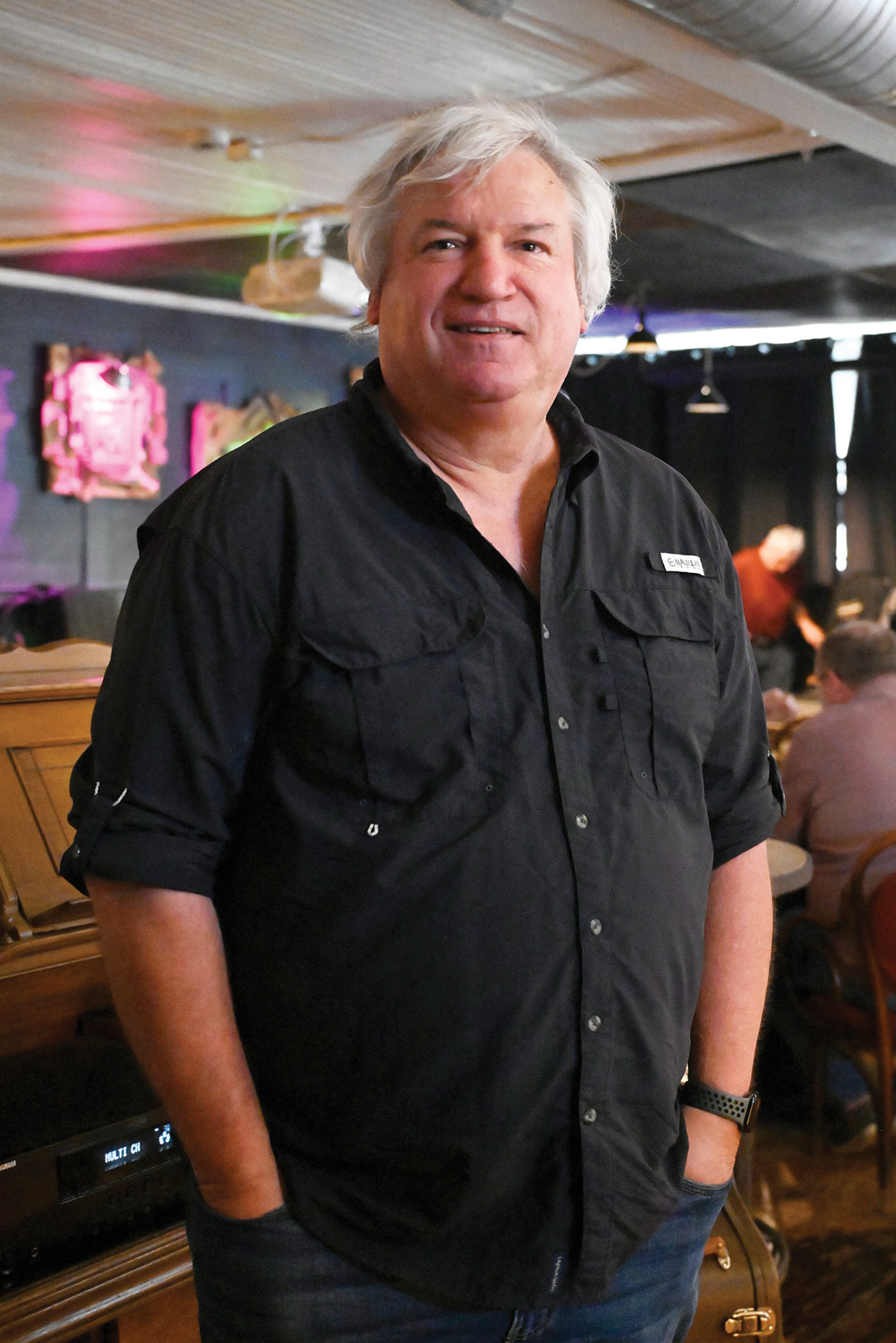
In a survey conducted in conjunction with the study, three of four respondents say Chattanooga needs a new music venue. But Barry Courter, who covered local entertainment at the Chattanooga Times Free Press and one of its predecessors, the Chattanooga Free Press, for more than 30 years, isn’t so sure.
“It’s just my opinion, but 6,000 seats defeats the purpose,” says Courter, who talks about the music industry generally, and the Bonnaroo festival more specifically, as co-host of The What Podcast. “We need twice that. If we built 6,000 seats, we’ll wish we’d done 12,000. The reason Moon River’s (on hiatus) isn’t because it wasn’t successful — they can’t make money with 12,000 seats. They need 15,000.
“Do we need something? Yes. Would it be cool? Yes. I just don’t understand why 6,000 seats,” he says.
Courter, 61, says that what the Chattanooga music scene really needs is more smaller venues, in the vein of Barrelhouse and Songbirds, to name just two.
“Any city needs a system that builds a fan base,” he says. “You have to be able to see a band in a small show, then they come back to a bigger house. You go from 200 seats to 600, then 1,200. It takes time to bring in a band and then grow it.
“We don’t have that progression right now. … But maybe that changes when the Tivoli reopens.”
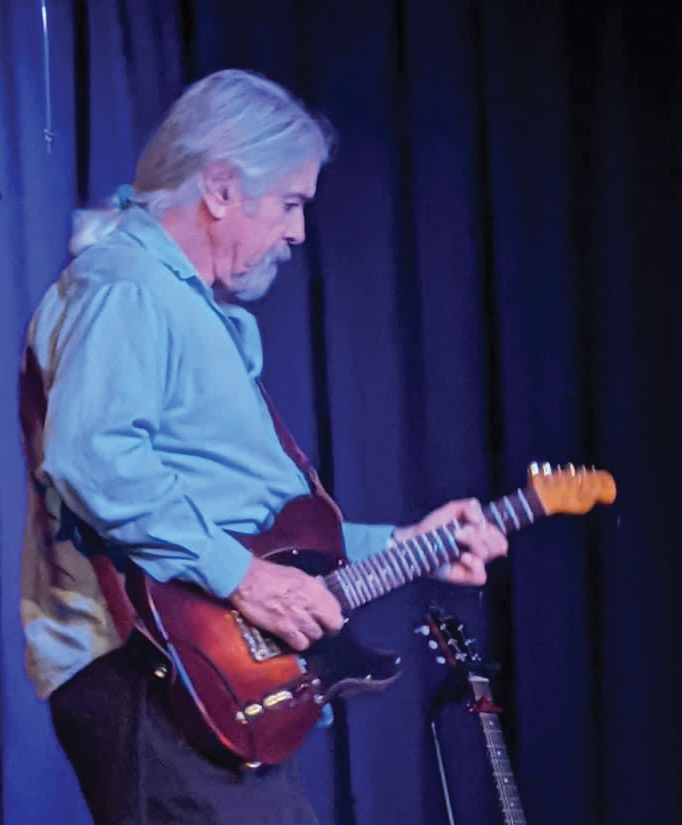
John Rawlston, a Chattanoogan who’s been playing around the area for nearly 50 years in multiple bands, agrees with Courter.
“We don’t need a 6,000-seat venue,” Rawlston, whose current band is Pan-O-Ram Club, says in a phone interview. “The big-ticket show is not what I see in this town.”
Rawlston recalls traveling to Clarksdale, Mississippi, as the global pandemic was winding down, with the goal of immersing himself in the blues music for which the city is renowned worldwide.
“Those places had music (playing) in the afternoon, the early evening, late at night, in clubs or just out in the street,” he recalls. “We need more places where you hear music when you walk by, whatever time of day. You think ‘that sounds interesting,’ and walk in.
“We’ve got beaucoup musicians, beaucoup venues and parks. I would animate those parks, those stages around town. I get that someone has to pay for that, and it would take time and effort, but we could make music a prime (tourism) asset, like we do with scenic beauty and outdoor culture.”
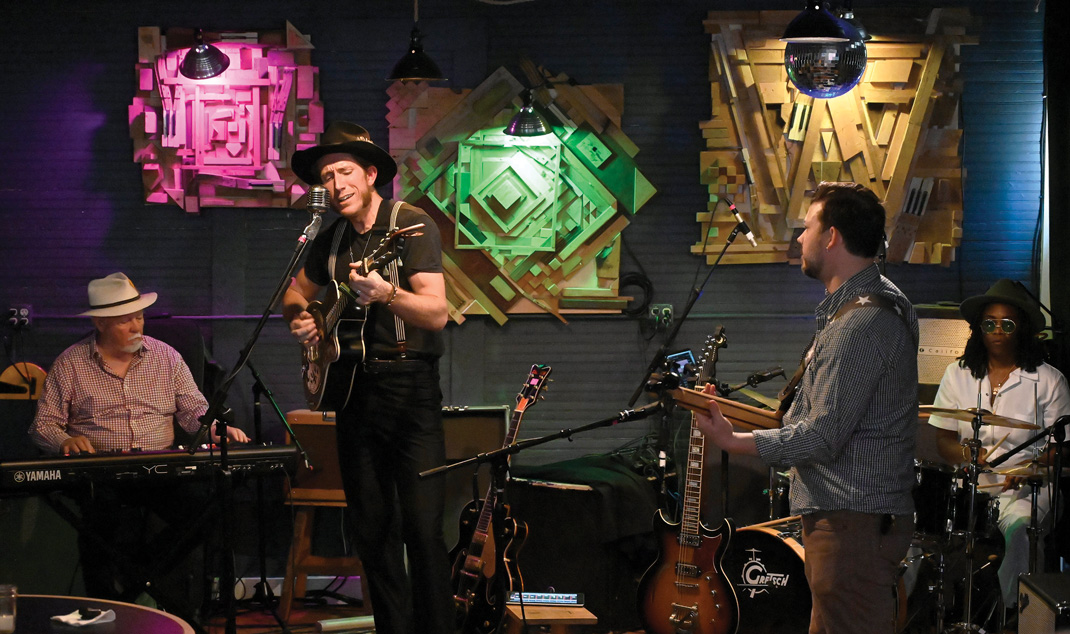
Where Rawlston feels Chattanooga has the potential to be a music hotbed, Jhett (pronounced JET) Black thinks the city’s already there.
“I spent the last 12 years as a touring musician, artist, producer and promoter, and I’ve never been anywhere as naturally musically prolific as Chattanooga — except maybe Ireland,” says Black, who recently purchased The Woodshop, in the St. Elmo music venue, with his wife, Callie Sioux Black. “The average player/performer here is excellent and can stand next to anyone in Nashville or Atlanta.”
A 34-year-old New Mexico native, Black says a venue such as the 6,000-seat amphitheater cited in the 2024 study is a vital “rung on the ladder” to having a “good, healthy music culture and scene.”
“We have a few good, regionally heavy-hitting bands that are on the verge,” he says. “There has to be a way for artists and audiences to go from open-mic (nights in small venues) to arenas, and we absolutely have the local infrastructure to support a venue like that. I see it as nothing but good for the local music scene.”
READ MORE
* Chattanooga’s biggest tourist attraction has a new leader
* Chattanooga: A family destination for every generation
* Chattanooga hotel visits, tourism spending highest in Tennessee last year
* Chattanooga Convention Center eyes renovation and expansion