
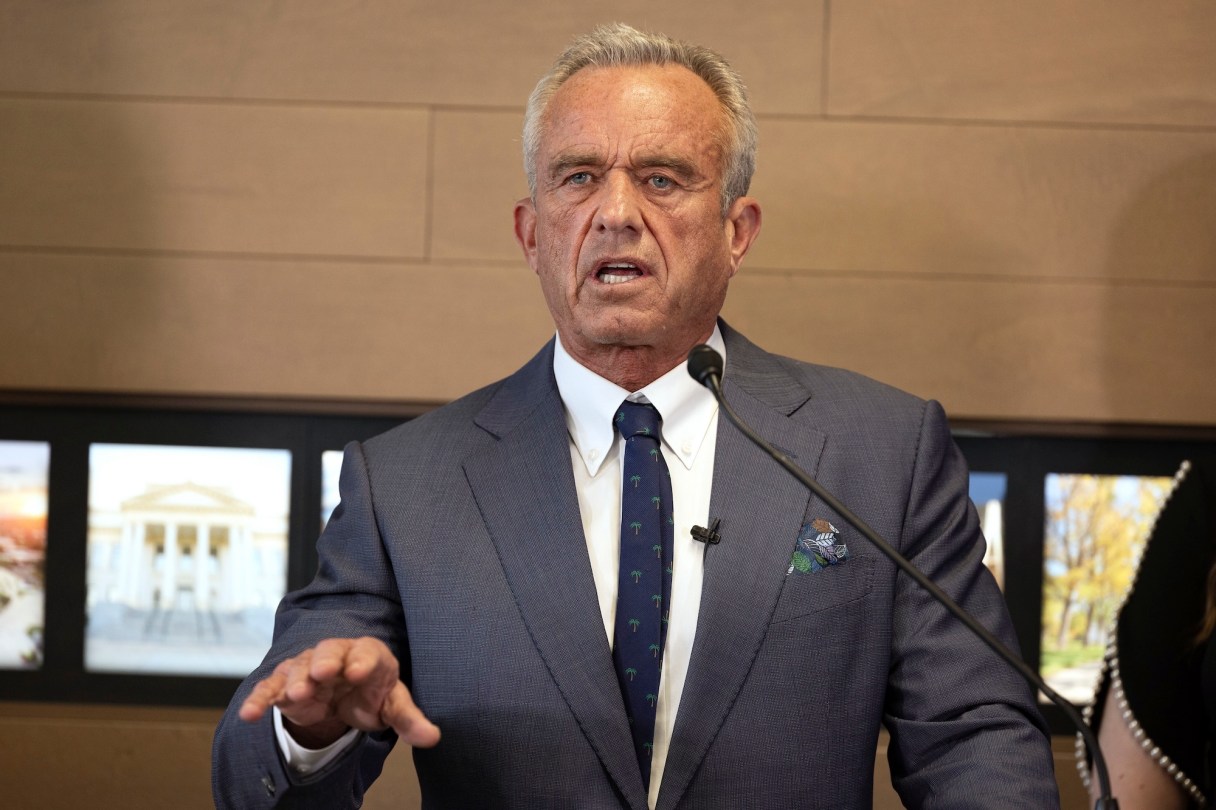
I remember when railing against the supposed evils of fluoride in drinking water was the work of a few voices clustered on the fringes of political discourse. The map shifted after Robert F. Kennedy Jr. took office as the secretary of health and human services. Last week, he announced that as part of his plan to “make America healthy again,” he would call for an end to fluoridation.
If fluoridation ends, what will occur is no mystery. More children’s teeth will rot, which will cause pain, social stigma, impaired development and lifelong health problems, and raise the costs of their medical care. The worst effects will fall on disadvantaged children, the kids who don’t have access to frequent dentist visits and special treatments like varnishes to make up for the loss. Adults with bad oral health also suffer more from cardiovascular complications and even Alzheimer’s.
We know this because it has already happened in the other places that stopped fluoridating their water. Calgary, Canada. Juneau, Alaska. The entire country of Israel. In all these cases, children’s teeth got worse, more so over time. They had to undergo more dental procedures, a greater number of which required general anesthesia, an indicator of severe problems and a risk factor itself. The costs went up.
What will the places banning fluoride gain? Fluoride is a miracle mineral that can strengthen tooth enamel and hinder bacterial infection, but, like many other substances used in health and medicine, it can cause unwanted side effects, ranging from tooth and bone problems to neurological effects and more, in excessive doses. Numerous credible studies show these effects can occur only at very high doses — much, much higher than what any state has ever added to the drinking supply. The benefits of lower doses have been demonstrated through more than 75 years of intense research.
Why the sudden urge to talk about fluoride? I think the answer may lie somewhere quite far afield. In Texas, actually.