
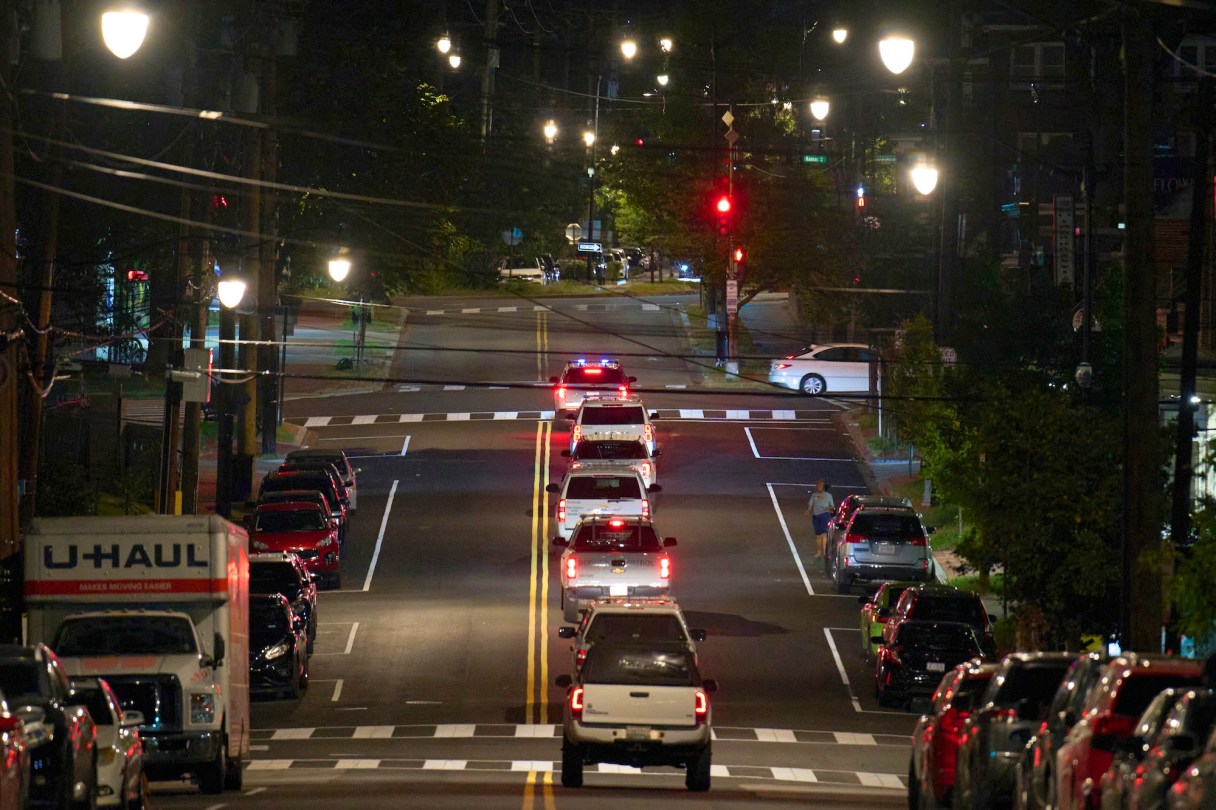
How did the president try to justify the “public safety emergency” he used to deploy the National Guard to Washington and seize control of its local police force?
He said there was crime — “bloodshed, bedlam and squalor and worse.”
“Our capital city has been overtaken by violent gangs and bloodthirsty criminals, roving mobs of wild youth, drugged-out maniacs and homeless people,” said President Donald Trump in a stark attack on the nation’s capital. The solution? Military force. “We’re going to put it in control very quickly, like we did in the southern border.” The president later described Washington as more violent and dangerous than some of “the worst places on earth.”
None of this is true. The Justice Department itself announced in January that crime in the capital is, according to data from its Metropolitan Police Department, “the lowest it has been in over 30 years.” The MPD cites a 26% decrease in total violent crime this year compared with the same period a year earlier. And the areas around the White House, where the president has made a point of stationing National Guard members, are not known for crime or disorder (unless you count the Jan. 6 rioters, pardoned by Trump in one of the first acts of his second term). Despite several high-profile incidents — including an assault on a young member of the Department of Government Efficiency — there is no evidence to support the president’s hellish depiction of the district.
But his claims are less reason than pretext. Trump is simply enthralled by the image of a crackdown, especially on those he’s deemed deviant. Recall that he wanted to use the Insurrection Act during the protests of the summer of 2020, asking his secretary of defense, Mark Esper, if soldiers could shoot protesters “in the legs or something.” In addition, and perhaps more than anything, he wants to appear in charge, whether he’s accomplishing his goals.