
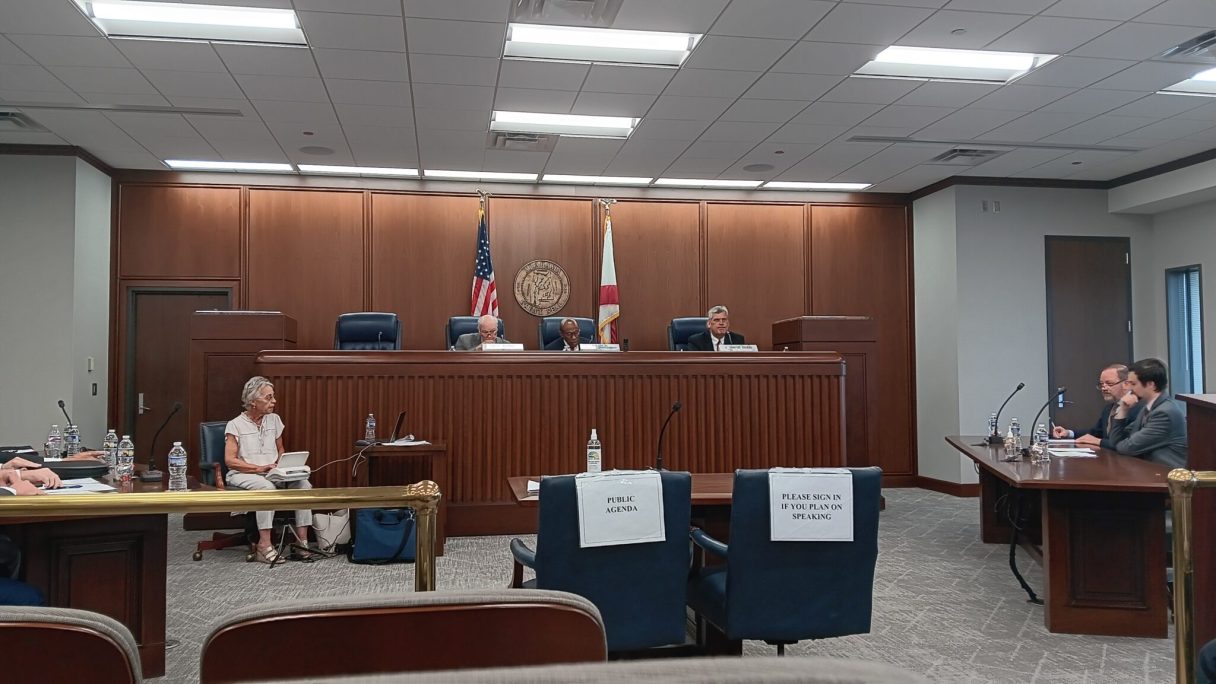
The Alabama Ethics Commission approved on Wednesday guidance allowing a former employee of the Alabama Department of Human Resources to represent foster parents in cases with the agency.
Members of the commission approved an advisory opinion that the “Revolving Door” provision of the Alabama Ethics Act does not prohibit Kimberly Dobbs, an attorney currently in private practice, from representing clients who are foster parents in adoption proceedings before the agency.
The advisory opinion comes after a request from Dobbs. According to Brian Paterson, assistant general counsel for Alabama Ethics Commission, Dobbs retired from the ADHR in 2025 after working at the department for 17 years, but continues to be a part time employee, working as an administrative law judge for the agency when needed.
The Revolving Door provision prohibits people from working for two years in specific capacities that are related to the previous state agency in which they worked.
ADHR oversees situations in which parents have lost custody of their children. In many cases, parents seek to adopt children in their custody with consent of the agency.
“During her 17 years with ADHR, Ms. Dobbs represented them at trial court and appellate levels in dependency and termination cases,” Paterson said.
Dobbs asked the Alabama Ethics Commission if she can represent foster parents as a practicing attorney in private practice in adoption proceedings with consent of ADHR in cases she was not involved in as an attorney or as an administrative law judge.
Staff said they found nothing in the Revolving Door provision of the Alabama Ethics Act applied to Dobbs’ situation.
The Alabama Ethics Commission also approved an increase to the maximum amount that state officials can accept without reporting it to $35 per occasion and $70 annually. A couple of years ago, the Commission approved an increase from $22 to $32 per occasion and from $50 annually to $64.
Read more at AlabamaReflector.com.