
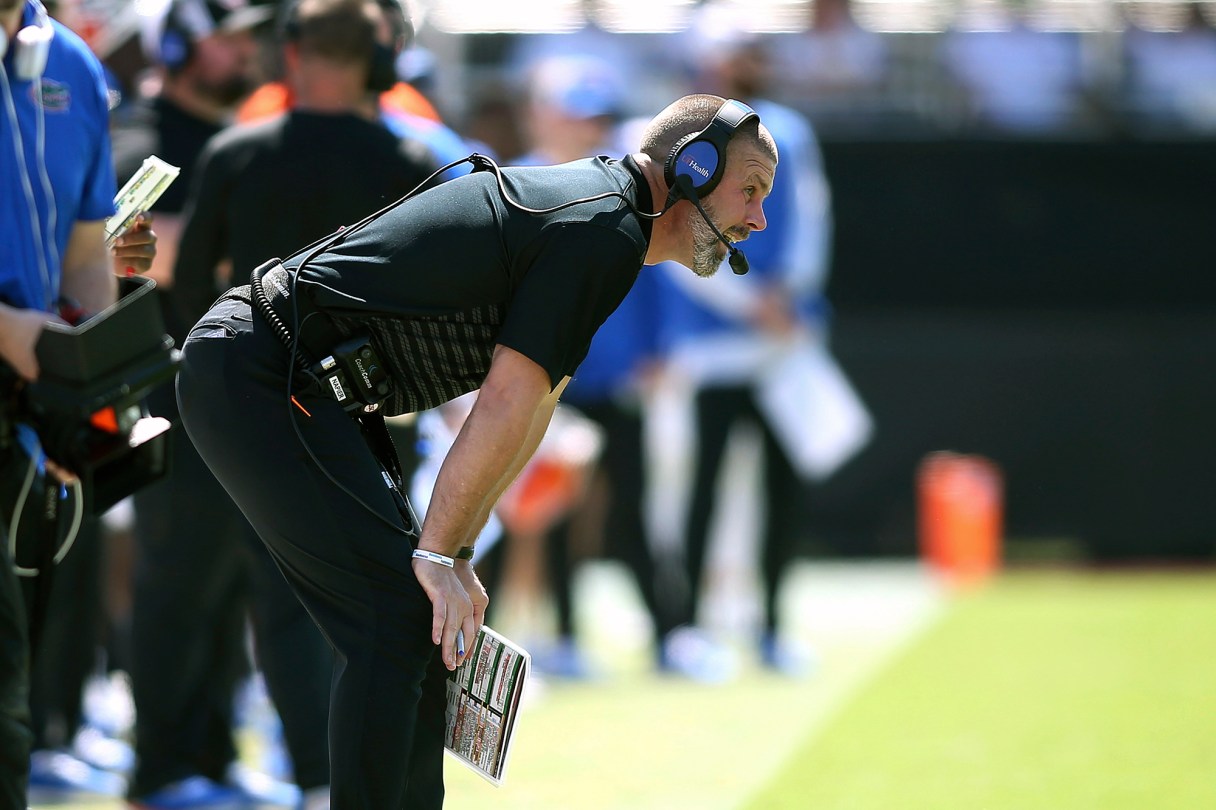
HARRISONBURG, Va. — Four years ago, Billy Napier walked away from the Sun Belt Conference football powerhouse he had built as the University of Louisiana at Lafayette’s head coach.
At least in part, Napier decided to move on because he wasn’t sure how the Ragin’ Cajuns would handle the financial challenges of new NCAA rules allowing college athletes to profit from their name, image and likeness.
There was also the not-so-small factor of a Power Four conference program coming calling in the form of the Florida Gators, who hired Napier in their latest attempt to get back to competing for Southeastern Conference titles and national championships.
Four years later, Napier is returning to the Sun Belt with James Madison University. And the Dukes’ ability to compete financially was one of the main drivers behind his decision to become the successor to Bob Chesney, who has been hired by Big Ten member UCLA but is sticking with JMU until its 2025 season is over.
“This place has what it takes to dominate the competition for sure,” Napier said of the Harrisonburg program ranked No. 19 in the AP Top 25 and headed to the College Football Playoff for the first time in just its fourth season in the top-tier Football Bowl Subdivision after several deep runs in the Football Championship Subdivision’s 24-team playoffs.
The Dukes (12-1), the lowest seed in the 12-team bracket for the CFP, will visit No. 5 Oregon (11-1) of the Big Ten in the opening round on Saturday for a 7:30 p.m. Eastern matchup at Eugene’s Autzen Stadium. The game will be televised by TBS, TNT, TruTV and HBO Max.
The winner will go on to play No. 4 Texas Tech (12-1), the Big 12 champion, in the Orange Bowl quarterfinal on New Year’s Day at Hard Rock Stadium in Miami Gardens, Florida. The Red Raiders received a first-round bye as one of the top four seeds.
JMU is one of two Group of Five league champions in the CFP this season, with American Conference winner Tulane the other. The 17th-ranked, 11th-seeded Green Wave (11-2) will visit No. 6 Ole Miss (11-1) of the SEC in another first-round matchup Saturday.
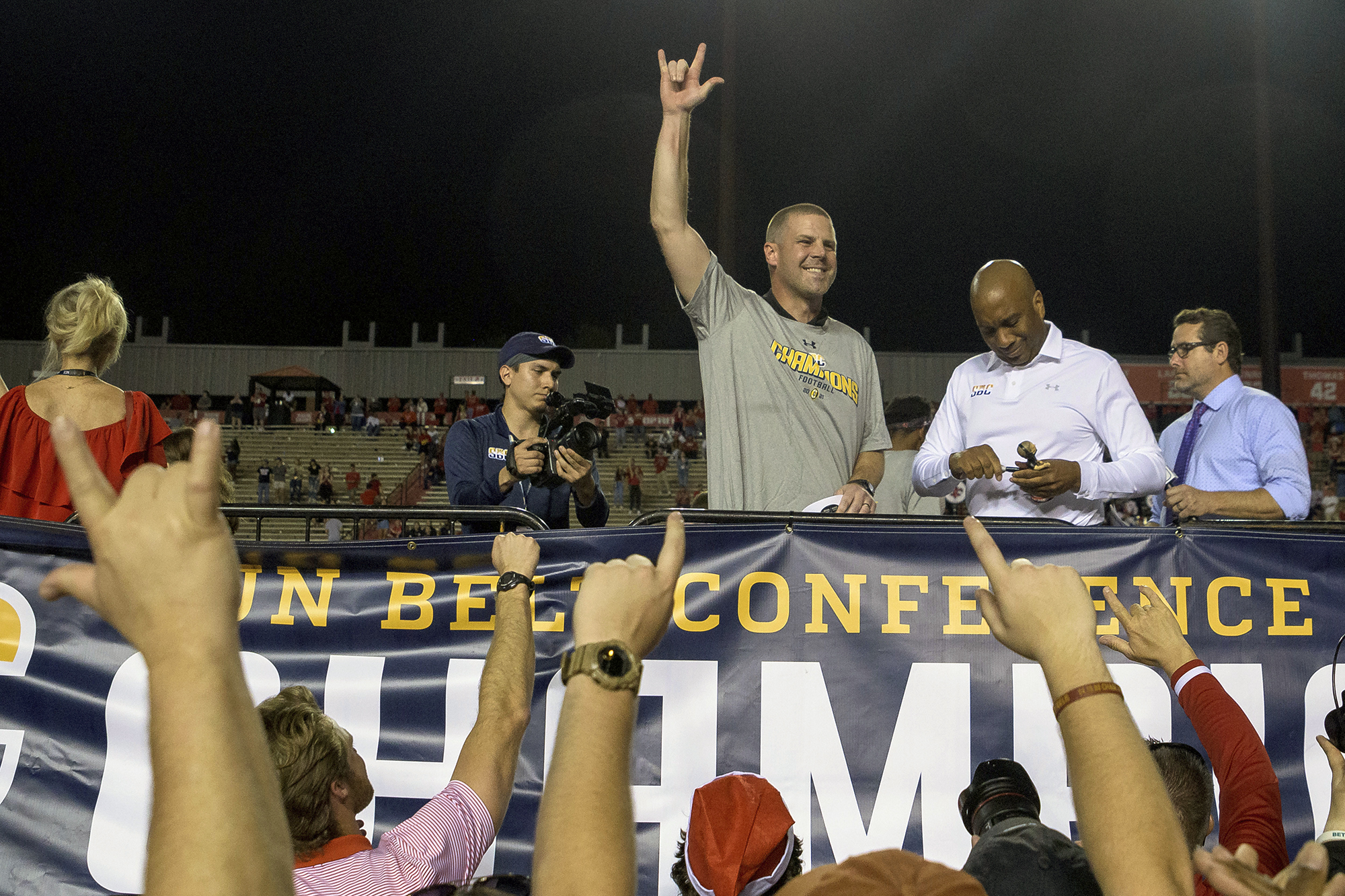
Napier went 40-12 in four seasons at Louisiana, dominating Sun Belt competition. The Ragin’ Cajuns won the conference’s West Division all four years he was there and earned league championships in his final two seasons. He was twice named the league’s coach of the year.
After leading Louisiana to a 12-1 record in 2021, though, Napier headed for Gainesville.
“I stayed at Louisiana after year two when we had opportunities, after year three when we had opportunities,” said Napier, who was a Northwest Georgia prep standout at Murray County and went on to play quarterback for an FCS program, Furman, which competes in the Southern Conference alongside the University of Tennessee at Chattanooga.
“And we probably, truth be known, would have stayed longer if it wasn’t for NIL,” Napier continued. “Because we know that was coming. We knew that roster was going to be tough to keep together.”
At Florida, Napier went 22-23 overall and 12-16 in SEC games during three-plus seasons. The Gators were 3-4 overall and 2-2 in league play when he was fired on Oct. 19, the day after a home win against Mississippi State.
As he surveyed the landscape, considering his future, he thought a lot about how college football had changed since he first took over at Louisiana in 2018. The NIL rules allowing college athletes to cash in on their fame went live in summer 2021, while this year marked the arrival of revenue sharing after the $2.8 billion House v. NCAA antitrust lawsuit settlement.
“It’s very different,” Napier said, noting the impact revenue sharing can make for FBS programs outside the power four conferences— the Atlantic Coast, Big 12, Big Ten and SEC — as they try to keep at least some of their best players from seeking greener pastures.
“Now you evaluate jobs relative to alignment, resources — which basically means building infrastructure and hiring a great staff — and then the rev share that allows you to compensate really good players,” he added.
Napier said that changes in the transfer process — athletes are almost always immediately eligible at their new school, whereas sitting out a season was once standard — and roster limits after the House settlement have changed the game since he last coached in the Sun Belt.
“But ultimately, football’s football,” said Napier, who comes from a coaching family, having played for his father at Murray County and with brothers who are in the business. “We’re going to need to evaluate well. Basically going to recruit a high school cycle each year. Then you’re going to recruit a portal cycle each year. Then start over.”
Those changes aren’t something Napier, whose hire was announced by JMU on Dec. 6, is thinking about in the abstract.
He jumps right into one of the most awkward positions in the country: seeking to retain players of a playoff-bound team while their current coach presumably is hoping to take some of the Dukes’ top talent with him west to UCLA.
“I’m for transparency,” Napier said. “Let’s rip the Band-Aid off. Who are you taking? And who wants to go?”
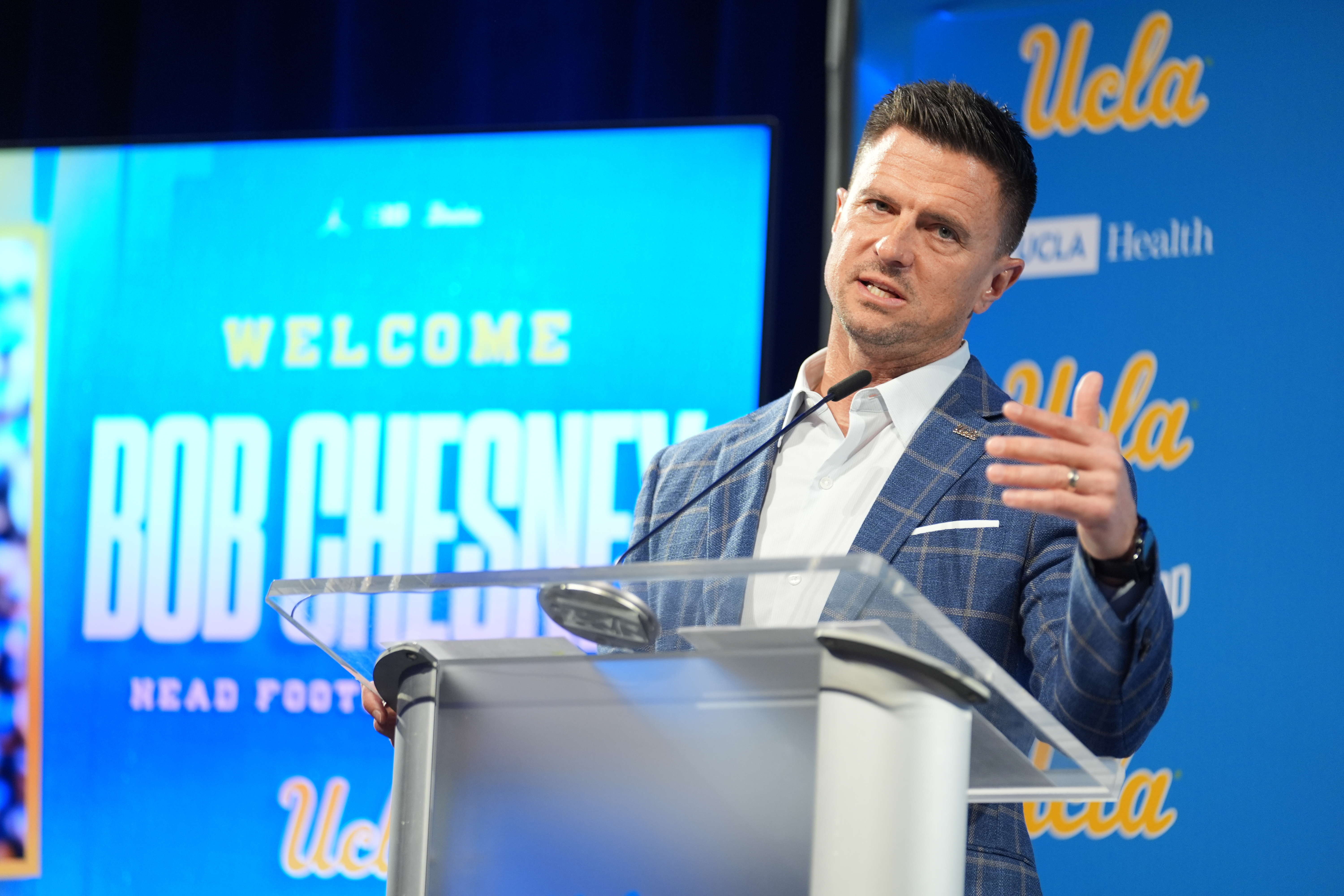
For all their success, the Dukes continue to face a familiar problem for programs still not at the very top of college football: retaining not just players but coaches, with Napier becoming JMU’s third leader in a four-season stretch.
In two seasons at Indiana, former Dukes coach Curt Cignetti has put a program that was an afterthought in the Big Ten into the national spotlight. The top-ranked, top-seeded Hoosiers are 13-0 for the first time and received a bye into the CFP’s Rose Bowl quarterfinal on New Year’s Day.
When he left JMU after five seasons for Indiana, he took 13 of the program’s top players with him. That group includes the leaders this season for the Hoosiers in touchdown runs (Kaelon Black), touchdown catches (Elijah Sarratt) and pass breakups (D’Angelo Ponds), as well as their second-leading tackler (Aiden Fisher).
Nine former Dukes started multiple games this season for the Hoosiers, who beat reigning national champion Ohio State in the Big Ten title game earlier this month when the Buckeyes were ranked No. 1.
Chesney had to rebuild JMU almost entirely from scratch. He brought in 58 new players his first season.
Athletic director Matt Roan said he and Chesney navigated the entire season with openness and honesty, starting with UCLA’s first inquiries about Chesney after the third week of the season, when the Bruins fired Deshaun Foster early in his second campaign as head coach at his alma mater. That gives Roan confidence that Chesney and Napier will be able to work simultaneously and professionally toward the future of both coaches’ programs.
“We were very transparent throughout,” Roan said. “The day that UCLA announced that DeShaun Foster was being removed as the head coach, they started calling. And every program in America started calling. And we would have those open, honest conversations about where things could go. We’ve been the adults in the room.”
Jim Schmidt, JMU’s school president, expressed confidence the Dukes will remain successful under Napier — no matter how the fight over players turns out.
“I have no doubt that we may lose some talented players to UCLA,” Schmidt said. “We certainly lost some talented players to Indiana. I believe that we will retain the right players, and I believe Coach Billy will bring some great players to round that out.”