
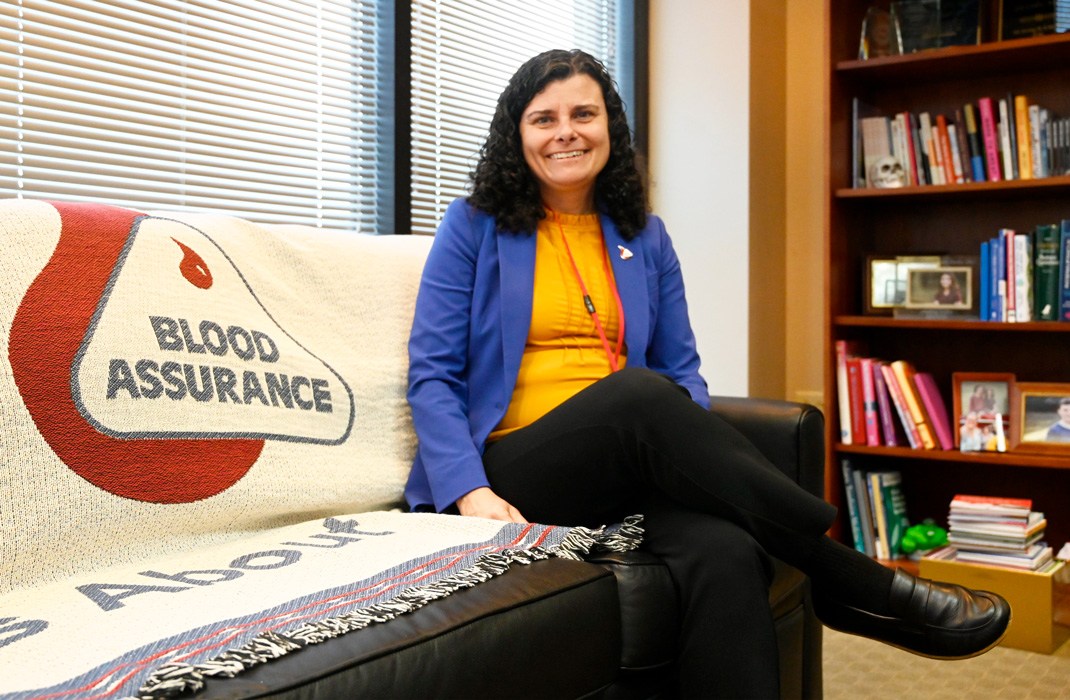
Blood Assurance should soon have a new level of blood assurance.
Dr. Liz Culler, the Chattanooga nonprofit’s president/CEO, says Blood Assurance became the primary blood supplier to Nashville’s Vanderbilt Hospital last summer. Blood Assurance was already playing a similar role for Tri Star HCA hospitals in Middle Tennessee, as well as for Parkridge, CHI Memorial and Erlanger in Chattanooga.
Culler says growth of the donor base anticipated in the wake of the Vanderbilt deal will make Blood Assurance, Tennessee’s largest single blood distributor, “self-sufficient” by the middle of this year.
“Blood centers help each other out,” she says, but adds that the partnership with Vanderbilt makes it unlikely that Blood Assurance will have to ask in the future for help from one of its counterparts.
Blood Assurance was launched in 1972 by the Chattanooga Hamilton-County Medical Society, the Chattanooga Area Hospital Council and the Chattanooga Jaycees, and now has 16 physical locations, 19 bloodmobiles and serves health care facilities in Tennessee, Georgia, Alabama, Kentucky and North Carolina.
Culler is a veteran of nearly 20 years at Blood Assurance, first serving as medical director, and then as chief medical offer as of two years ago. She was tapped in early 2024 to succeed the retiring chief executive, J.B. Gaskins.
She was still doing her fellowship (at Atlanta’s Emory University hospital) when she interviewed for her first position in 2005. She immediately clicked with the company and her colleagues.
That fit is not just professional, but personal for Culler, who was 13 when her mother became extremely sick, and lost a lot of weight. “Her tests all came back negative,” she remembers, “but you could look at her and tell she was ill.”
Her mother qualified for a clinical trial, which included multiple blood transfusions. The treatment worked, and her mother lived another 19 years.
“She was at my graduation and my wedding because of the kindness of blood donors,” Culler says. “I’d gone to medical school thinking oncology, but I decided I wanted blood banking.
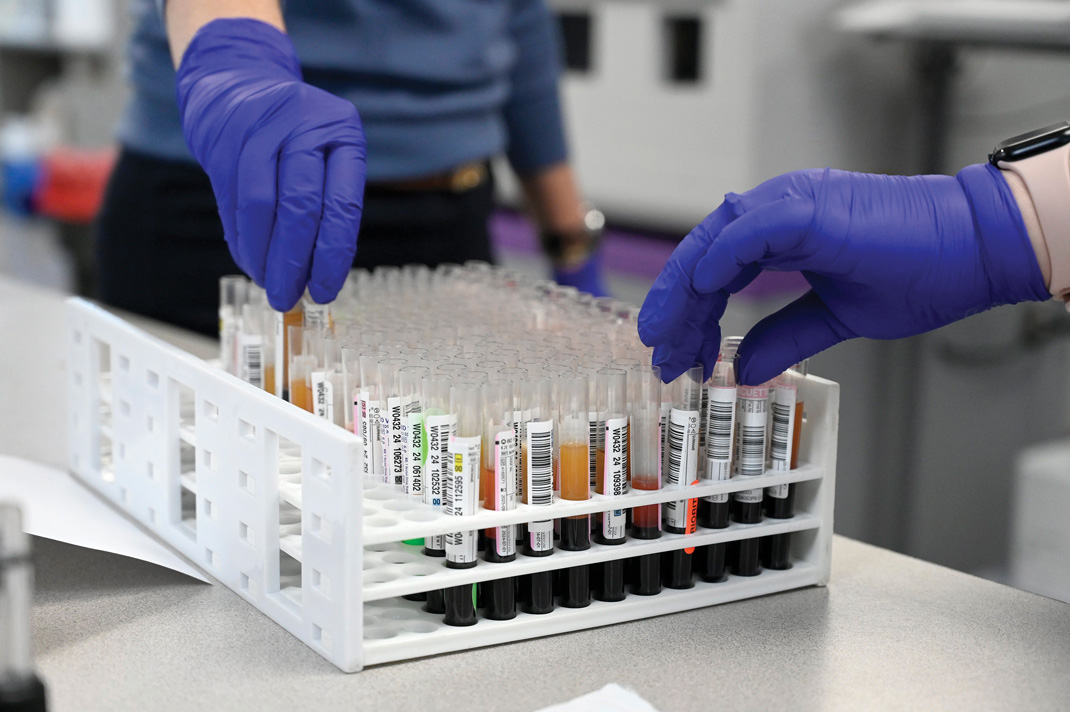 Photo by Abby White / Blood samples taken at the Fourth Street Blood Assurance site.
“I like to think that what we’re doing here is helping someone keep their mom around longer.”
One of the ways Culler’s looking to do that is cellular therapy, wherein white blood cells are harvested from a patient with leukemia or lymphoma, for instance. The DNA of those cells is altered, after which the cells are reinfused to the patient.
“(The altered white cells) attack the cancer directly,” she says. “It replaces a lot of bone marrow transplants.”
Culler says cellular therapy is being done at Vanderbilt Hospital, Nashville’s Sarah Cannon Cancer Center and the University of Alabama at Birmingham. She adds that Blood Assurance is collecting white cells for researchers at present, but the next step is bringing cellular therapy to patients at a community level.
“We’re very close,” she says. “Within the next year. Taking our (equipment) into hospitals. Creating a (blood) mobile just for this.
“It will be a game changer. It’s not a perfect cure rate, but patient outcomes are better and there are fewer side effects.”
Culler says Blood Assurance will build that cellular therapy lab in the former Earth Fare supermarket building on Hixson Pike, for which it paid $3.7 million last year. With 37,000 new square feet, she adds, Blood Assurance will also be able to do a lot more of what it’s always done.
“In 2023, our lab did 1.04 million blood tests,” she says. “In 2025, we anticipate 1.64 million tests. In 2023, we shipped more than 90,000 red blood cells. This year, we’ll ship about 130,000.
“(Last year) was a very busy year. And 2025 will be, too.”