
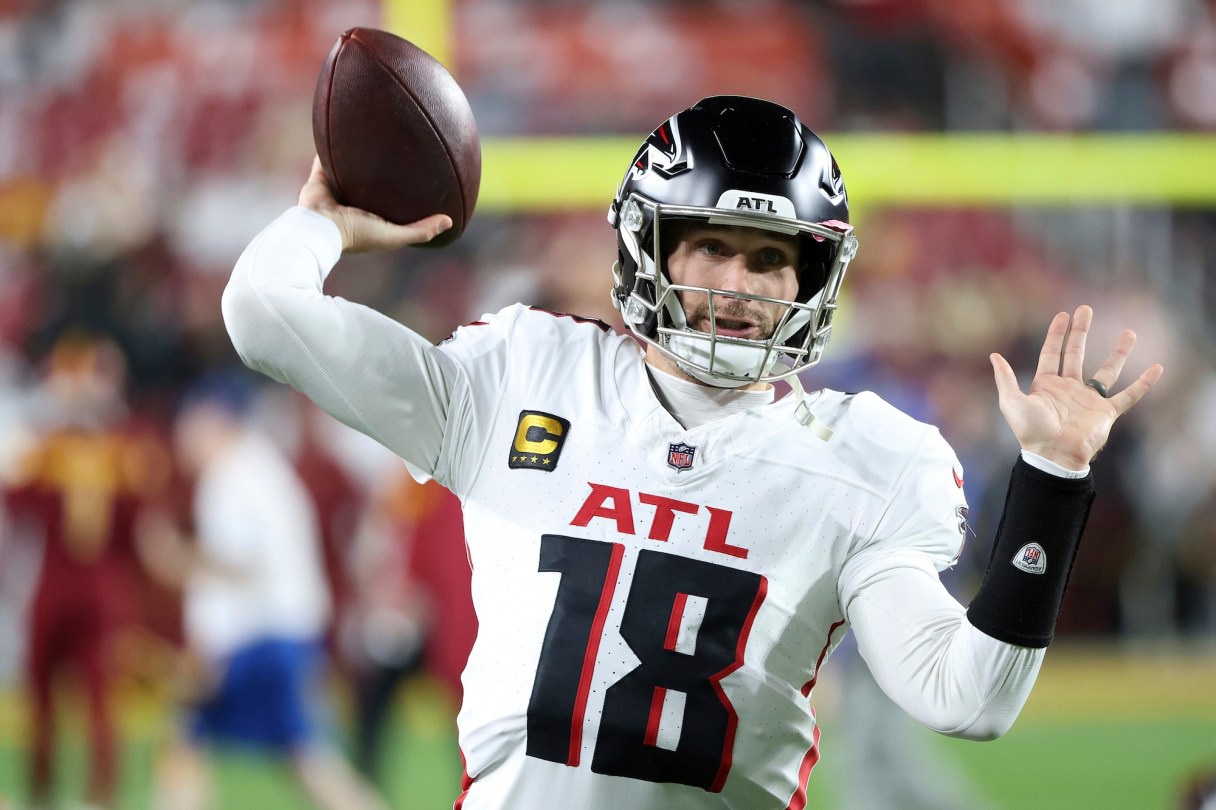
In hindsight, maybe Kirk Cousins recognized what his teammates and coaches were seeing on the Falcons practice fields in Flowery Branch and what the team’s fans saw in the final three games of the season.
Improving week by week, Michael Penix Jr. was the real deal.
It would help answer one of the more perplexing riddles of the Falcons’ 2024 season, a journey of futility that extended the franchise’s postseason drought to seven consecutive years.
In an interview Tuesday on NFL Network, Cousins acknowledged that his right elbow and shoulder were injured in the Falcons’ 20-17 road loss to the New Orleans Saints Nov. 10. It flew in the face of repeated assurances during the season that he was healthy.
On Tuesday, Cousins said that in that Saints game, “I got hit pretty good in my right shoulder and elbow, and from there, kind of dealing with that. It was something that I was working through, and I just never really could get it to where I wanted it.”
It sounded a lot like Cousins effectively was acknowledging that he had fibbed when he said that his appearance on the injury report the following week was because of “a clerical error” and not the result of his actually being injured in the game, when he was sacked three times and the Saints registered nine quarterback hits.
Worth noting: The team didn’t publicly rebut Cousins’ explanation, but never backed it up, either. If it had been a clerical error — such mistakes sometimes happen — the Falcons would have corrected the mistake with a press release, particularly if their star quarterback had claimed an error had been made. They’ve been in trouble with the NFL previously with injury-report shenanigans; this would have been an odd situation to risk a fine.
So why would Cousins have attributed his appearance on the injury report as some sort of typo?
Perhaps because he recognized Penix as a legitimate threat to his starting job and didn’t want to give coach Raheem Morris any additional reason to give Penix a shot. If Cousins had acknowledged that he was playing hurt as his play declined, it would have provided Morris all the reason and cover he needed to sub him out.
But if it had been a mere clerical error, as Cousins asserted, then his slump was merely that — a tough stretch that a veteran quarterback could be expected to get past. And that was the story that he and Morris told. It was only when Cousins’ career-worst performance left Morris little choice but to make a move that he did, four games after the loss to the Saints.
And then after Morris pulled Cousins, Penix put on a brilliant three-game display that rendered Cousins’ explanation moot. Completing 58 of 100 passes for 737 yards with three touchdowns against three interceptions, Penix made it clear that Cousins no longer was necessary as the Falcons’ starter.