
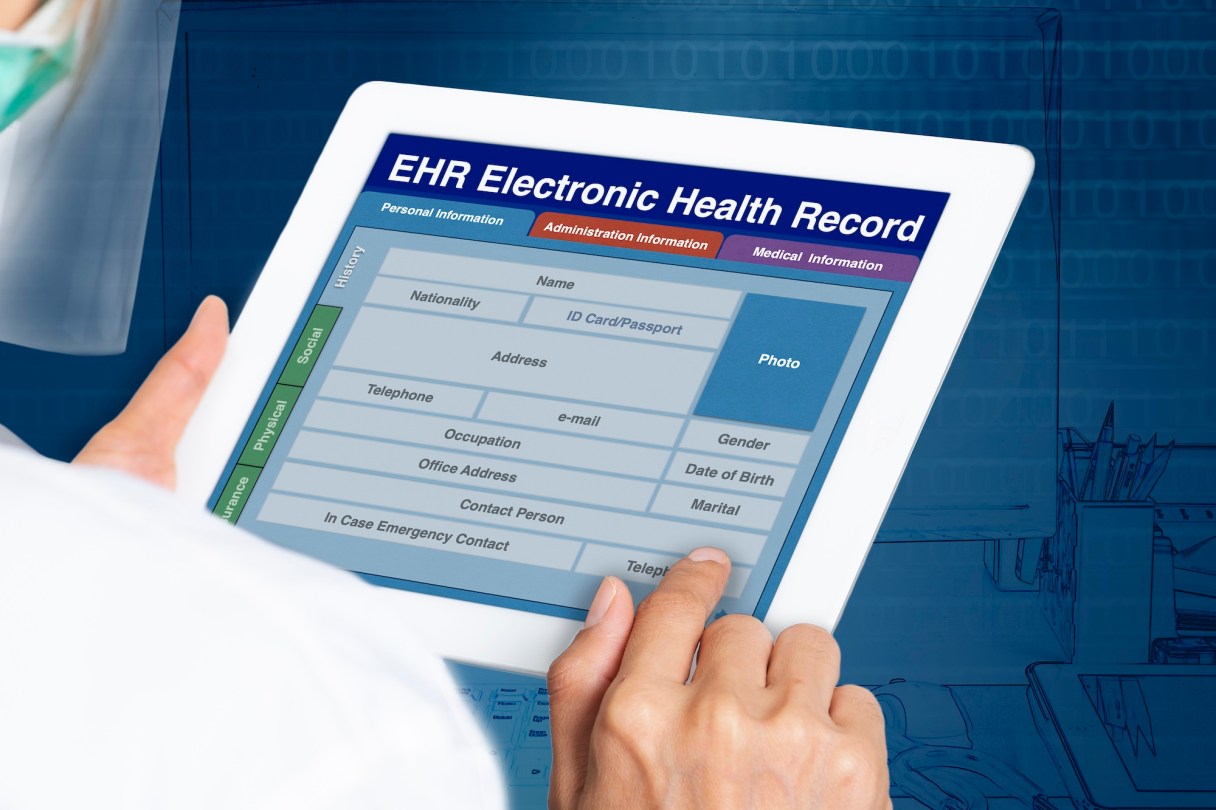
The U.S. health-care system exchanges tens of millions of patient records a day. Thanks to recent technological advances, the ability to analyze such large amounts of data has improved markedly.
Why, then, are patients still filling out clipboards of redundant information, or juggling multiple passwords and portals to make a doctor’s appointment?
Over the past decade and a half, the government has spent more than $35 billion attempting to modernize health data-sharing. Yet the typical patient experience has hardly improved. Designing a saner, more user-friendly system isn’t only a matter of convenience; it should improve care, boost efficiency and lay the groundwork for technological advances to come.
The earliest medical-records systems started in academic centers in the 1960s and ’70s. A “health IT” sector emerged about a decade later. By the early 2000s, a series of reports suggested the myriad benefits of digital records – from increased legibility to quicker access – would reduce medical errors and save lives.
President Barack Obama soon became an evangelist for this effort. “We will make sure that every doctor’s office and hospital in this country is using cutting-edge technology and electronic medical records,” he said in 2008, just before taking office. Two months later, Congress passed a fatefully ambitious law to accelerate the digitization of health data, largely through incentive payments to providers that shuttled generous subsidies to vendors.