
Red Auerbach once got ejected from an NBA All-Star Game for arguing a call. Rick Barry and Bob Cousy each fouled out of the midseason exhibition twice, the only players who can say that. Dwyane Wade was whistled for the first flagrant in the event’s history after breaking Kobe Bryant’s nose.
As the story goes, Wade called Bryant not long after that 2012 game and attempted to apologize for the foul. Turned out, there was no need. Wade’s recollection of what Bryant said?
“Bro, I love it,” Wade said in a conversation with Kevin Garnett, a clip that has been a social media standard ever since.
The NBA doesn’t want coaches to get kicked out, anyone to get into foul trouble or anyone getting hurt. But the league has asked, begged and pleaded for years with players in an effort to get the NBA All-Star Game get taken more seriously. And the latest solution is a radical one: a mini tournament.
Welcome to a format like none other in NBA All-Star history: three games, no clock, first team to 40 points wins, eight-man rosters, and there’s a reasonable chance that the team leaving San Francisco on Sunday as winners will have captured that title without having a single actual NBA All-Star on its roster.
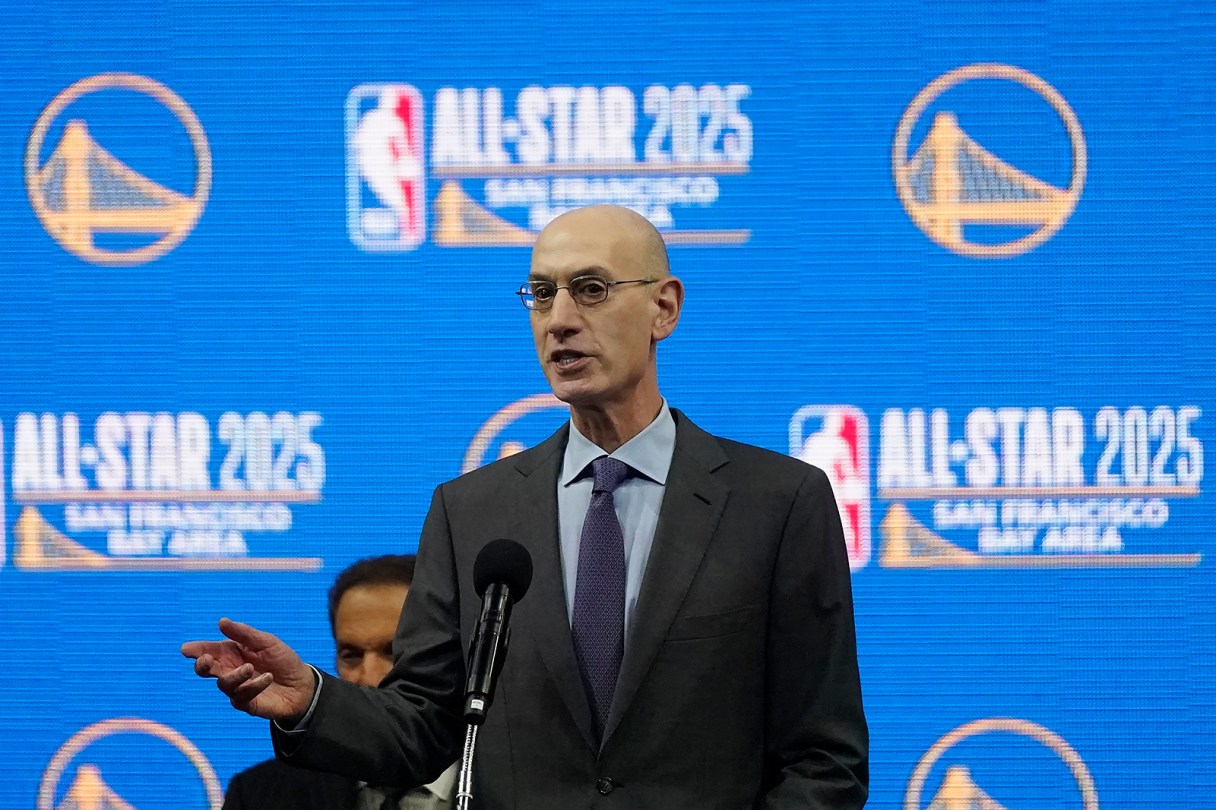
“We went back to the drawing board,” commissioner Adam Silver said.
Here’s the big question going into Sunday’s matchup at the Chase Center, the home of the Golden State Warriors: Will it work?
To be fair, there were skeptics when Silver added a play-in tournament to determine the final two playoff spots in the Eastern and Western conferences; by all accounts, it has been a smashing success. There were skeptics when Silver added the NBA Cup in-season tournament; some players say they still don’t totally understand the format, but the first two final four weekends in Las Vegas have been big hits as well.
And now this. The NBA thinks players don’t want to go to a 48-minute exhibition this time of year and play hard for a full game. Perfectly understandable. The proposed solution: short games where nobody will have to play for long and there’s little room for error because only 40 points are needed to win.
Kevin Durant’s first response?
“I hate it. Absolutely hate it. Terrible,” the Phoenix Suns star and 15-time NBA All-Star said when the league announced the plan in December, though Durant quickly noted his initial reaction could have been worded differently.
Perhaps he could have taken the route that perennial All-Star forward Anthony Davis, then of the Los Angeles Lakers and now of the Dallas Mavericks, took when he was asked in December what he thinks of the new plan.
“I don’t really like it,” Davis said. “But we’ll see how it goes this year and see if they change it again or not.”
And it could, possibly as early as next year.
Some players want the traditional East versus West format, although the league went back to that last year and the score wound up being 211-186 — all dunks and 3-pointers, pretty much — that broke records and forced the NBA to break the mold on the format.
The league tried a target score approach; no clock in the fourth quarter and have the teams chase a set total to ensure that the game ends on a made basket. Some years it worked, some years not so much. It tried having playing captains pick the teams; again, success was mixed.
Next up, the tournament. There is a prize pool of $1.8 million. Each player on the championship team gets $125,000, each player on the runner-up team will get $50,000, and each player on the teams eliminated in the semifinals will get $25,000.
“I don’t know if everyone understands how this is going to go,” said Miami Heat guard Tyler Herro, set for his NBA All-Star debut this weekend. “But everyone will want to win.”
There are four teams in the tournament: three picked by TNT analysts Charles Barkley, Shaquille O’Neal and Kenny Smith from the pool of 24 All-Stars, with the fourth the winning team from the Rising Stars event on Friday night.
The Rising Stars players aren’t NBA All-Stars. Some aren’t even in the NBA right now; there’s a G League team in that event. Still, the Rising Stars winner could win the All-Star Game — meaning, yes, guys who aren’t currently in the league could be getting the biggest prize of the weekend.
Whichever way it shakes out, it will be a massive deviation from last year, when the East and West each scored at least 42 points in every quarter. Karl-Anthony Towns scored 50 points on his own last year; it will take only 40 for a team to win a game this year.
“Them trying to shake things up is expected and makes sense,” said Oklahoma City Thunder guard Shai Gilgeous-Alexander, an NBA All-Star selection this year for the third time. “But at the end of the day, it’s going to come down to whether the players wanting to go at it, and I would love to see that. Love to be a part of that for sure, and hopefully it happens.”
Heat forward Kevin Love — who proudly says he took part in NBA All-Star Games where players were competitive and even strategized in the locker rooms before games and at halftimes — doesn’t know when it all changed.
The 36-year-old thinks it became part of the evolution within the game; more 3-pointers are shot than ever before, and combined with everyone just treating it like an exhibition and not Game 7 of the NBA Finals, that led to the defense-optional approach the league doesn’t want to see anymore.
“I’ll tell you if this will work,” Love said. “I’ll tell you on Sunday.”